
Abstract book of the 18th Conference of the EAVP
Pterosaurs from Coahuila
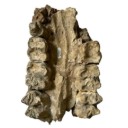
New elephant cranium from early Pliocene Ileret, Kenya
Les sélaciens du Miocène de la région de Montpellier
Muridae du Pliocène supérieur d'Espagne et du midi de la France.
Contribution à l'étude des genres Gliravus et Microparamys.
Eocene (57) , Quercy Phosphorites (38) , Systematics (32) , Rodents (29) , Mammalia (27) , Rodentia (25) , Miocene (25)

|
Rongeurs du Miocène supérieur de Chorora (Ethiopie): Cricetidae, Rhizomyidae,Phiomyidae, Thryonomyidae,Sciuridae.Denis Geraads
Published online: 15/12/1998 |
|

|
Contributions à l'étude du gisement Miocène supérieur de Montredon (Hérault). Les grands mammifères. 1 - Les LagomorphesNieves Lopez-MartinezPublished online: 15/11/1988Keywords: Lagomorpha; Montredon; Prolagus; Upper Miocene https://doi.org/10.18563/pv.18.ext.3-14 Abstract A sample of 231 isolated teeth of lagomorphs from the upper Miocene of Montredon (southern France), identified as the ochotonid Prolagus crusafonii DOPEZ, 1975, is studied, comparing it with other populations of the same species as well as with its closest species P. oeningensis (KÖNIG, 1825). PV article infos Published in Vol. 18, Ext (1988) |
|

|
La palichnofaune de vertébrés tétrapodes du permien supérieur du Bassin de Lodève (Languedoc-France).Georges Gand, Jacques Garric, Georges Demathieu and Paul EllenbergerPublished online: 15/09/2000Keywords: Footprints; France; Languedoc; Lodève basin; new ichnotypus; Saxonian; Upper Permian https://doi.org/10.18563/pv.29.1.1-82 Abstract Near "la Lieude", in the Lodève basin, more than a thousand of footprints are distributed in a twenty of trackways which amounts to 220 m length. They have been found on calcareous siltstone level in the B site named also "Réserve Naturelle Volontaire". This last is located in the Saxonian summit dated Upper Permian. "La Lieude" tracks are described by using statistical methods then they are compared with others from the world Permian. What allows to distinguish 4 following ichnotaxa: Lunaepes ollierorum nov.ichnosp., Merifontichnus thalerius nov. ichnogen. and nov. ichnosp., Planipes brachydactylus nov.ichnosp. and Brontopus circagiganteus nov. ichnosp. All these traces are attributed with possibility or probability to Therapsida or to Therosauria, except Brontopus circagiganteus nov. ichnosp. that could be due to Caseamorpha. All these animals whose sizes have been estimated between l and 5 m lived probably in a playa environment.The biological and sedimentological data from "la Lieude" footprints levels compared with informations provided by the tracks orientations, suggest the following scenario. Animals coming from the North have crossed a sandy channel bank with plants zones by directing to the South for the majority. Maybe, they were going to the lacustrine part of the playa, close to "la Lieude" footprints that they have just trampled on. PV article infos Published in Vol. 29, Fasc. 1 (2000) |
|

|
Skeleton of early Eocene Homogalax and the origin of PerissodactylaKenneth D. RosePublished online: 16/12/1996Keywords: Eocene; Homogalax; Perissodactyla; Skeletal Anatomy https://doi.org/10.18563/pv.25.2-4.243-260 Abstract The first good skeletal remains of Homogalax protapirinus from the Wasatchian of the Bighorn Basin, Wyoming, indicate that this primitive tapiromorph was more plesiomorphic in many features than primitive equoids including Hyracotherium. Compared to Hyracotherium, Homogalax more closely resembles Phenacodonta (the closest outgroup of Perissodactyla for which postcrania are known) in various details of articular surfaces, muscle attachments, and proportions of the humerus, manus, and pes.Among known taxa, Homogalax most nearly approximates the plesiomorphic postcranial skeletal anatomy of Perissodactyla. PV article infos Published in Vol. 25, Fasc. 2-4 (1996) |
|
|
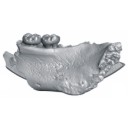
Enigmatic rodents from Lavergne, a late middle Eocene (MP 16) fissure-filling of the Quercy Phosphorites (Southwest France)
|
|

|
Contributions à l'étude des micromammifères du gisement Miocène supérieur de Montredon (Hérault). 1- Le gisementJean-Pierre Aguilar and Jean-Yves CrochetPublished online: 30/06/1982Keywords: Hérault; Late Miocene; Micromammals; Montredon https://doi.org/10.18563/pv.12.3.75-79 Abstract La localité fossilifère du Puech de Montredon, désignée plus communément sous le nom de Montredon, est située sur la commune de Montouliers (Hérault) à quelques 300 mètres de la limite avec le département de l'Aude. Elle a été découverte en 1845 par Narbonne, Directeur des Mines de La Caunette, et de très nombreux restes de vertébrés continentaux y ont été extraits. La plus ancienne mention de ce gisement dans la littérature semble être celle de Lartet (1859) qui signale que "M. Jourdan, de Lyon, a constaté à Montredon, près de Bize (Aude), l'association des restes de Dinotherium avec l'Hipparion". PV article infos Published in Vol. 12, Fasc. 3 (1982) |
|

|
Nouvelles espèces de Dendromus (Rongeurs,Muriodea) à Langebaanweg (Pliocène,Afrique du Sud) conséquences stratigraphiques et PaléoecologiquesChristiane Denys
Published online: 20/05/1994 |
|
|
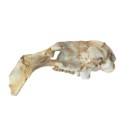
A partial skeleton of Metaxytherium medium from the middle Miocene of La Morfassière quarry (Indre-et-Loire, France)Stéphane Ducrocq
Published online: 16/01/2025 |
|

|
A new hypothesis for the origin of African Anomaluridae and Graphiuridae (Rodentia)Monique Vianey-Liaud
Published online: 16/12/1996 |
|

|
Sur les Condylarthres Cernaysiens Tricuspiodon et Landenodon (Paléocène supérieur de France)Donald E. RussellPublished online: 01/10/1980Keywords: Arctocyonidae; Condylarths; Late Paleocene; Tricuspiodontidae https://doi.org/10.18563/pv.9.ext.127-166 Abstract The numerical importance of the Condylarths in the Cernaysian fauna is discussed. The Condylarth family, Tricuspiodontidae, is reviewed in the light of new material and its close relationships to the Phenacodontidae is suggested ; one new species is recognized : Tricuspiodon sobrinus. European Arctocyonidae are reviewed and the recentclassification of Van Valen is briefly commented on. Also, the arctocyonine Landenodon is described for the first time in Thanetian (Late Paleocene) sediments ; two new species are proposed : T. lavocati and T. phelizoni. PV article infos Published in Vol. 9, Ext (1980) |
|

|
Révision des Rhombodontidae (Neoselachii Batomorphii) des bassins à phosphate du MarocAbdelmajid Noubhani and Henri Cappetta
Published online: 20/05/1994 |
|

|
Archosauriform teeth from the upper Triassic of Saint Nicolas-de-Port (Northeastern France).Pascal Godefroit
Published online: 15/12/1997 |
|
|
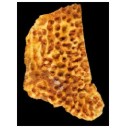
Lissamphibians from Dams (Quercy, SW France): Taxonomic identification and evolution across the Eocene-Oligocene transitionAlfred Lemierre
Published online: 25/06/2025 |
|

|
Contribution à l'étude des genres Gliravus et Microparamys (Rodentia) de l'Eocène d'Europe.Jean-Louis HartenbergerPublished online: 15/03/1971Keywords: Eocene; Gliravus; Microparamys; Rodentia https://doi.org/10.18563/pv.4.4.97-135 Abstract Based on material found in about 15 localities the relationships of the genera Microparamys and Glirarus have been studied. One new genus, two subgenera and three species [Microparamys (Sparnacomys) chandoni n. subgen. and n. sp., Microparamys (Pantrogna) russelli n. subgen., Eoglirarus wildi n. gen. and n. sp., Gliravus meridionalis n. sp.] as well as the publication PV article infos Published in Vol. 04, Fasc. 4 (1971) |
|

|
Modification du statut générique de quelques espèces de sélaciens crétacés et tertiairesHenri Cappetta
Published online: 15/12/1980 |
|

|
Le genre Leptolophus (Perissodactyla, Mammalia): morphologie et histologie dentaires, anatomie cranienne, implications fonctionnelles.Jean-Albert RemyPublished online: 15/09/1998Keywords: dental histology; Eocene; functional anatomy; Palaeotheriidae; skull anatomy; Southern France; Systematics https://doi.org/10.18563/pv.27.1-2.45-108 Abstract A strong lophodonty, an extreme heterodonty, some hypsodonty and regular overlayings of coronal cement are prominent features of the genus Leptolophus (Palaeotheriinae = Palaeotheriidae s.s.). The histological pattern of the teeth unusually joins type II enamel prisms, characteristic of advanced ungulates, together with archaic features, such as an almost complete lack of Hunter-Schreger zonation and a weak expanse of peritubular dentine. The skull is narrow and slender, with an elongated ante-orbital facial region, a moderately notched nasal aperture, a rather elongated post-canine diastem, parallel zygornatic arches and a fairly dorsally located squamoso-mandibular joint.The functional analysis brings to light "ectolophodont" masticatory cycles with two phases, in which maximum power was applied, contrary to equíds, on hindmost teeth; likewise, skull accomodations to increasing height of the teeth are quite different. This study leads to the assumption that Leptolophus may have been light mammals, living in rather open surroundings, browsing on herbaceous plants or leaves cropped close to the ground. Moreover, it appears that it could have been some inadequacy of dental structures to the dietary, which leaded to quick wear of the teeth and to many enamel notches, but had been somewhat balanced by the early increase of hypsodonty, not induced in such a case by a biotop deterioration (as it will happen at the end of the Eocene). This ínadaptation might account for the short duration of the genus Leptolophus, whose the 3 species, L. stehlini, L. nouletí and L. magnus n. sp. are indeed confined in the level MP 16. Its geographical spreading (as far as known, South of western Europe) and the morphological pattern of its dentition suggest that this genus would have been related to early upper Eocene endemic spanish forms. PV article infos Published in Vol. 27, Fasc. 1-2 (1998) |
|

|
New records of the pantodont Archaeolambda from the Paléocène of southern ChinaSuyin Ting, Judith A. Schiebout and Jianjian ZhengPublished online: 16/12/1996Keywords: Archaeolambda; China; Paleocene; Pantodont https://doi.org/10.18563/pv.25.2-4.125-132 Abstract Two new finds of pantodont materials from southern China, assigned to Archaeolambda, are described in this paper. One, a new species from the Nanxiong Basin, Guangdong Province, is similar to Alcidedorbignya inopinata from the early Paleocene of Tiupampa, Bolivia in size. It provides reliable evidence of the occurrence of Archaeolambda in the early-middle Paleocene of southern China. The second find includes specimens of Archaeolambda sp. cf. A. planicanina from the ?late Paleocene of Hengyang Basin, Hunan Province, which are the first record of a fossil mammal from the area near Hengyang city. The only vertebrate fossils previously found here were two genera of crocodiles discovered in 1938. This find sheds new light on the local biostratigraphy. PV article infos Published in Vol. 25, Fasc. 2-4 (1996) |
|
|
Revision of the historical collections of Pliocene-Pleistocene large mammals from Le Riège and Saint-Palais localities, near Pézenas (Southern France)Federica Mulè
Published online: 23/06/2025 |
S.I. Data |

|
The endocranial cast and encephalization quotient of Ptilodus (Multituberculata, Mammalia)David W. Krause
Published online: 11/02/1993 |
|
|
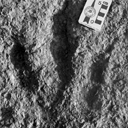
Nouvelles données sur les Ichnites de dinosaures d'El Bayadh (Crétacé Inférieur, Algérie)Mostefa Bessedik
Published online: 16/12/2008 |
|
