|
Evolution de la lignée Megacricetodon collongensis-Megacricetotodon roussillonensis (Cricetidae, Rodentia, mammalia) au cours du Midocène inférieur et moyen dans le Sud de la France.
Published online: 14/06/1995
Keywords:
Cricetids rodents; Evolutionary lineage; Lower and Middle Miocene; Mammalian biochronology; Megacricetodon new species; Southern France
https://doi.org/10.18563/pv.24.1-2.1-45
Abstract
New populations of the genus Megacricetodon have recently been discovered in Southern France.Two new species are defined: M. lemartineli n. sp. and M. fournasi n. sp., their stages of evolution are intermediate between those of M. gersii and M. roussillonensis. Morphological and biometrical analysis indicate the presence of only one lineage: M. collongensis--M. collongensis-gersii--M. gersii--M.lemartineli nov. sp.--M. fournasi nov. sp. and M. roussillonensis. This observation allows to refine the chronology based on rodents, for the Late Early Miocene and the Middle Miocene in the Southern France.
Comparisons with some iberian species are done. The validity of the French species M. bezianensis and M. bourgeoisi is discussed.
PV article infos
Published in Vol. 24, Fasc. 1-2 (1995)
|
PDF
|

|
Les gangas (Aves, Columbiformes, Pteroclidae) du Paléocène et du Miocène inférieur de France.
Published online: 11/02/1993
Keywords:
Birds; evolution; Lower Miocene; New taxa; Oligocene; Paleoecology; Paulhiac; Quercy Phosphorites; Saint-Gérand-Ie-Puy; Sandgrouse; Upper Eocene
https://doi.org/10.18563/pv.22.2-3.73-98
Abstract
The two species of Sandgrouse from Quercy, Pterocles validus MILNE-EDWARDS and P. larvatus MILNE-EDWARDS, are ascribed to the genus Archaeoganga MOURER-CHAUVIRÉ which includes a third, very large species, A. pinguis. The Sandgrouse of Saint-Gérand-le-Puy, Pterocles sepultus MILNE-EDWARDS, is ascribed to a new genus, Leptoganga. This form appears in the Upper Oligocene of Quercy, in Pech Desse and Pech du Fraysse localities, and is still present in the Lower Miocene of Saint-Gérand-le-Puy and Paulhiac. Recent Sandgrouse live in semidesert or desert areas. The indications provided by mammal and bird faunas in the localities where sandgrouse were found, confirm that the paleoenvironment was open and arid. The morphological study of these fossils indicates that, in the Upper Eocene, the Pteroclidae were already completely individualized with respect to Charadriiformes.
PV article infos
Published in Vol. 22, Fasc. 2-3 (1993)
|
PDF
|

|
Le genre Mesembriacerus (Bovidae, Artiodactyla, Mammalia) : un Oviboviné primitif du Vallésien (Miocène supérieur) de Macédoine (Grèce)
Published online: 15/12/1984
Keywords:
Bovidae; Cladistics; Late Miocene; Ovibovinae; Vallesian
https://doi.org/10.18563/pv.14.4.201-223
Abstract
The bovid Mesembriacerus melentisi, the numerous skulls, teeth and limb bones of which are described from the locality Ravin de la Pluie (Macedonia, Greece), bears some features which allow us to put it in the tribe ovibovini (Ovibovinae) with several other Miocene genera and the Recent one Ovibos. A cladogram gives the phyletic relationships within this tribe. It shows that Mesembriacerus which is one of the oldest genera, is also the most primitive. The limb bones are as elongated as those of Recent cursorial bovids and they show, as does the bulk of the fauna, an open environment for the locality.
PV article infos
Published in Vol. 14, Fasc. 4 (1984)
|
PDF
|

|
Pseudorhyncocyon cayluxi Filhol, 1892 insectivore géant des phosphorites du Quercy
Published online: 15/11/1974
Keywords:
Insectivores; Leptictidae; Quercy Phosphorites
https://doi.org/10.18563/pv.6.1-2.33-46
Abstract
Une hémimandibule et une molaire supérieure recueillies dans le gisement oligocène inférieur d'Escamps (phosphorites du Quercy) fournissent de nouvelles informations sur le genre Pseudorhyncocyon FllHOL, grand insectivore longirostre du Paléogène d'Europe, fossile très mal connu jusqu'ici. Des comparaisons avec les macroscélididés africains, géolabididés nord-américains, et leptictidés euraméricains permettent de rattacher cet amimal aux leptictidés, et de le rapprocher du genre Lepticidium TOBIEN, au sein de la sous-famille européenne nouvelle des pseudorhyncocyoninés.
PV article infos
Published in Vol. 06, Fasc. 1-2 (1974)
|
PDF
|

|
Mammals and stratigraphy : the Paleocene of Europe
Published online: 01/12/1982
Keywords:
Europe; Mammalia; Mammalian biochronology; Paléogène; Stratigraphy
https://doi.org/10.18563/pv.12.ext
Abstract
The mammalian faunas of the Paleogene of Europe and their localities are reviewed with comments on problems of European stratigraphy (epoch, stage and substage limits) and on the possibilities of faunal migrations. Radiometric dating is discussed. A stratigraphic scale for the Paleogene is presented, as well as a refined system of sequential faunal levels.
PV article infos
Published in Vol. 12, Ext (1982)
|
PDF
|

|
Deux nouveaux primates dans l'Oligocène inférieur de Taqah (Sultanat d'Oman): premiers Adapiformes (?Anchomomyini) de la péninsule arabique?
Published online: 15/11/1993
Keywords:
Adapids; Afro-Arabian plate; Early Oligocene; New taxa; Primates; Trans-Tethyan dispersals
https://doi.org/10.18563/pv.22.4.141-196
Abstract
Two new species, Omanodon minor n. g., n. sp. and Shizarodon dhofarensis n. g., n. sp., known from fifteen isolated teeth, are described here as the first adapiform primates (?Anchomomyini) recognizable to date in the Taqah material (early Oligocene of Sultanate of Oman).
Omanodon minor n. g., n. sp. displays special morphological similarity to the adapid tribe Anchomomyini from the Eocene of Europe, and especially to the Anchomomys lineage. Resemblances with the extant lemurifonn Microcebus are also noticeable and could be regarded as supporting Schwartz & Tattersall (1983) hypothesis of special relationships between the anchomomyine adapids and the cheirogaleid lemuriformes. However, these morphological affmities can be interpreted, altematively, as the results of parallelisms: important differences in upper molars indicate that the resemblances of cheirogaleids and Omanodon minor n. g., n. sp. are indeed probably due to parallelisms. Phyletic relationship of O. minor n. g., n. sp. to Anchomomyini is finally the most likely hypothesis.
Shizarodon dhofarensis n. g., n. sp., although much more poorly known, is closely related to Omanodon minor n. g., n. sp., at least at a familial level. The general morphology of this species suggests
also a close link with adapid Anchomomyini, although precise relationships within this tribe remain obscure. Interesting resemblances of Shizarodon dhofarensis n. g., n. sp. to Djebelemur martinezi lower molars (early Eocene of Tunisia) are also noticeable. These resemblances are even stronger than those betwen Omanodon minor and Djebelemur martinezi. However the very bunodont upper molars referred to D. martinezi are unusual for adapids, and there are moreover some notable differences in their lower molars. Thus resemblances in Djebelemur and Shizarodon are probably due to paralellisms.
Because of the fragmentary nature of the material and of possible parallelisms, the systematic position of Omanodon and Shizarodon within adapiformes cannot however yet be established definitively.
PV article infos
Published in Vol. 22, Fasc. 4 (1993)
|
PDF
|

|
Les insectivores des phosphorites du Quercy
Published online: 15/11/1974
Keywords:
Insectivores; Quercy Phosphorites
https://doi.org/10.18563/pv.6.1-2.109-159
Abstract
Many types of insectivores have been described from specimens found in the Quercy phosphorites. These remains very often were not dated because they came from old collections. Recent excavations have permitted the situation of Amphidozotherium cayluxi FILHOL in the late Eocene. Two new genera are descrlbed based on material both from the old collections (Cryplotopos nov. g.) and from that recently recovered (Darbonetus nov. g., beginning of the middle Oligocene). Their systematic positions are revised and comparisons with American faunas are made. Amphidozotherium is not a talpid, but an erinaceoid belonging to an indeterminate family. Saturninia gracilis STHELIN is classified among the Nyctitheriinae, Myxomygale antiqua FILHOL among the Urotrichini Talpinae, and the genus Geotypus POMEL among the Scaptonichini Talpinae. A new study of the talpids from Auvergne has been rendered necessary. During the late Eocene and Oligocene precise morphology relationships existed between certain insectivores of Europe and North America.
PV article infos
Published in Vol. 06, Fasc. 1-2 (1974)
|
PDF
|

|
New records of terrestrial Mammals from the upper Eocene Qasr el Sagha Formation, Fayum Depression, Egypt
Published online: 16/12/1996
Keywords:
Egypt; Eocene; Fossil mammals; Qasr el Sagha Formation
https://doi.org/10.18563/pv.25.2-4.175-192
Abstract
New records of terrestrial mammals from the Qasr el Sagha Formation, Fayum Depression, Egypt are reported, and the stratigraphic occurrences of these fossils noted. These include additional specimens of Moeritheríum, Barytherium, and anthracotheres, as well as the oldest record of a hyracoid in the Fayum.These Eocene mammals occur almost exclusively in the alluvial deposits of the Dir Abu Lifa Member of the Qasr el Sagha Formation and show close affinities to the faunas from the lower sequence of the Jebel Qatrani Formation. There is no evidence of a more marked faunal discontinuity between the Qasr el Sagha and Jebel Qatrani Formations than there is across any of the three major breaks in sedimentation that exist within the Jebel Qatrani Formation. The faunal similarities between fossils of the lower sequence of the Jebel Qatrani Formation and of the upper part of the Qasr el Sagha Formation is consistent with recent paleomagnetic dating that suggests that these rocks differ in age by only one to two million years.
PV article infos
Published in Vol. 25, Fasc. 2-4 (1996)
|
PDF
|

|
Les poissons crétacés et tertiaires du bassin des Iullemmeden (République du Niger)
Published online: 15/09/1972
Keywords:
Actinopterygians; Cenozoic; Cretaceous; Dipnoans; Selachians
https://doi.org/10.18563/pv.5.5.179-251
Abstract
The present work is devoted to the study of the Cretaceous and Tertiary fishes (teeth of Selachians, Actinopterygians and Dipnoans) collected during a recent expedition in Niger. The Maestrichtian localities have yielded a new genus and a new subspecies of Selachian: Igdabatis sigmodon nov. gen., nov. sp. and Lamna biauriculata nigeriana nov. subsp. The locality of Sessao, which has been attributed to the Thanetian by means of the study of the fish, has furnished by screen-washing an interesting fauna wherein six new species are described: Raja Iouisi, Dasyatis sessaoensis, D. sudrei, D. russelli, Hypolophites thaleri and Ceratodus casieri. Comparison of these faunas with contemporary faunas of Africa has brought out a certain endemism in the Iullemmeden Basin during the late Cretaceous and the early Tertiary.
PV article infos
Published in Vol. 05, Fasc. 5 (1972)
|
PDF
|

|
Les Issiodoromyinae (Rodentia, Theridomyidae) de l'Eocène supérieur à l'Oligocène supérieur en Europe occidentale
Published online: 15/05/1976
Keywords:
climate; Faunal turnover; Paléogène
https://doi.org/10.18563/pv.7.1-2.1-115
Abstract
Based on material from 30 localities, morphologic dental, cranial and biometric analyses have permitted the characterization of two parallel Issiodoromyine lineages, and also the definition of diverse species representing several evolutive stages. Thus it is that new lineages complete the contribution made by the Theridomyinae and Cricetidae and permit, for the Quercy in particular, additional precision in the biochronologic succession of the localities. One of the lineages is limited to the genus Pseudoltinomys LAVOCAT; the other evolves from the genus Elfomys HARTENBERGER to the genus Issiodoromys BRAVARD in GERVAIS. The latter is affected by profound anatomical changes due to a functional modification of the mastication apparatus. These changes seem to be able to be put in relation with the aridification and cooling of the climate at the end of the Eocene. At the end of the middle Oligocene, a new chewing structure is achieved. It is found in diverse living rodents that inhabit a rather arid steppe environment (Cavia, Pedetes, Ctenodactylus). To these supposed nearby ecologic conditions, these rodents have responded in a convergent fashion. It is possible to attribute to the extreme specialization of Issiodoromys its incapacity to adapt to the new climatic crisis of the end of the Oligocene. The arrival of immigrants may be considered as another cause of its disappearance at this time, complementary or not with the first.
PV article infos
Published in Vol. 07, Fasc. 1-2 (1976)
|
PDF
|

|
Cricetid rodents from Siwalik deposits near Chinji village. Part I: Megacricetodontinae, Myocricetodontinae and Dendromurinae.
Published online: 15/10/1988
Keywords:
Dendromurinae; Megacricetodontinae; Middle Miocene; Myocricetodontinae; Rodents; Siwalik
https://doi.org/10.18563/pv.18.2.95-154
Abstract
Seventeen species of cricetid rodent are recognized and described from lower and middle Siwalik deposits in the Potwar Plateau of Pakistan. These species are grouped in three categories, characterized as subfamilies (e. g., Megacricetodontinae, Myocricetodontinae, and Dendromurinae); an additional and more abundant category of rodents from these deposits, the Democricetodontinae, is excluded from this study, and will be described in a later study. Fifteen of the species are new, and four new genera are described. The Siwalik cricetid taxa are : Megacricetodon aquilari, n. sp.; Megacricetodon sivalensis, n. sp.; Megacricetodon daamsi, n. sp.; Megacricetodon mythikos, n. sp.; Punjabemys downsi, n. gen. & n. sp.; Punjabemys leptos, n. gen. & n. sp.; Punjabemys mikros, n. gen. & n. sp.; Myocricetodon sivalensis, n. sp.; Myocricetodon sp.; Dakkamyoides lavocati, n. gen. & n. sp.; Dakkamyoides perplexus, n. gen. & n. sp.; Dakkamys asiaticus, n. sp.; Dakkamys barryi, n. sp.; Dakkamys sp.; Paradakkamys chinjiensis, n. gen. & n. sp.; Potwarmus primitivus, n. gen.; and Potwarmus minimus, n. gen. & n. sp. This diverse record of middle Miocene small mammals illuminates a profound radiation of cricetid rodents in southem Asia, the effects of which were felt in Europe and Africa as well as the rest of Asia.
PV article infos
Published in Vol. 18, Fasc. 2 (1988)
|
PDF
|

|
Revision der Equoidea aus den Eozänen Braunkohlen des Geiseltales bel Halle (DDR).
Published online: 15/04/1986
Keywords:
Eocene; Europe; Mammalia; Perissodactyla; Stratigraphy; taxonomy
https://doi.org/10.18563/pv.16.1.1-34
Abstract
The dentitions as well as one complete and several partial skeletons of Equoids from the Eocene lignite beds of the Geiseltal locality are revised. Instead of 13 species distinguished up to now 3 chronoclines with 5 species and 3 separate species are recognized (text. fig. 1). Propalaeotherium hassiacum HAUPT, 1925 is evolving into Propalaeotherium isselanum (CUVIER, 1824) between the levels of the « obere Unterkohle ›› and the « untere Mittelkohle ›› of the Geiseltal section. Propalaeotherium argentonicum GERVAIS, 1849 is shown to be present in the « untere Unterkohle ››, whereas Lophiotherium pygmaeum (DEPERET,1901) occurs in the « obere Mittelkohle ›› and in the « oberes Hauptmittel ››. Plagiolophus cartieri STEHLIN, 1904 appears during the transition from the « Mittelkohle ›› into the « Oberkohle ›› as the earliest true Palaeothere. Therefore the « Oberkohle ›› is already regarded as Upper Eocene. This is corroborated by the occurrence of a phyletic descendant of Propalaeatherium parvulum (Propalaeotherium n.sp.) in the middle and upper "Oberkohle " because this species appears otherwise for the first time at the mammal level of Lissieu. On the other hand Propachynolophus gaudryz (LEMOINE, 1878) described by Matthes (1977) from the « untere Unterkohle ›› turns out te be in fact a Phenacodont. Thus the decisive argument for classifying the « untere Unterkohle ›› as Lower Eocene has to be dropped. Biostratigraphically the « Unterkohle ›› and the «Basishauptrnittel ›› correspond with the lower Middle Eocene (mammal level of Messel), whereas the «unteres Hauptmittel ›› and the « untere Mittelkohle ›› are equivalent to the middle part of the middle Eocene (mammal level of lssel), and the « obere Mittelkohle ›› together with the « oberes Hauptmittel ›› coincide with the upper Middle Eocene (mammal level of Bouxwiller).
PV article infos
Published in Vol. 16, Fasc. 1 (1986)
|
PDF
|

|
Premier catalogue des specimens-types Paléontologiques déposés dans les collections de l'Université de Montpellier II (Sciences et Techniques du Languedoc)
Published online: 20/12/1994
Keywords:
Collections; Inventory; Type specimens; University Montpelllier II
https://doi.org/10.18563/pv.23.ext.3-113
Abstract
More than 400 paleontological type-specimens housed in the Montpellier University collections have been inventoried in this catalogue which includes charophytes, Paleozoic plants, brachiopodes, molluscs, arthropodes and vertebrates (selachians, amphibians, reptiles, birds and mammals). The vertebrates have been treated exhaustively in the catalogue and one can consider that it includes most of the type specimens deposited in the Montpelier II collections.
PV article infos
Published in Vol. 23, Ext (1994)
|
PDF
|

|
Analyse d'ouvrage: “M. ARSENAULT, H. LELIÈVRE & P. JANVIER (Eds.): Etudes sur les vertébrés inférieurs — VII e Symposium International, Parc de Miguasha, Québec, 9- 22 Juin 1991 (1994)”
Published online: 18/03/1996
Keywords:
Book review
https://doi.org/10.18563/pv.25.1.51-53
Abstract
Etude sur les vertébrés inférieurs (VIIe Symposium International, Parc de Miguasha, Québec, 9-22 Juin 1991), édité par Marius ARSENAULT, Hervé LELlÈVRE & Philippe JANVIER, 1994. Bulletin du Muséum National d'Histoire Naturelle, Paris, 4e Série, T. 17, Section C, n° 1-4, 529 p.
Ce volume spécial du Bulletin du Muséum réunit les actes du congrès international sur les Vertébrés inférieurs qui s'est tenu au Québec en 1991.
PV article infos
Published in Vol. 25, Fasc. 1 (1996)
|
PDF
|

|
La poche à phosphate de Ste-Néboule (Lot) et sa faune de vertébres du Ludien supérieur. 4- Crocodiliens
Published online: 25/09/1978
Keywords:
Eocene; Quercy Phosphorites
https://doi.org/10.18563/pv.8.2-4.191-199
Abstract
Crocodilians are represented in the Upper Eocene of Sainte·Néboule (Lot) by an isolated parietal and a dorsal scute, bath from young individuals. They are refferred to Diplocynodon sp. Predators (mammals and birds) are probably responsible for the occurrence of remains of small crocodilians (belonging to the genera Allognathosuchus and Diplocynodon) in the phosphorltes of Quercy.
PV article infos
Published in Vol. 08, Fasc. 2-4 (1978)
|
PDF
|
|
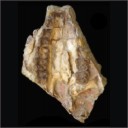
A new species of Propalaeotherium (Palaeotheriidae, Perissodactyla, Mammalia) from the Middle Eocene locality of Aumelas (Hérault, France).
Published online: 24/05/2016
Keywords:
Eocene; new species; Palaeotheriidae; Propalaeotherium
https://doi.org/10.18563/pv.40.2.e1
Abstract
A new Propalaeotherium species, clearly distinct from the genus Eurohippus, is described. It is characterized by having a similar size as P. voigti from the German Geiseltal localities (MP 11 to MP 13 reference-level), but differs in several features suggesting a slighty more derived morphology. It presents indeed less brachyodont crowns with less prominent and less elevated cingula, slightly larger relative surface of premolars, and a more marked metaconid splitting on cheek teeth. This new species is unknown from other European localities except the nearby Saint-Martin de Londres locality which has been considered older than the MP 13 level.
PV article infos
Published in Vol.40-2 (2016)
|
PDF
S.I. Data
|
|
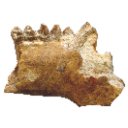
The new Algerian locality of Bir el Ater 3: validity of Libycosaurus algeriensis (Mammalia, Hippopotamoidea) and the age of the Nementcha Formation
Published online: 10/06/2015
Keywords:
Dispersal event; Miocene; North Africa; Tetralophodon
https://doi.org/10.18563/pv.39.2.e1
Abstract
The description of original material of anthracothere and proboscidean in the new locality of Bir el Ater 3 from East Algeria, and a thorough review of early Libycosaurus remains of Bir el Ater 2 allows us validating L. algeriensis as the smallest and earliest species of Libycosaurus and probably the earliest migrant of the genus from Asia. The presence of a Tetralophodon in the Neogene Nementcha formation might represent the earliest occurrence of the genus in Africa. These original fossil remains allow us to discuss the age of the Neogene part of the Nementcha formation close to the Serravalian/Tortonian boundary.
PV article infos
Published in Vol.39-2 (2015)
|
PDF
|
|
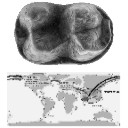
First early Eocene tapiroid from India and its implication for the paleobiogeographic origin of perissodactyls
Published online: 08/09/2015
Keywords:
Ceratomorpha; Helaletidae; Paléogène; Tapiromorpha; Vastan
https://doi.org/10.18563/pv.39.2.e5
Abstract
The presence of cambaytheres, the sister group of perissodactyls, in western India near or before the time of collision with Asia suggests that Perissodactyla may have originated on the Indian Plate during its final drift towards Asia. Herein we reinforce this hypothesis by reporting two teeth of the first early Eocene tapiromorph Perissodactyla from the Cambay Shale Formation of Vastan Lignite Mine (c. 54.5 Ma), Gujarat, western India, which we allocate to a new genus and species, Vastanolophus holbrooki. It presents plesiomorphic characters typical of the paraphyletic “Isectolophidae,” such as small size and weak lophodonty. However, the weaker hypoconulid and low paralophid, higher cusps, lower cristid obliqua, and the lingual opening of the talonid are found in Helaletidae, the most primitive tapiroid family. V. holbrooki, gen. et sp. nov., may be the oldest and the most primitive tapiroid, suggesting that at least tapiroid perissodactyls originated on India.
PV article infos
Published in Vol.39-2 (2015)
|
PDF
|

|
Study of the Turolian hipparions of the lower Axios valley (Macedonia, Greece). 4. Localities of Dytiko.
Published online: 15/12/1988
Keywords:
Equidae; Greece; Hipparion; Lower Axios Valley; Macedonia; Mammalia; Turolian
https://doi.org/10.18563/pv.18.4.187-239
Abstract
The hipparions from the Dytiko localities of the lower Axios valley (Macedonia, Greece) are studied. The material comes from three localities Dytiko-l, 2, 3 (DTK, DIT, DKO), which are situated near the village of Dytiko, about 60 km northwest to Thessaloniki. Three species have been determined, the medium-sized H. mediterraneum, the small-sized H. matthewi and the very small-sized H. periafricanum. The determined Hipparion species, their morphological characters and their comparison with the other Axios valley material indicate a Late Turolian age for the Dytiko localities.
PV article infos
Published in Vol. 18, Fasc. 4 (1988)
|
PDF
|

|
Evolution des Aplodontidae Oligocènes Européens
Published online: 01/10/1979
Keywords:
Aplodontidae; Europe; Oligocene
https://doi.org/10.18563/pv.9.2.33-82
Abstract
Until now Aplodontidae of the European Oligocene have been documented by four species only. The phylogenetic relations remained obscure. as the distribution of only one species has been known in some detail. New material made it possible to define the stratigraphic range of two of the already existing species (Plesispermophilus angustidens, Sciurodon cadurcense) and to follow their development during the Oligocene beginning with the event of the « Grande Coupure ››. Sciurodon remained nearly without change until the end of the Middle Oligocene. Plesispermophilus angustidens split into two distinct phyletic lines, one of which (P. macrodon n. sp.) reaching considerable size, is represented till the beginning of the Upper Oligocene (Pech de Fraysse, Gaimersheim). The other line leads to Plesispermophilus ernii (basal Upper Oligocene of Burgmagerbein 1. terminal Upper Oligocene of Coderet). Besides the already known forms a new small-sized species (P. atavus n. sp.) is described, which by its primitive features closely resembles the genus Plesispermophilus. Two other small-sized species already known from the Upper Oligocene (? P. argoviensis) and Lower Miocene (? P. descedens) seem to be closely related to the new species. It cannot be decided whether they are descendents of this line or have developed independently, because of their poor fossil record.
Comparison of the evolutionary modalities in the different phylogenetic lines reveals general trends. the most striking of which is the complication of the tooth pattern by the development of additional crests. In the lower molars the cusps diminuate in size and are more and more transformed into ridges. ln addition new connection between the crests appear. in the upper molars, the « selenodont » shape of the teeth becomes more and more dominant, and in the two main evolutionary lines of Plesispermophilus the metaconulus becomes duplicated. A further evolutionary trend is the size increase of the premolars compared to the molars, which is even more pronounced in the Miocene Aplodontidae.
Phylogenetic relations between the primitive Plesispermophilus and certain « prociurines ›› of Northern America as well as between Plesispermophilus (P. angustidens) and more progressive forms of the Upper Oligocene (P. ernii, P. macrodon n. sp.) can be documented. In this light, the taxonomic distinction between Prosciurinae (bunodont) and Allomyinae (selenodont) sensu Rensberger 1976 can be shown to be artificial, because it separates forms from each other, which are evidently closely related. Consequently the separation into two subfamilies has been abolished.
PV article infos
Published in Vol. 09, Fasc. 2 (1979)
|
PDF
|