|
Les sélaciens du Miocène de la région de Montpellier
Published online: 15/12/1970
Keywords:
Ichtyofauna; Miocene; Montpellier
https://doi.org/10.18563/pv.3.ext.1-139
Abstract
The utilization of screen-washing and attack by dilute acetic acid has permitted the collecting, in the Miocene of the department of Hérault (France), of a very rich ichthyofauna. This fauna is presently comprised of about 60 studied species, of which 11 are new, and represents, in the present state of knowledge, the most varied Miocene selachian fauna described in the world.
The abondance of material has allowed an overall revision to be made; it has thus been possible to complete the description and the figuration of species that were poorly known until now, and to synonymize species that were established on simple morphotypes. Paleo-ecologic study of the ichthyofauna has permitted conclusions to be drawn relative to climate and bathymetry; it was thus possible to show that the Miocene fauna of Hérault was a fauna of a subtropical sea, essentially neritic with rare pelagic contributions.
Knowing the stratigraphic position of the localities, it has been possible to distinguish three faunal assemblages based on associations of species. Some hypotheses on the evolution of certain lineages have been expressed.
The comparison of this fauna with that of other regions permitted the relationships of two diflerent faunal provinces to be specified: the first belongs to the northern domain, characterized by a fauna still subtropical but with numerous temperate water elements; the leoond belongs to the Mesogean domain characterized by warm water forms. It has also lhovm that contemporary faunas could be very different according to the bathymetric zone in which they lived, which furnishes valuable information for the paleogeographic reconstruction of sedimentary basins.
PV article infos
Published in Vol. 3, Ext (1970)
|
PDF
|

|
First record of dinosaur eggshells and teeth from the north-west african Maastrichtian (Morocco).
Published online: 15/12/2003
Keywords:
Africa; amniotic eggshells; Maastrichtian; Morocco; theropod teeth
https://doi.org/10.18563/pv.32.2-4.59-69
Abstract
We report the discovery of amniotic eggshells and theropod teeth from the Late Cretaccous period in Morocco.The megaloolithid family represents the only known dinosaur egg remains in the north part of Africa and attests indirectly to the occurrence of sauropod dinosaurs (titanosaurids) in the Maastrichtian of Africa.
PV article infos
Published in Vol. 32, Fasc. 2-4 (2003)
|
PDF
|
|
The beginning of the adaptive radiation of Theridomorpha (Rodentia) in Western Europe: morphological and phylogenetic analyses of early and middle Eocene taxa; implications for systematics
Published online: 20/09/2021
Keywords:
characters analyses; Dental morphology; Eocene; Rodentia; variability
https://doi.org/10.18563/pv.44.2.e2
Abstract
This paper provides a revision of the early and middle Eocene European rodents previously referred to as Ischyromyoidea, including taxa considered to be at the origin of the Theridomorpha. The use of an accurate dental terminology and a better understanding of the size and shape of their infra-orbital foramen (i.o.f.) led us to a substantial revision of this group, which allowed to better characterize them and to appreciate their variability. On these bases, phylogenetic analyses (cladistic and standard Bayesian
approaches) of early Ypresian to late Priabonian European rodent species were undertaken in order to highlight the root of the early Theridomorpha and its content. In this paper, the phylogeny was established based on 343 characters (338 dental) through 45 early Paleogene taxa using both cladistic and bayesian analyses. The ingroup included on one hand a few North American genera (Reithroparamys, Microparamys, and Acritoparamys) and European ones (Eogliravus, Ailuravus, Corbarimys, Meldimys, Euromys, Plesiarctomys, and Pseudoparamys) considered until now as being related with the North American superfamily Ischyromyoidea. On the other hand, it included genera close to the root of the Theridomorpha (Sparnacomys, Pantrogna, and Hartenbergeromys) and early Theridomyoidea (Masillamys, Protadelomys, and some Pseudosciuridae). The phylogenetic results obtained via the two
distinct reconstruction approaches are consistent in virtually all relationships. The proposed systematics here derives from these phylogenetic results. This phylogenetic context led us to change the suprafamilial, familial, subfamilial or generic attribution of several species. Characters of Theridomorpha, like the obliquely developed postprotocristid allied with the occurrence of a metalophulid I, have been found in genera previously considered as Ischyromyidae (Pseudoparamys, Euromys, Sparnacomys, Meldimys, Pantrogna, and Hartenbergeromys) as well as the large i.o.f., when preserved (Pseudoparamys, Hartenbergeromys, and Masillamys). Based on these morphological observations and new phylogenetic considerations, the content of the Theridomorpha clade is here enlarged, thereby extending back the first theridomorph radiations to the early Eocene. Aside, a new taxon (Reinomys rhomboides gen and sp. nov.) is described from Avenay. In addition, a new genus, Auroremys, is created for the species subita (Comte et al., 2012) from Chery-Chartreuve.
PV article infos
Published in 44-2 (2021)
|
PDF
S.I. Data
|

|
Cricetid and arvicolid rodents of the California wash local fauna, late Blancan of the san Pedro Valley, Arizona.
Published online: 15/12/1997
Keywords:
Arvicolidae; Blancan; Cenozoic; Cricetidae; Mammals
https://doi.org/10.18563/pv.26.1-4.189-218
Abstract
An assemblage of micromammals is reported from California Wash, a fossil bearing continental deposit in the San Pedro Valley, Arizona, late Blancan in age. Cricetid and Arvicolid rodents are richly represented, including four and two species, respectively. This study mainly focuses on Sígmodon, the most abundant form. The sample of Sigmodon is compared to samples of the same genus from other localities of the San Pedro Valley of comparable age, and some inferences on the taxonomy of the genus are attempted. The specimens are referred to Sigmodon minor and Sigmodon cf. S. curtisi. Other cricetids (Onychomys pedroensis and Baiomys brachygnathus) and arvicolids (Mictomys vetus and Ondatra ídahoensis) are also recognized and described.
PV article infos
Published in Vol. 26, Fasc. 1-4 (1997)
|
PDF
|

|
Analysis of changing diversity patterns in Cenozoic land mammal age faunas, South America
Published online: 30/03/1990
Keywords:
Cenozoic; Chronofaunas; diversity; Equilibrium theory; Extinction; Land mammal faunas; Origination; South America
https://doi.org/10.18563/pv.19.4.169-210
Abstract
Comparison of various measurements of taxonomic evolution using stratigraphic range data for orders, families and genera of land mammals indicates several means by which deficiencies of the South American fossil record (e.g., presence of hiatuses, unequal temporal and geographic representation of ages, unequal systematic treatment) may be normalized, thus permitting a less distorted appreciation of diversity pattern and trend. Initial radiation of native taxa resulted in a relative equilibrium by early Eocene time. Subsequent increases in absolute diversity were apparently induced by immigration at the family level and by environmental factors at the generic level. Miocene through Pleistocene phases of faunal stability, herein characterized as chronofaunas, are punctuated by rapid turnover events resulting from a complex of factors, including adaptive radiation of immigrant taxa into unoccupied eco-space; environmental and concomitant habitat change induced by orogenic events of the Andes; and biotic interactions between native and immigrant taxa, including competition and prey naivete. The first two factors account for major faunal transitions in the South American middle and late Tertiary; immigration-induced turnover may have been of greater importance in shaping the character of the fauna upon the Great American Interchange and the arrival of man in the Neotropics
PV article infos
Published in Vol. 19, Fasc. 4 (1990)
|
PDF
|
|
Autopsie d’une radiation adaptative : Phylogénie des Theridomorpha, rongeurs endémiques du Paléogène d’Europe - histoire, dynamique évolutive et intérêt biochronologique
Published online: 15/12/2016
Keywords:
Diversification; Extinction; Paléoenvironnements; Rodentia; Theridomyoidea
https://doi.org/10.18563/pv.40.3.e1
Abstract
Résumé :
L’étude des rongeurs Theridomorpha permet de suivre le déroulement d’une radiation adaptative pendant toute sa durée (Eocène moyen-Oligocène terminal), sur un territoire restreint à l’extrémité ouest de l’Europe Occidentale. Dans ce papier, la phylogénie de ce groupe est établie à partir d’une analyse cladistique reposant sur l’examen de 315 caractères (310 dentaires). Le groupe d’intérêt comprend 110 des 132 espèces (24 genres) de Theridomyoidea et deux genres encore inclus jusqu’ici dans les Reithroparamyinae qui rejoignent les Theridomorpha. Les groupes externes comprennent des Glires basaux, Cocomys, Tanquammys et 16 Ischyromyiformes. Un cadre phylogénétique robuste est produit, qui permet de clarifier la systématique des Theridomorpha. La position des Remyoidea (nov. sup.fam.) au sein des Ischyromyiformes, extérieure aux Theridomorpha, est confortée. Les Protadelomys et Tardenomys sont à la base des Theridomyoidea, avant la séparation en deux clades correspondant aux familles Pseudosciuridae et Theridomyidae. Les sous-familles sont consolidées : Pseudosciurinae et Sciuroidinae pour les Pseudosciuridae ; Issiodoromyinae, Oltinomyinae, Columbomyinae, Theridomyinae, auxquelles s’ajoute au moins une nouvelle sous-famille (Patriotheridomyinae), pour les Theridomyidae. La topologie des chrono-espèces (sensu Simpson), traitées antérieurement comme lignées évolutives, apparaît dans la plupart des cas sous forme de clades successifs dans lesquels les espèces sont le plus souvent arrangées de manière pectinée, émergeant dans l’ordre stratigraphique. L’analyse des caractères aux principaux nœuds permet de consolider les caractères diagnostiques des taxons et les tendances évolutives, ainsi que de discuter des divers parallélismes et convergences dans l’évolution des structures et patrons dentaires (e.g., émail des incisives unisérié chez les Issiodoromyinae et les Patriotheridomyinae, ou pseudo-multisérié chez les Blainvillimys les plus hypsodontes, les Protechimys et Archaeomys ; patrons dentaires téniodontes ; allongement des dents déciduales chez les Patriotheridomyinae, Issiodoromyinae et Theridomyidae ; sélénodontie ou lophodontie). Les dynamiques évolutives traduites par les changements morphologiques sont mises en relation avec les variations environnementales. Enfin, les implications biochronologiques de l’évolution des Theridomyoidea sont discutées.
Abstract:
The adaptive radiation of the rodents Theridomorpha occurred during a limited time window (middle Eocene to late Oligocene), on an area restricted to Western Europe. In this paper, the phylogeny of this group is established via a cladistic assessment of 315 morphological characters (310 dental). The group of interest encompasses 110 upon 132 species (24 genera) of Theridomyoidea, and two genera formerly included within the Reithroparamyinae, and which are included here within the Theridomorpha. The outgroups include basal Glires, Cocomys, Tanquammys and 16 Ischyromyiformes. A robust phylogenetic frame is produced, which allows clarifying the systematics of the Theridomorpha. Within the Ischyromyiformes, the Remyoidea (nov. supfam.) are set apart from the Theridomorpha. Protadelomys and Tardenomys represent the earliest offshoots of the Theridomyoidea, before the dichotomy between Pseudosciuridae and Theridomyidae. It supports the former subfamilies Pseudosciurinae and Sciuroidinae within the Pseudosciuridae; and for the Theridomyidae: the Issiodoromyinae, Oltinomyinae, Columbomyinae, Theridomyinae, with at least one new subfamily (Patriotheridomyinae). The topologies of the chronospecies (sensu Simpson), formerly considered as evolutionary lineages, appear in most cases as successive clades, in which the species are generally pectinately arranged and emerging in the stratigraphic order. The analysis of characters supporting the main nodes allow consolidating the diagnosic characters of the taxa and their evolutionary trends, as well as discussing the various cases of parallelism and convergence in the evolution of structures and dental patterns (e.g., uniserial incisor enamel for Issiodoromyinae and Patriotheridomyinae, or pseudo-multiserial for the most hypsodont Blainvillimys, Protechimys and Archaeomys; taeniodont dental patterns; lengthening of deciduous premolars for Patriotheridomyinae, Issiodoromyinae and Theridomyidae; selenodonty or lophodonty).
Evolutionary dynamics are analysed with respect to environmental changes. Finally, biochronological implications of the evolution of Theridomyoidea are discussed.
PV article infos
Published in Vol 40-3 (2016)
|
PDF
S.I. Data
|
|
Late Campanian theropod trackways from Porvenir de Jalpa, Coahuila, Mexico
Published online: 29/11/2017
Keywords:
Dinosaur tracks; Late Cretaceous; Mexico.; Tetanura; Theropod
https://doi.org/10.18563/pv.41.2.e1
Abstract
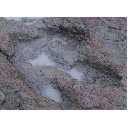
Confident attribution of bipedal tridactyl dinosaur tracks to theropods or ornithopods can be challenging. Here we describe trackways produced by tetanuran dinosaurs, previously attributed to hadrosaurs, from Coahuila State, northeastern Mexico. Multiple trackways headed in the same direction suggest gregarious behaviour in these late Campanian theropods.
PV article infos
Published in Vol 41-2 (2018)
|
PDF
|

|
Contributions à l'étude des micromammifères du gisement Miocène supérieur de Montredon (Hérault). 1- Le gisement
Published online: 30/06/1982
Keywords:
Hérault; Late Miocene; Micromammals; Montredon
https://doi.org/10.18563/pv.12.3.75-79
Abstract
La localité fossilifère du Puech de Montredon, désignée plus communément sous le nom de Montredon, est située sur la commune de Montouliers (Hérault) à quelques 300 mètres de la limite avec le département de l'Aude. Elle a été découverte en 1845 par Narbonne, Directeur des Mines de La Caunette, et de très nombreux restes de vertébrés continentaux y ont été extraits. La plus ancienne mention de ce gisement dans la littérature semble être celle de Lartet (1859) qui signale que "M. Jourdan, de Lyon, a constaté à Montredon, près de Bize (Aude), l'association des restes de Dinotherium avec l'Hipparion".
PV article infos
Published in Vol. 12, Fasc. 3 (1982)
|
PDF
|
|
New remains of the very small cuckoo, Chambicuculus pusillus (Aves, Cuculiformes, Cuculidae) from the late Early/early Middle Eocene of Djebel Chambi, Tunisia
Published online: 15/02/2016
Keywords:
Cuckoos; Eocene; Fossil bird
https://doi.org/10.18563/pv.40.1.e2
Abstract
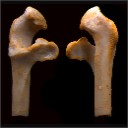
Abstract: A very tiny cuckoo, Chambicuculus pusillus, was recently described after a few fragments of tarsometatarsi from the late Early/early Middle Eocene of Djebel Chambi, Tunisia. New remains, notably a coracoid, confirm the attribution of this genus to the recent family Cuculidae. This coracoid shows a very elongate and strap-like processus procoracoideus. This morphological feature is otherwise only known in the family Cuculidae. The characteristics of the coracoid and tarsometatarsi show that Chambicuculus is morphologically more advanced over the other stem cuculids described in Europe and North America. Chambicuculus is the oldest Cuculidae known so far.
PV article infos
Published in Vol.40-1 (2016)
|
PDF
|

|
Contribution à l'étude des genres Gliravus et Microparamys (Rodentia) de l'Eocène d'Europe.
Published online: 15/03/1971
Keywords:
Eocene; Gliravus; Microparamys; Rodentia
https://doi.org/10.18563/pv.4.4.97-135
Abstract
Based on material found in about 15 localities the relationships of the genera Microparamys and Glirarus have been studied. One new genus, two subgenera and three species [Microparamys (Sparnacomys) chandoni n. subgen. and n. sp., Microparamys (Pantrogna) russelli n. subgen., Eoglirarus wildi n. gen. and n. sp., Gliravus meridionalis n. sp.] as well as the publication
of numerous new facts concerning species previously reported, support the phyletic scheme proposed. The latter shows that the origin of the Gliravinae is to be sought among the very small and still rather poorly known Microparamys species of the early Eocene. Gliravus: robiacensis can be considered as the common ancestor to different lineages not only of Glirarus but also of modern genera (Peridyromys, Glirudinus and Microdyromyx), at the origin of which Peridyromys micio, although difficult to interpret, occupies a similar place.
The stratigraphic conclusions permit more detail in the chronologie succession of the localities studied. The paleoecologic and biogeographic aspects lead one to the problem of the oligocene "Grande Coupure" through the study of this group.
PV article infos
Published in Vol. 04, Fasc. 4 (1971)
|
PDF
|
|
New Late Miocene plecotine bats (Chiroptera, Vespertilionidae: Plecotini) from Gritsev, Ukraine
Published online: 07/03/2019
Keywords:
Barbastella; bats; late Neogene; Mammalia; Plecotus
https://doi.org/10.18563/pv.42.1.e2
Abstract
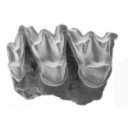
The Late Miocene site of Gritsev (MN 9, Ukraine) has yielded a very rich bat fauna, the remains of which are well preserved. Compared to other Neogene bat assemblages of Europe, the Gritsev bat community is unique in preserving plecotine bats, which are rare from Neogene sites. Some peculiar and new bat species, including a large plecotin Otonycteris, already were described from the Gritsev mammal site. Here we report new records of small plecotin bats from Gritsev, including a new taxon, Barbastella maxima nov. sp. This is the earliest reliable fossil record of this genus and it differs from more recent species of Barbastella in being considerably larger. The evolutionary patterns in the odontology within the tribe Plecotini, supported by biostratigraphical distribution of fossil records of Plecotus are discussed. The morphological peculiarities of the new fossils of plecotine bats from Gritsev are discussed in connection with its possible taxonomical affinity.
PV article infos
Published in Vol 42-1 (2019)
|
PDF
|

|
Osteology of Prolagus sardus, a Quaternary Ochotonid (Mammalia, Lagomorpha).
Published online: 21/06/1969
Keywords:
Lagomorpha; Ochotonidae; Prolagus
https://doi.org/10.18563/pv.2.4.157-190
Abstract
Prolagus sardus is the last representative of the diverse lineages of European endemic ochotonids. It is also the most abundant in the collections. The previous studies made of this species have established rather well its dental morphology, its phylogenetic position, its geographic and temporal distribution, and its intraspecific individual variation. On the other hand, no osteologic study has fully utilized the superb material from Corsica and Sardinia collected by Forsyth Major.
Nearly all of the parts of the skeleton are represented in this material; they are here described and figured. Comparisons are made with Ochotona, the only surviving genus of the family, as well as with the living leporids, in particular Romerolagus, Oryctolagus and Lepus. A brief examination of the dentition reveals some particular characters of the incisors. The osteologic study allows limited interpretations to be advanced concerning the posture, mastication. locomotion and some other adaptive features of P. sardus.
P. sardus appears as an incontestable ochotonid, but it differs from Ochotona by some characters which are found in leporids. Certain of the characters are here judged primitive for lagomorphs. The genus Ochotona therefore can no longer be considered as the image of a primitive lagomorph, because in spite of the lack of cursorial adaptations which differentiate it from leporids, it presents other specializations which are common to it alone.
PV article infos
Published in Vol. 02, Fasc. 4 (1969)
|
PDF
|

|
Nouvelles espèces de Dendromus (Rongeurs,Muriodea) à Langebaanweg (Pliocène,Afrique du Sud) conséquences stratigraphiques et Paléoecologiques
Published online: 20/05/1994
Keywords:
Dendromurinae; Paleoecology; Pliocene; Rodents; South Africa; Stratigraphy
https://doi.org/10.18563/pv.23.1-4.153-176
Abstract
New Dendromus species (Rodentia, Muroídea) from Langebaanweg (Pliocene, South Africa). Stratigraphical and paleoecological consequences.
Two new species of Dendromus are described from the Langebaanweg site which precises the evolutionary trend among this genus in South Africa and gives further paleoenvironmental indications. Two evolutionary stages are described: D. darti nov. sp. shows low-crowned molars with bunodont cusps and its more closest relative would be D. melanozis from the Cape region. On the contrary, D. averyi nov. sp. is more lophodont and is better related with the modem D. melanotis. Both species are at a less evolved stage than the Dendromus sp. from Laetolil Beds at Laetoli. The Langebaanweg deposits cannot still be dated by biostratigraphy but they clearly cannot be older than the basis of Pliocene times. The association of Dendromus and Mystromys in the same levels indicates a grassland environment with woodland patches as well as probable swamps.
PV article infos
Published in Vol. 23, Fasc. 1-4 (1994)
|
PDF
|

|
Modification du statut générique de quelques espèces de sélaciens crétacés et tertiaires
Published online: 15/12/1980
Keywords:
Cretaceous; Selachians; Tertiary
https://doi.org/10.18563/pv.10.1.29-42
Abstract
The re-examination of six fossil selachian species has involved the creation of six new genera: Squatiscyllium, Protolamna, Parotodus, Abdounia, Physogaleus, Hypolophodon and of one new species : Prozolamna sokolovi. The modification of the generic statute of these species allows to clarify their systematic position and to define their relationships at a familial level.
PV article infos
Published in Vol. 10, Fasc. 1 (1980)
|
PDF
|

|
Les Bovidae (Artiodactyla, Mammalia) du Miocène moyen de la formation Hofuf (Province du Hasa, Arabie Saoudite).
Published online: 30/12/1983
Keywords:
Biostratigraphy; Bovidae; Middle Miocene; Palaeogeography; Saudi Arabia
https://doi.org/10.18563/pv.13.5.157-206
Abstract
The study of the bovids from Al Jadidah (Hofuf Formation, Saudi Arabia) confirms that the fauna comes from a pre-Hipparion level. The Al Jadidah age is close to that of Fort Ternan (14 m.y.) and Beni Mellal, but cannot be older than that of Fort Ternan. The age of the Hofuf Formation is close to but slightly older than the oldest deposits of the Ngorora Formation (Kenya). 7 to 9 species have been recorded, of which 2 to 4 remain indeterminate. If the great specific diversity of te bovids from this locality gives evidence of immigrations from anterior Asia (Turkey) (e.g. Pachytragus Iigabuei sp. nov.), the bovid assemblage of Al Jadidah results in fact from a double influence: from the anterior Asia and mainly from Africa (e.g. the Caprotragoides lineage and the Neotragini? Homoiodorcas). The Al Jadidah bovids reflect, on the whole, the predominant character of open to very open environment, which supports the conclusions drawn from our two preliminary studies.
PV article infos
Published in Vol. 13, Fasc. 5 (1983)
|
PDF
|

|
New records of the pantodont Archaeolambda from the Paléocène of southern China
Published online: 16/12/1996
Keywords:
Archaeolambda; China; Paleocene; Pantodont
https://doi.org/10.18563/pv.25.2-4.125-132
Abstract
Two new finds of pantodont materials from southern China, assigned to Archaeolambda, are described in this paper. One, a new species from the Nanxiong Basin, Guangdong Province, is similar to Alcidedorbignya inopinata from the early Paleocene of Tiupampa, Bolivia in size. It provides reliable evidence of the occurrence of Archaeolambda in the early-middle Paleocene of southern China. The second find includes specimens of Archaeolambda sp. cf. A. planicanina from the ?late Paleocene of Hengyang Basin, Hunan Province, which are the first record of a fossil mammal from the area near Hengyang city. The only vertebrate fossils previously found here were two genera of crocodiles discovered in 1938. This find sheds new light on the local biostratigraphy.
PV article infos
Published in Vol. 25, Fasc. 2-4 (1996)
|
PDF
|

|
Sur les Condylarthres Cernaysiens Tricuspiodon et Landenodon (Paléocène supérieur de France)
Published online: 01/10/1980
Keywords:
Arctocyonidae; Condylarths; Late Paleocene; Tricuspiodontidae
https://doi.org/10.18563/pv.9.ext.127-166
Abstract
The numerical importance of the Condylarths in the Cernaysian fauna is discussed. The Condylarth family, Tricuspiodontidae, is reviewed in the light of new material and its close relationships to the Phenacodontidae is suggested ; one new species is recognized : Tricuspiodon sobrinus. European Arctocyonidae are reviewed and the recentclassification of Van Valen is briefly commented on. Also, the arctocyonine Landenodon is described for the first time in Thanetian (Late Paleocene) sediments ; two new species are proposed : T. lavocati and T. phelizoni.
PV article infos
Published in Vol. 9, Ext (1980)
|
PDF
|

|
A new rodent from Quaternary deposits of the Canary Islands and its relationships with Neogène and recent murids of Europe and Africa.
Published online: 15/12/1988
Keywords:
Canary Islands; Holocene; Island evolution; Muridae; PHYLOGENY; Rodents; Spain
https://doi.org/10.18563/pv.18.4.241-262
Abstract
A peculiar new rodent, Malpaisomys insularis nov. gen., nov. sp., is described from subfossil deposits of the eastern Canary Islands. The species shows some highly specialized skull features although its molars exhibit a mixture of primitive and derived characters among which a partial stephanodonty is most notable. A comparison of the new rodent with several Miocene to Holocene Muridae shows that Malpaisomys possibly shares a common ancestor with Acomys and Uranomys.
PV article infos
Published in Vol. 18, Fasc. 4 (1988)
|
PDF
|

|
Premières données sur les rongeurs de la formation de Ch'orora (Ethiopie) d'âge Miocène supérieur. I: Thryonomyidés
Published online: 01/10/1980
Keywords:
Ethiopia; Paraulacodus; Rodents; Upper Miocene
https://doi.org/10.18563/pv.9.ext.365-374
Abstract
The genus Paraulacodus has been collected in the Ch'orora formation of Upper Miocene age, in Ethiopia. The new species, P. johanesi n. sp.. is more evolved than the previously described indian species P. indicus HINTON of the Siwalik Hills area. The morphological gap between P. johanesi and the present Thryonomys is still important.
PV article infos
Published in Vol. 9, Ext (1980)
|
PDF
|

|
Révision des Rhombodontidae (Neoselachii Batomorphii) des bassins à phosphate du Maroc
Published online: 20/05/1994
Keywords:
Batomorphii; Maastrichtian; Morocco; New taxa; Phosphate; Rbombodontidae
https://doi.org/10.18563/pv.23.1-4.1-49
Abstract
The revision of the Rhombodontidae from the Maastrichtian of Morocco led us to the description of a new species: Rhombodus andriesi.
The biometrical study of populations of R. binkhorsti and R. microdon, species sometimes considered as synonymous, supports the conclusion that they represent two distinct species and not young and adult specimens of a single species. The stratigraphical range of these two species confirms this
result.
The reexarnination of type-series studied by C. Ararnbourg led us to revise the generic status of Rhombodus bondoni which is now ranged, because his dental features, in the new genus Dasyrhombodus showing a less derived dentition than Rhombodus. The stratigraphical range of each species is clarified within the phosphatic series.
PV article infos
Published in Vol. 23, Fasc. 1-4 (1994)
|
PDF
|