
Abstract book of the 18th Conference of the EAVP
Pterosaurs from Coahuila
New elephant cranium from early Pliocene Ileret, Kenya
Les sélaciens du Miocène de la région de Montpellier
Muridae du Pliocène supérieur d'Espagne et du midi de la France.
Contribution à l'étude des genres Gliravus et Microparamys.
Eocene (57) , Quercy Phosphorites (38) , Systematics (32) , Rodents (29) , Mammalia (27) , Rodentia (25) , Miocene (25)
Page 9 of 19, showing 20 record(s) out of 366 total

|
Sur les Condylarthres Cernaysiens Tricuspiodon et Landenodon (Paléocène supérieur de France)Donald E. RussellPublished online: 01/10/1980Keywords: Arctocyonidae; Condylarths; Late Paleocene; Tricuspiodontidae https://doi.org/10.18563/pv.9.ext.127-166 Abstract The numerical importance of the Condylarths in the Cernaysian fauna is discussed. The Condylarth family, Tricuspiodontidae, is reviewed in the light of new material and its close relationships to the Phenacodontidae is suggested ; one new species is recognized : Tricuspiodon sobrinus. European Arctocyonidae are reviewed and the recentclassification of Van Valen is briefly commented on. Also, the arctocyonine Landenodon is described for the first time in Thanetian (Late Paleocene) sediments ; two new species are proposed : T. lavocati and T. phelizoni. PV article infos Published in Vol. 9, Ext (1980) |
|

|
Morphotypes dentaires actuels et fossiles des chiroptères vespertilionines. 2ème partie: implications systématique et phylogéniques.Henri MenuPublished online: 15/11/1987Keywords: Chiroptera; PHYLOGENY; Systematics; Vespertilionine https://doi.org/10.18563/pv.17.3.77-150 Abstract The first part of this study was devoted to a descriptive analysis of teeth morphologies among the vespertilionine bats. This leads now to a tentative synthesis, providing views on the systematics of the group. The results could be seen according to three distinct but closely related purposes : 1 - the sorting of the genera contents in order to conform the genera units to homogeneous taxa that could represent natural issues of evolutionary lineages ; 2 - the investigation of relationships between extant genera in order to infer the possibilities of common origin ; 3 - according to the preceeding items and to the observed evolutionary trends, a tentative phylogeny, modest and cautious. The contents of many genera are sorted : Leuconoe is removed from subgeneric to generic position, whereas Myotis becomes a subgenus of it ; the myotodont species are cleared away from the Pipistrellus genus ; Glischropus and Scotozous are synonymized within Pipistrellus ; Hypsugo is raised to the generic level ; some species previously ranged within Pipistrellus will form provisionally a collective group, Attalepharca nov. ; the Eptesicus genus is broken up, the excluded species being grouped within Nycterikaupius gen. nov. ; the Nycticeini tribe is defined again after exclusion of Otonycteris , Scotoecus, Scotophilus , and addition of Hesperoptenus ; the species la io and Pipistrellus tasmaniensis are removed to Eptesicus (n.s.) and Pipistrellus dormeri to Scotoecus. Groupings of genera are stated according to the main evolutionary trends of I1/. The relevance of these is often warranted by close morphologic similarities of other teeth. This leads to a recognition of the major evolutionary radiations which occurred in the group. The filiations schematized at the end of the work show the dental relationships observed between the extant genera, and could represent a phylogenic framework. Two major facts are to be underlined : 1- the early divergence of leuconoids ; 2 - the successives crossings to myotodonty from the nyctaloid flow. Fossil data from the literature are punctually and tentatively incorporated within phylogenic sketches. PV article infos Published in Vol. 17, Fasc. 3 (1987) |
|

|
Les mammifères post-glaciaires de Corse. Etude Archéozoologique.Jacques MichauxPublished online: 15/09/1989Keywords: Book review https://doi.org/10.18563/pv.19.1.45-46 Abstract Les Mammifères post-glaciaires de Corse de Jean-Denis Vigne, étudie l'évolution des mammifères en Corse depuis 7000 av. J.-C. jusqu'à aujourd'hui, en explorant leur adaptation insulaire, l'impact de l'homme sur leur extinction ou leur introduction, et les pratiques de chasse et d'élevage à travers l'analyse des ossements. PV article infos Published in Vol. 19, Fasc. 1 (1989) |
|

|
Deux nouveaux primates dans l'Oligocène inférieur de Taqah (Sultanat d'Oman): premiers Adapiformes (?Anchomomyini) de la péninsule arabique?Emmanuel Gheerbrant
Published online: 15/11/1993 |
|

|
Rongeurs muroidés du Néogène supérieur d'Afghanistan, évolution, biogéographie, corrélationsLouis D. BrandyPublished online: 30/09/1981Keywords: Afghanistan; Muroidea; Neogene https://doi.org/10.18563/pv.11.4.133-179 Abstract The rodent faunas of five afghan localities found in 1976 and 1977 (Sherullah, Ghazgay, Pul-e Charkhi, Dawrankhel 14 and 15) are studied. PV article infos Published in Vol. 11, Fasc. 4 (1981) |
|

|
Nouveaux Mammifères Eocènes du Sahara OccidentalJean SudrePublished online: 01/11/1979Keywords: Eocene; Mammals; Occidental Sahara https://doi.org/10.18563/pv.9.3.83-115 Abstract The fossil mammals collected from the Eocene of Hammada du Dra (northwest Sahara. Algeria) and two fragmentary teeth from the Lutetian of M'Bodione Dadere (Senegal) are described. PV article infos Published in Vol. 09, Fasc. 3 (1979) |
|

|
New datation of the Tafna Basin (Algeria): A combination between biochronological and magnetostratigraphical dataSalamet Mahboubi
Published online: 11/03/2015 |
|
|
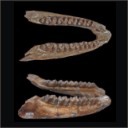
A mandible of the hyracoid mammal Titanohyrax andrewsi in the collections of the Muséum National d'Histoire Naturelle, Paris (France) with a reassessment of the speciesRodolphe Tabuce
Published online: 18/04/2016 |
|

|
Revision der Equoidea aus den Eozänen Braunkohlen des Geiseltales bel Halle (DDR).Jens L. Franzen and Hartmut HauboldPublished online: 15/04/1986Keywords: Eocene; Europe; Mammalia; Perissodactyla; Stratigraphy; taxonomy https://doi.org/10.18563/pv.16.1.1-34 Abstract The dentitions as well as one complete and several partial skeletons of Equoids from the Eocene lignite beds of the Geiseltal locality are revised. Instead of 13 species distinguished up to now 3 chronoclines with 5 species and 3 separate species are recognized (text. fig. 1). Propalaeotherium hassiacum HAUPT, 1925 is evolving into Propalaeotherium isselanum (CUVIER, 1824) between the levels of the « obere Unterkohle ›› and the « untere Mittelkohle ›› of the Geiseltal section. Propalaeotherium argentonicum GERVAIS, 1849 is shown to be present in the « untere Unterkohle ››, whereas Lophiotherium pygmaeum (DEPERET,1901) occurs in the « obere Mittelkohle ›› and in the « oberes Hauptmittel ››. Plagiolophus cartieri STEHLIN, 1904 appears during the transition from the « Mittelkohle ›› into the « Oberkohle ›› as the earliest true Palaeothere. Therefore the « Oberkohle ›› is already regarded as Upper Eocene. This is corroborated by the occurrence of a phyletic descendant of Propalaeatherium parvulum (Propalaeotherium n.sp.) in the middle and upper "Oberkohle " because this species appears otherwise for the first time at the mammal level of Lissieu. On the other hand Propachynolophus gaudryz (LEMOINE, 1878) described by Matthes (1977) from the « untere Unterkohle ›› turns out te be in fact a Phenacodont. Thus the decisive argument for classifying the « untere Unterkohle ›› as Lower Eocene has to be dropped. Biostratigraphically the « Unterkohle ›› and the «Basishauptrnittel ›› correspond with the lower Middle Eocene (mammal level of Messel), whereas the «unteres Hauptmittel ›› and the « untere Mittelkohle ›› are equivalent to the middle part of the middle Eocene (mammal level of lssel), and the « obere Mittelkohle ›› together with the « oberes Hauptmittel ›› coincide with the upper Middle Eocene (mammal level of Bouxwiller). PV article infos Published in Vol. 16, Fasc. 1 (1986) |
|

|
Les serpents des phosphorites du QuercyJean-Claude Rage
Published online: 20/12/1974 |
|

|
Sur le remplissage des "poches à phosphorite" d'Aubrelong (commune de Bach, Lot)Bernard GèzePublished online: 15/11/1974Keywords: Aubrelong; Quercy Phosphorites https://doi.org/10.18563/pv.6.1-2.21-25 Abstract L’article analyse les poches à phosphorite d’Aubrelong (Quercy), comparant les fouilles de 1937 (Éocène supérieur) et celles des années 1967-1970 (Oligocène inférieur), révélant une stratification contrastée : argiles brunes pauvres en fossiles en surface, et argiles rouges riches en phosphates et faune en profondeur. Les analyses géochimiques confirment une origine latéritique sous climat tropical humide, avec des remplissages tantôt stratifiés, tantôt chaotiques, remettant en cause l’hypothèse d’une progression chronologique uniforme des dépôts PV article infos Published in Vol. 06, Fasc. 1-2 (1974) |
|

|
Fossil snakes from the Palaeocene of Sao José de Itaborai, Brazil, Part II. BoidaeJean-Claude Rage
Published online: 28/12/2001 |
|

|
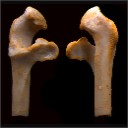
Revision of the family Cephalomyidae (Rodentia, Caviomorpha) and new cephalomyids from the early Miocene of Patagonia.Alejandro Kramarz
Published online: 30/07/2001 |
|
|
New remains of the very small cuckoo, Chambicuculus pusillus (Aves, Cuculiformes, Cuculidae) from the late Early/early Middle Eocene of Djebel Chambi, TunisiaCécile Mourer-Chauviré
Published online: 15/02/2016 |
|

|
Analysis of changing diversity patterns in Cenozoic land mammal age faunas, South AmericaLarry G. Marshall and Richard L. CifelliPublished online: 30/03/1990Keywords: Cenozoic; Chronofaunas; diversity; Equilibrium theory; Extinction; Land mammal faunas; Origination; South America https://doi.org/10.18563/pv.19.4.169-210 Abstract Comparison of various measurements of taxonomic evolution using stratigraphic range data for orders, families and genera of land mammals indicates several means by which deficiencies of the South American fossil record (e.g., presence of hiatuses, unequal temporal and geographic representation of ages, unequal systematic treatment) may be normalized, thus permitting a less distorted appreciation of diversity pattern and trend. Initial radiation of native taxa resulted in a relative equilibrium by early Eocene time. Subsequent increases in absolute diversity were apparently induced by immigration at the family level and by environmental factors at the generic level. Miocene through Pleistocene phases of faunal stability, herein characterized as chronofaunas, are punctuated by rapid turnover events resulting from a complex of factors, including adaptive radiation of immigrant taxa into unoccupied eco-space; environmental and concomitant habitat change induced by orogenic events of the Andes; and biotic interactions between native and immigrant taxa, including competition and prey naivete. The first two factors account for major faunal transitions in the South American middle and late Tertiary; immigration-induced turnover may have been of greater importance in shaping the character of the fauna upon the Great American Interchange and the arrival of man in the Neotropics PV article infos Published in Vol. 19, Fasc. 4 (1990) |
|

|
Insectivores pliocènes du Sud de la France (Languedoc-Roussillon) et du Nord-Est de l'Espagne.Jean-Yves CrochetPublished online: 31/10/1986Keywords: Biostratigraphy; Insectivora; Languedoc; Pliocene; Spain; Systematics https://doi.org/10.18563/pv.16.3.145-171 Abstract The first lists of Insectivores (Erinaceidae, Talpidae and Soricidae) from the Pliocene beds of Southern France and North-East Spain are given in this paper. The material from twelve localities is studied. These localities are geographically situated in Languedoc (Celleneuve, Vendargues, Nîmes, Sète, Balaruc 2 and Seynes), in Roussillon (Terrats, Serrats-d'en-Vacquer, Château d'eau and Mont-Hélène) and in North-East Spain (Layna, Medas Islands and Puebla de Valverde). These faunas correspond to the Early, Middle and Late Pliocene. 1 to 8 taxa are identified in these localities and 14 specific taxa are presently listed for this period in this area. Two new specific taxa are described as Galerix depereti nov. sp. from all the Early Pliocene localities in the North-Pyrenean area and as Desmanella gardiolensis nov. sp. from Balaruc 2. For this small mammals, two faunal assemblages are recognized. The first one is dated from the Early Pliocene (F 1, 2 and 3 zones in Aguilar et Michaux) and is characterized by Galerix depereti and rare and little diversified Soricids. The second one is Late Pliocene in age (zones G 2 and G 3). The fossils of the genus Talpa are relatively abundant and the Soricids are diversified and very abundant. The Middle Pliocene (zone G 1) is a transitional period. ln these faunas, most of the insectivore genera are known from the European Late Miocene beds (8 on 10). This fact demonstrates a relative continuity between the invectivore faunas from the Late Miocene to the Early Pliocene. In conclusion, somme paleoecological considerations are suggested. PV article infos Published in Vol. 16, Fasc. 3 (1986) |
|

|
Contributions à l'étude du gisement Miocène supérieur de Montredon (Hérault). Les grands mammifères. 8 - Analyse paléoécologique de la faune mammalienneSerge Legendre
Published online: 15/11/1988 |
|

|
Contributions à l'étude du gisement miocène supérieur de Montredon (Hérault). Les grands mammifères. Avant propos.Bernard SigéPublished online: 15/11/1988Keywords: Editorial; Mammalia; Montredon; Upper Miocene https://doi.org/10.18563/pv.18.ext.1-2 Abstract Le Mémoire Extraordinaire 1988 de PALAEOVERTEBRATA regroupe dix articles consacrés au gisement à mammifères du Miocène supérieur de Montredon (Hérault), connu et classique depuis la fin du siècle dernier, et auquel est lié le nom du savant paléontologue lyonnais Charles Depéret. View editorial Published in Vol. 18, Ext (1988) |
|

|
Nouvelles données sur les mammifères du Thanétien et de l'Yprésien du bassin d'Ouarzazate (Maroc) et leur contexte stratigraphique.Emmanuel Gheerbrant
Published online: 15/12/1998 |
|

|
Lower Paleogene crocodilians from Silveirinha, Portugal.Miguel T. Antunes
Published online: 15/10/2003 |
|
