|
La poche à phosphate de Ste-Néboule (Lot) et sa faune de vertebres du Ludien supérieur. 12- Fissipèdes (Carnivores)
Published online: 25/09/1978
Keywords:
Carnivora; Eocene; Quercy Phosphorites
https://doi.org/10.18563/pv.8.2-4.301-311
Abstract
Les Carnivores Fissipèdes de Sainte-Néboule appartiennent tous au genre Cynodictis et semblent constituer une population homogène. Celle-ci se distingue suffisamment des espèces déjà décrites pour constituer un taxon particulier : Cynodictis lacustris neboulensis n. s. sp. . L'étude des variations à l'intérieur de cette population nous a conduit à reconsidérer les critères utilisés pour définir les espèces existantes et à regrouper certaines d'entre elles. Il semble qu'il demeure cependant trois lignées distinctes dans le genre Cynodictis mais le matériel nous paraît encore insuffisant pour traduire cette remarque en termes de systématique.
PV article infos
Published in Vol. 08, Fasc. 2-4 (1978)
|
PDF
|

|
Les crocodiliens paléogenes du Tilemsi (Mali): un aperçu systématique
Published online: 01/10/1980
Keywords:
Crocodilians; Dyrosoridae; Eocene; Mali; Palaeocene
https://doi.org/10.18563/pv.9.ext.15-35
Abstract
Abundant crocodilian fossil remains have been collected, mainly by R. Lavocat. from several levels of the
Palaeogene of the Tilemsi valley (eastern Mali). Several dyrosaurids occur in the Palaeocene (Montian ?) : Phosphatosaurus sp., Hyposaurus bequaerti (Dollo). H. wilsoni (Swinton). H. nopesai (Swinton), Rhabdognathus rarus Swinton, R. compressus n. sp. ln the lower Eocene has been found a dyrosaurid which cannot be accurutely determined.In the middle Eocene were found a dyrosaurid, Tilemsisuchus lavocati n. g., n. sp., and an indeterminate eusuchian.
PV article infos
Published in Vol. 9, Ext (1980)
|
PDF
|

|
Mammifères de l'Ilerdien Moyen (Eocène inférieur) des Corbières et du Minervois (Bas-Languedoc, France). Systématique, Biostratigraphie, Corrélations.
Published online: 25/01/1991
Keywords:
Biostratigraphy; Corbières; correlations; Early Eocene; Ilerdian; Mammalia; Minervois; Paleobiogeography; Southern France
https://doi.org/10.18563/pv.20.2-3.55-144
Abstract
Mammal-bearing localities have been discovered in the marine and lacustrine series of the middle Ilerdian (Lowermost Eocene) from Southem France (Minervois and Corbières). In the localities of Fordones, Monze, Fournès, and La Gasque, thirty mammal species have been identified. Among others, they include ischyromyid rodents (Microparamys and Pseudoparamys), paromomyid and adapid primates (Arcius and Donrussellia), new insectivores, condylarths, and a dyspternine pantolestid. These faunas provide new informations on the early Eocene Mesogean faunas of Rians and Palette. The assemblages of primates and rodents from Fordones support good correlations with Palette which was recently placed near the standard-level of Dormaal (MP 7). In fact, Palette and Fordones could be even older than Dormaal. Consequently, there seems to be a relatively important temporal gap between the late Paleocene of Cernay and the Sparnacian of Dormaal. This gap could be partly filled with the Mesogean faunas of Palette, Fordones, and Silveirinha. On the basis of these new mammal faunas the marine middle Ilerdian is proved to be older than the Cuisian stage of the Paris Basin. With regards to the position of the Fordones fauna at the top of the NP 10 calcareous nannoplankton biozone, the westem European paleomammalogists Paleocene/Eocene boundary could be situated between the NP 9 and NP 10 biozones.
PV article infos
Published in Vol. 20, Fasc. 2-3 (1991)
|
PDF
|

|
The Gliridae (Mammalia) from the oligocene (MP24) of Gröben 3 in the folded molasse of southern Germany
Published online: 28/12/2001
Keywords:
Biostratigraphy; Cyrena Beds; folded molasse; Germany; Gliridae; level MP 24; Mammals; Oligocene; Palaeoecology
https://doi.org/10.18563/pv.30.3-4.151-187
Abstract
This study describes four taxa of Gliridae from the Oligocene mammal locality Gröben 3: Gliravus tenuis BAI-ILO, 1975, Bransatoglis micio (MISONNE, 1957), B. planus (BAHLO, 1975) and B. heissigi n. sp. Gliravus tenuis from Gröben 3 is somewhat more advanced than the type population found in Heimersheim. This confirms previous research suggesting that Gröben 3 should be dated earlier than Heimersheim (MP 24). The first documented occurrence of B. mício around level MP 24 was found in Gröben 3. An abundance of tooth material from B. planus in Gröben 3 makes it possible, for the first time, to observe evolutionary stages within this species from MP 21 until MP 28. B. heissigi n. sp. is restricted to level MP 24. This species is located between B. mísonnei (MP 20 - 23) and Microdyromys praemurinus (MP 25 - 28). Within the lineage Bransatoglis bahloi - B. misonnei - B. heissigi, a decrease in size is noticeable.
PV article infos
Published in Vol. 30, Fasc. 3-4 (2001)
|
PDF
|

|
Les rongeurs de l'Eocène inférieur et moyen d'Europe Occidentale; Systématique, phylogénie, biochronologie et paléobiogéographie des niveaux-repères MP 7 à MP 14.
Published online: 15/12/1999
Keywords:
Biochronology; Early and Middle Eocene; Gliridae; Ischyromyidae; Mammalia; MP Scale; New Genus and Species; Palaeogeography; PHYLOGENY; Rodents; Theridomyidae; Western Europe
https://doi.org/10.18563/pv.28.2-4.89-351
Abstract
Fourteen distinct phyletical lineages which belong at least in three families: Ischyromyidae ALSTON, 1876, Gliridae THOMAS, 1896 and Theridomyidae ALSTON, 1876, have been identified after the study of more than 3600 rodent dental remains from about twenty Early and Middle Eocene european localities. A systematical and phylogenetical revision of these rodents has been achieved. Nearly all the specific and generic diagnosis are emended. Several new combinations and synonymies are proposed. Four new species and two new genera, Euromys nov. (Ailuravinae) and Hartenbergeromys nov. (Microparamyini), are named and described. Euromys nov. gen. is known by three distinctive ypresian (MP 7 to MP 10 european reference levels) chronospecies. This new lineage is thought to be the direct ancestor of Meldimys MICHAUX, 1968 and Ailuravus RUTIMEYER, 1891. A new species of the genus Plesiarctomys BRAVARD, 1850, Pl. lapicidinarum from Condé-en-Brie (MP 8-9 reference level), allows to relate the Plesiarctomys lineage to the Pseudoparamys MICHAUX, 1964 one. The taxa Sparnacomys HARTENBERGER, 1971, Pantrogna HARTENBERGER, 1971, and Corbarimys MARANDAT, 1989 are erected to genus rank; the last one is not thought to be an Ischyromyidae. A new chronospecies of Pantrogna, P. marandati nov. sp. from the locality of Prémontré (MP 10 reference level), is described. This lineage is at the origin of two others, namely Masillamys TOBIEN, 1954, including M. mattaueri (HARTENBERGER, 1975) nov. comb. (MP 10 reference level), and Hartenbergeromys nov. gen., known from MP 10 (H. hautefeuillei nov. sp.) and MP 11 (H. parvus TOBIEN, 1954) reference levels. The phylogenetical position of Hartenbergeromys nov. gen., at the origin of the european family Theridomyidae, is discussed. The systematical and phylogenetical status of two probable Paramyinae, "Paramys" woodi MICHAUX, 1964 and an unnamed genus and species, are discussed. New populations of the primitive Gliridae Eogliravus HARTENBERGER, 1971 and of the primitive Theridomyidae Protadelomys HARTENBERGER, 1968, are described and assigned to previously known species.
PV article infos
Published in Vol. 28, Fasc. 2-4 (1999)
|
PDF
|

|
Les mammifères Montiens de Hainin (Paléocène moyen de Belgique) Part1: Multituberculés.
Published online: 01/11/1979
Keywords:
Belgium; Hainin; Mammals; multituberculates; Paleocene
https://doi.org/10.18563/pv.9.4.117-131
Abstract
The Montian locality of Hainin (Hainaut, Belgium) yielded about twenty teeth of Multituberculates. They are very peculiar forms, showing no affinities, at the generic level, with those hitherto known from North America, Asia and Europe. They are referred to the new taxa Boffius splendidus nov. gen., nov. sp., Hainina belgica nov. gen., nov. sp., and H. godfriauxi nov. gen., nov. sp. They expose some common features, such as the advanced type of first upper molar. possessing at least three complete rows of cusps. Because of this, and also of the upper premolar reduction, Boffius splendidus appears as the most specialized form within the Ptilodontoidea suborder.
Several other characters of Hainina seem to be less advanced, such as the great number of upper premolars and the simple cusp-formula of the first lower molar.
Till now, only H. godfriauxi has been recovered within the Thanetian fauna from Cemay-les-Reims, where it is very poorly documented.
PV article infos
Published in Vol. 09, Fasc. 4 (1979)
|
PDF
|

|
Les vertébres dévoniens de la Montagne Noire (Sud de la France) et leur apport à la phylogénie des pachyosteomorphes (Placodermes Arthrodires).
Published online: 15/05/1987
Keywords:
Devonian; Montagne Noire; New taxon; PHYLOGENY; Placoderms; Stratigraphy; Vertebrate
https://doi.org/10.18563/pv.17.1.1-26
Abstract
Several different taxa of jawed vertebrates are reported for the first time from the Devonian of south-eastern Montagne Noire, France. Besides some undeterminable fragments of placoderm fishes from the Pragian and Lower Emsian, the material from the Upper Devonian is mainly represented by Melanosteus occitanus gen. and sp. nov. (Frasnian) and Thoralodus cabrieri LEHMAN, 1952 ("Famennian"). The good state of preservation of Melanosteus allows a detailed anatomical study leading to a phylogenetic analysis of the selenosteid pachyosteomorphs.
PV article infos
Published in Vol. 17, Fasc. 1 (1987)
|
PDF
|

|
Première occurrence d'un mégachiroptère ptéropodidé dans le Miocène moyen d'Europe (Gisement de Lo Fournas-II, Pyrénées-Orientales, France).
Published online: 31/10/1986
Keywords:
Europe; First occurence; Megachiroptera; Middle Miocene; Teeth
https://doi.org/10.18563/pv.16.3.173-184
Abstract
A lot of isolated teeth of a pteropodid fruit bat has been recently found within an assemblage of micromammals recovered from a karstic fissure filling named Lo Fournas-Il near the locality of Baixas (Pyrénées-Orientales, France). The fauna is Middle Miocene Serravallian age. The fossil fruit bat appears morphologically close to Rousettus; its size is that of a recent medium-sized fruit bat. While the fruit bats are very poorly known as fossils, this discovery shows that one of their recent types of dentitions was perfectly established by Middle Miocene times, and supports the presumed long geologic story of the suborder. One of the major invasions of the Old World fruit bats, supposed originated from SE Asia, reached up to Europe. A suborder unit is added to the miocene fauna of this continent.
PV article infos
Published in Vol. 16, Fasc. 3 (1986)
|
PDF
|

|
New murids and gerbillids (Rodentia, Mammalia) from Pliocene Siwalik sediments of India.
Published online: 15/12/1997
Keywords:
Dental morphology; evolution; new species of murids and gerbillids; phylogenetic relationships; Systematics
https://doi.org/10.18563/pv.26.1-4.129-165
Abstract
Murids and gerbillids (Rodentia, Mammalia) recovered from four Upper Siwalik localities; Moginand (around 3.5-4.5 m.y.), Kanthro (around 2.5 m.y.), Ghaggar (around 2 m.y.) and Nadah (around 1.8-2 m.y.) are described herein. A comparison of Mus linnaeusi sp. nov. reveals its close relationship towards the house mouse Mus musculus. In contradiction to earlier proposals that Golunda migrated to the Indian subcontinent from Africa sometime during Late Pliocene, it is suggested here that Golunda (in the form of Golunda tatroticus sp. nov.) evolved from Parapelomys robertsí of Late Miocene deposits of Siwaliks. Golunda tatroticus sp. nov. exhibits a progressive relationship to the extant Indian Bush Rat Golunda ellioti through Golunda kelleri and Golunda sp. Tatera pinjoricus sp. nov. is considered here to be a link between the extinct Abudhabia kabulense and the extant Tatera indica.
PV article infos
Published in Vol. 26, Fasc. 1-4 (1997)
|
PDF
|

|
Cervus elaphus rossii (Mammalia, Artiodactyla), a new endemic sub-species from the Middle Pleistocene of Corsica
Published online: 28/12/2001
Keywords:
Cervus elaphus; Corsica; Endemism; Pleistocene
https://doi.org/10.18563/pv.30.3-4.189-213
Abstract
Several endemic deer remains from the Middle Pleistocene deposits of the Castiglione cave (Oletta, Haute-Corse) are examined here. A morphometric analysis allows to relate them to a new insular subspecies Cervus elaphus rossii. The bones were compared with those of the mainland early Middle Pleistocene subspecies Cervus elaphus acoronatus Beninde and the European species Cervus elaphus Linné (Late Middle Pleistocene and Upper Pleistocene forms (continental and insular)). The Castiglione fossil shows peculiar morphofunctional features in its appendicular skeleton suggesting a morphological convergence with certain Bovidae.
PV article infos
Published in Vol. 30, Fasc. 3-4 (2001)
|
PDF
|

|
Stratigraphy and Oligocene-Miocene mammalian biochronology of the Aktau Moutains, Dzhungarian Alatau Range, Kazakhstan
Published online: 16/12/1996
Keywords:
Dzhungarian Alatau; Kazakhstan; Lithologic correlation; Mammalian biochronology; Miocene; Oligocene; Stratigraphy
https://doi.org/10.18563/pv.25.2-4.141-174
Abstract
Stratigraphic studies in the Aktau Mountains bordering the Dzhungarian Alatau Range in southeastern Kazakhstan have included mapping of Tertiary lithostratigraphic units, documentation of fossiliferous deposits, correlation of sections, etc. These investigations have led in turn to revised interpretation of the Tertiary geology of the area. The Tertiary sequence in the Aktau Mountains is represented by three lithostratigraphic units (in ascending order): (1) the middle Eocene Akbulak Formation; (2) the Oligocene Aktau Formation with a lower member including white quartz sands that contain fossil mammals, and an upper member including red-colored clays and sandstones, brick red clays, an anhydrite and gypsum clayey horizon, and bright brown-red clays; and (3) the upper Oligocene-Miocene Chul'adyr Formation with a lower member of greenish and yellowish conglomerates and gritstones, a middle member including grayish and yellowish sands and gritstones, and an upper member including brown and red clays and carbonate- and anhydrite-rich clays. The Aktau and Chul”adyr Formations represent separate cycles of sedimentation. Mammalian biostratigraphy and biochronology of the three vertebrate faunas in Aktau Mountains are reviewed. The mammalian fauna from white sands of the lower Aktau Formation is small but includes Ardynia and is thought to be early Oligocene in age. The mammalian fauna from conglomerates and gritstones of the lower member of the Chul”adyr Formation is also small but includes Paraceratherium and is thought to be late Oligocene in age. The mammalian fauna from sands of the middle member of the Chul'adyr Formation is extensive, with micro- and macrofauna attributed to Neogene mammal zones MN4 to MN 6, indicating a latest early Miocene to earliest middle Miocene age (Orleanian-Astaracian). Most genera of middle Chul”adyr mammals are known from the middle Miocene Shanwang faunas of China and from the Castelnau-d”Arbieu faunal assemblage (MN4-MN6) of southwestern France.
PV article infos
Published in Vol. 25, Fasc. 2-4 (1996)
|
PDF
|

|
Recherches de mammifères paléogènes dans les départements de l'Aisne et de la Marne pendant la deuxième moitié du vingtième siècle
Published online: 16/12/1996
Keywords:
Biochronology; Eastern Paris Basin; Fossil localities; Mammals; paleoenvironments; Paléogène; Paleogeography
https://doi.org/10.18563/pv.25.2-4.83-113
Abstract
A brief historical account of fossil vertebrate discoveries in the Eastern part of the Paris Basin between the beginning of the nineteenth century and 1950 is given. Other localities discovered since then are presented. A reconstruction of past landscapes is briefly elaborated. A biozonation based on mammals is proposed, from the Late Thanetian to the Middle Bartonian. Paleogeographical considerations are added. Suggestions regarding the search for new marnmal localities are made.
PV article infos
Published in Vol. 25, Fasc. 2-4 (1996)
|
PDF
|

|
Rongeurs Miocènes dans le Valles-Penedes 2 : Les rongeurs de Castell de Barbera
Published online: 20/04/1979
Keywords:
Castell de Barbera; Miocene; Rodents; Valles-Penedes
https://doi.org/10.18563/pv.9.1.17-32
Abstract
The rodent-fauna (Cricetidae and Gliridae) recently found at Castell de Barbera (Spain) is similar to those from the other locslities of the Valles - Penedes - Can Ponsic 1 and Can Llobateres - : same composition and similar evolutionary level of the different species. On the other hand this fauna is different from those of Upper Vindobonian and Vallesian localities of the Calatayud - Teruel area. Castell de Barbera has an intermediate chronological position between the localities of Anwil (Switzerland) and Can Ponsic 1. It is still not possible to validate or invalidate the initial attribution based on absence of Hipparion of Castell de Barbera to the Upper Vindobonian.
PV article infos
Published in Vol. 09, Fasc. 1 (1979)
|
PDF
|

|
Physogaleus hemmooriensis (Carcharhinidae, Elasmobranchii), a new shark species from the early to middle Miocene of the north sea basin.
Published online: 15/10/2006
Keywords:
Carcharhinidae; Early Miocene; Elasmobranchii; Hemmoorian; new species; North Sea Basin; Physogaleus
https://doi.org/10.18563/pv.34.e14
Abstract
A new carcharhinid shark species, Physogaleus hemmooriensis sp. nov., is described from the Lower Hemmoorian (Behrendorfian, late Burdigalian, early Miocene) of Werder, Lower Saxony, Germany. P. hemmooriensis also occurs in the Edegem and Antwerpen Sands Members of the Berchem Formation, Belgium, and in the Miste Bed, Aalten Member of the Breda Formation, The Netherlands, which have an early to middle Miocene age. In the Western Atlantic region, the taxon is present in the early Miocene Calvert Formation of Delaware, U.S.A, which is largely contemporaneous with the Hemmoorian.
PV article infos
Published in Vol. 34, Fasc. 1-2 (2006)
|
PDF
|
|
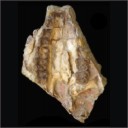
A new species of Propalaeotherium (Palaeotheriidae, Perissodactyla, Mammalia) from the Middle Eocene locality of Aumelas (Hérault, France).
Published online: 24/05/2016
Keywords:
Eocene; new species; Palaeotheriidae; Propalaeotherium
https://doi.org/10.18563/pv.40.2.e1
Abstract
A new Propalaeotherium species, clearly distinct from the genus Eurohippus, is described. It is characterized by having a similar size as P. voigti from the German Geiseltal localities (MP 11 to MP 13 reference-level), but differs in several features suggesting a slighty more derived morphology. It presents indeed less brachyodont crowns with less prominent and less elevated cingula, slightly larger relative surface of premolars, and a more marked metaconid splitting on cheek teeth. This new species is unknown from other European localities except the nearby Saint-Martin de Londres locality which has been considered older than the MP 13 level.
PV article infos
Published in Vol.40-2 (2016)
|
PDF
S.I. Data
|
|
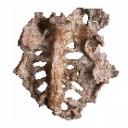
New remains of the giant bird Gargantuavis philoinos from the Late Cretaceous of Provence (south-eastern France)
Published online: 27/08/2015
Keywords:
Aves; Gargantuavis; Late Cretaceous; Pelvis; South-eastern France
https://doi.org/10.18563/pv.39.2.e3
Abstract
Two incomplete pelves of the giant bird Gargantuavis philoinos are described from Late Cretaceous deposits at Fox-Amphoux (Var, south-eastern France). They consist of synsacra with attached parts of the ilia. One of them has undergone considerable dorsoventral compression, which makes it very similar in appearance to the holotype pelvis of Gargantuavis philoinos from Campagne-sur-Aude (Aude, southern France). The second specimen has suffered some lateral distortion but is uncrushed dorsoventrally. Because of this, its avians characters (including an arched synsacrum and widespread pneumatisation) are especially clear. These new specimens confirm the avian nature of Gargantuavis and reveal new details about its pelvic anatomy, but provide little new evidence about its systematic position within Aves. The geographical distribution and general rarity of Gargantuavis are discussed.
PV article infos
Published in Vol.39-2 (2015)
|
PDF
|

|
Les rongeurs du Miocène moyen et supérieur du Maghreb
Published online: 15/05/1977
Keywords:
Neogene; North Africa; Rodentia
https://doi.org/10.18563/pv.8..1.1-166
Abstract
The Faunas of Rodents from seven north-african fossiliferous beds distributed from the Middle up to the Uppest Miocene are studied. One genus, seventeen species, one subspecies described are new.
A detailed description is given of the evolution of the numerous specific lines, systematic groups and communities. The evidence of the strong endemism of the North African faunas of that time compared with those of Europe as well as of Tropical Africa is clearly shown. Special relationships with Asia clearly also appear, mostly in the Middle Miocene and the beginning of the Upper Miocene.
Using the specific lines with a biostratigraphic purpose gives the opportunity to establish a biochronological scale for the continental formations of the Maghreb. This scale is calibrated by a few absolute datations. These datations, as well as the stratigraphical study of several fossiliferous localities have given the possibility to establish precise correlations with the corresponding scales of Europe and of Tropical Africa, as well as with the marine formations of the Neogene of occidental Mediterranean sea.
The paleoclimatic data connected with this period in North Africa are explained and the contribution of the micromammals is discussed.
PV article infos
Published in Vol. 08, Fasc. 1 (1977)
|
PDF
|

|
Rongeurs du Miocène supérieur de Chorora, Ethiopie: Murinae, Dendromurinae et conclusions.
Published online: 30/07/2001
Keywords:
Ethiopia; Late Miocene; Muridae; Rodentia
https://doi.org/10.18563/pv.30.1-2.89-109
Abstract
The subfamilies Murinae and "Dendromurinae" both include 4 species at Chorora. Among the former, while Preacomys nov. gen. seems to be a forerunner of Acomys, the affinities of the remaining, poorly known taxa, are more difficult to evaluate. The bulk of the fauna, remarkably, consists of Dendromurines. Their similarities with those of Ngorora tends to pull the site back in time, but the large size and diversity of Murines fit better an age more recent than the very beginning of the Late Miocene.
PV article infos
Published in Vol. 30, Fasc. 1-2 (2001)
|
PDF
|

|
Le genre Mesembriacerus (Bovidae, Artiodactyla, Mammalia) : un Oviboviné primitif du Vallésien (Miocène supérieur) de Macédoine (Grèce)
Published online: 15/12/1984
Keywords:
Bovidae; Cladistics; Late Miocene; Ovibovinae; Vallesian
https://doi.org/10.18563/pv.14.4.201-223
Abstract
The bovid Mesembriacerus melentisi, the numerous skulls, teeth and limb bones of which are described from the locality Ravin de la Pluie (Macedonia, Greece), bears some features which allow us to put it in the tribe ovibovini (Ovibovinae) with several other Miocene genera and the Recent one Ovibos. A cladogram gives the phyletic relationships within this tribe. It shows that Mesembriacerus which is one of the oldest genera, is also the most primitive. The limb bones are as elongated as those of Recent cursorial bovids and they show, as does the bulk of the fauna, an open environment for the locality.
PV article infos
Published in Vol. 14, Fasc. 4 (1984)
|
PDF
|

|
Avant-propos
Published online: 16/12/1996
Keywords:
D.E.Russell
https://doi.org/10.18563/pv.25.2-4.61-62
Abstract
Le présent volume est l'aboutissement d'un projet né il y a presque cinq ans. En décembre 1991, l'un d'entre nous (MG) prenait des contacts en vue de proposer un symposium sur les mammifères fossiles, dédié à D.E. Russell, dans le programme du 4e Congrès de la European Society for Evolutionary Biology. Ce congrès, baptisé "Evolution 93", devait se tenir à Montpellier en août 1993. Son Comité d'Organisation, animé par F. Catzeflis, recherchait des organisateurs de symposiums. L'idée fut acceptée avec enthousiasme par le second d'entre nous (PDG), et le titre de notre Symposium fut précisé: " Palaeobiology and Evolution of Early Cenozoic Mammals - A Symposium in Honor of D.E. Russell". Le projet fut formellement accepté par le Comité d'Organisation en avril 1992.
PV article infos
Published in Vol. 25, Fasc. 2-4 (1996)
|
PDF
|