
Abstract book of the 18th Conference of the EAVP
Pterosaurs from Coahuila
New elephant cranium from early Pliocene Ileret, Kenya
Les sélaciens du Miocène de la région de Montpellier
Muridae du Pliocène supérieur d'Espagne et du midi de la France.
Contribution à l'étude des genres Gliravus et Microparamys.
Eocene (57) , Quercy Phosphorites (38) , Systematics (32) , Rodents (29) , Mammalia (27) , Rodentia (25) , Miocene (25)

|
Reflections on some Russian eotheriodonts (Reptilia, Synapsida, Therapsida)Denise Sigogneau-Russell and P. K. TchudinovPublished online: 28/02/1972Keywords: Reptilia; Russia; Synapsida; Therapsida https://doi.org/10.18563/pv.5.3.79-109 Abstract As a result of the enrichment of eotheriodont material by one of us (P.K.T.), these specimens (essentially Biarmosuchur and Eotitanosuchur) are reexamined and refigured. A reevaluation of their particularities supports the distinction of two families, for which new diagnoses are proposed. This leads us to discuss the affinities of these families, with respect to the sphenacodonts on one hand, and to the South African primitive theriodonts on the other (gorgonopsids and ictidorhinids). This study contains inherent paleogeographic consequences which are considered in conclusion. PV article infos Published in Vol. 05, Fasc. 3 (1972) |
|

|
Les pantolestidés (Mammalia, Pantolesta) de l'Eocène inférieur de Prémontré (Aisne, France).Richard SmithPublished online: 30/07/2001Keywords: France; Mammals; Pantolestids; Ypresian https://doi.org/10.18563/pv.30.1-2.11-35 Abstract Study of pantolestid mammals from the late Ypresian locality of Prémontré (reference level MP 10) allows the recognition of three genera: Palaeosinopa. Pantolestes and Premontrelestes n. gen. Pantolestes, up to now only recorded from North America, is represented by P. sabatieri n. sp. Premontrelestes n. gen., represented by the type species P. duchaussoisi n. sp., is compared with Pantolestes and Buxolestes. The latter, known from middle Eocene sites in Europe, has not been recognized at Prémontré. Two other taxa, the first of which is close to Pantolestes and the second of Premontrelestes n. gen. are left in open nomenclature. PV article infos Published in Vol. 30, Fasc. 1-2 (2001) |
|

|
Eléments nouveaux sur l'évolution des genres Eucricetodon et Pseudocricetodon (Eucricetodontinae, Rodentia,Mammalia, de l'Oligocène d'Europe Occidentale.Bernard ComtePublished online: 01/07/1985Keywords: evolution; Occidental Europe; Oligocene; Rodentia; Systematics https://doi.org/10.18563/pv.15.1.1-68 Abstract The review of material recently collected in the new localities from the “Phosphorites du Quercy", and different localities from the South of France, bring new informations on the genus Eucricetodon THALER. 1966, and Pseudocricetodon THALER, I969 (Middle and Upper Oligocene. Western Europe). Thanks to Eucricetodon huerzeleri VIANEY-LIAUD, 1972, which were unsufficiently known until now, is proposed. During the middle Oligocene Eucricetodon atavus MISONNE, 1957 seems to give rise to two lineages. One of them led to Eucricetodon huberi,which however exhibits a larger size and a development of progressive characters on the teeth. The other would be Eucricetodon huerzeleri well differentiated at the “Mas de Pauffié" standard level (beginning of the upper Oligocene). The ornementation of lower incisors is described, when possible. Though the fossils are not abundant, it seems that the ancestral lineage, Eucriretodon atavus, remains in the upper Oligocene (Boningen standard level). evolving into Eucricetodon praecursor SCHAUB, 1925 (Rickenbach standard level). The characters of Eucricetodon dubius (SCHAUB. 1925), represented by a numerous population in Pech Desse and Pech du Fraysse (Quercy). confirm that this species and Eucricetodon praecursor belong to two different lineages. As Eucricetodon dubius shows more primitive features, this species could not originale from Eucricetodon atavus -Eucricetodon huberi. The appearance of this species at the level of Mas de Pauffié could be the result of an immigration. A new definition of Pseudocricetodon incertus (SCHLOSSER. 1884) is given. This species has been found in several localities, where it had not been identified until now. lts comparison with Pseudocricetodon moguntiacus (BAHLO. l975), found at several localities from the standard level of Antoingt (end of middle Oligocene). shows a parallel evolution to that of Pseudocetodon incertus, which is of larger size and with a less complicated pattern of teeth. PV article infos Published in Vol. 15, Fasc. 1 (1985) |
|

|
Rongeurs du Miocène inférieur et moyen en Languedoc. Leur apport pour les correlations Marin-Continental et la Stratigraphie.Jean-Pierre AguilarPublished online: 31/03/1980Keywords: Languedoc; Miocene; Rodents; Southern France https://doi.org/10.18563/pv.9.6.155-203 Abstract The rodents (Cricetidae, Gliridae, Sciuridae) found in lacustrine, brackish marine and karstic sediments of Miocene age in Languedoc, assign the position of the different localities in the scale of "niveaux repères" used by mammalogists. Some detailed stratigraphical studies bring several correlations between this continental biochronological scale and the marine scale ; the most important results are the Aquitanian age of the "niveaux repères" of Coderet and Paulhiac, the Burdigalian age of Laugnac, Estrepouy, Vieux-Collonges, La Romieu and Sansan and the Langhian or Lower Serravallian age of La Grive M. The correlations between the Tethys and the Central Paratethys for the Lower Neogene profit also of these results, since the locality of Neudorf Spalte 1, 2 (Czechoslovakia) is shown to be younger than Sansan (France). The paleontological study has also several geological inferences for the Miocene of Languedoc ; with the calibration of this Miocene, we know quite precisely that the Lower Miocene is chiefly a time lacustrine sedimentation, and also that the marine Miocene sedimentation ends early in the Miocene Period, in Langhian or lower Serravallian times. PV article infos Published in Vol. 09, Fasc. 6 (1980) |
|

|
Additions to the elasmobranch fauna from the upper Cretaceous of New Jersey (middle Maastrichtian, Navesink Formation)Gerard R. Case and Henri Cappetta
Published online: 15/12/2004 |
|

|
Rongeurs nouveaux de l'Oligocène Moyen d'Espagne.Louis ThalerPublished online: 15/09/1969Keywords: Cricetidae; Oligocene; Pseudocricetodon; Rodents; Theridomys https://doi.org/10.18563/pv.2.5.191-207 Abstract Description of four new rodents from a recently discovered locality at Montalban. Theridomys crusafonti nov. sp. is considered as the ancestry of T. Iembronicus. Theridomys varian: nov. sp. includes «Theridomys» morphotypes and «Blainvilllimys» morphotypes; it could be ancestral to B. blainvillei. Pseudoltinomys nanus nov. sp. represents a new lineage paralleling in evolution that of P. gaillardi (which is equally found at Montalban). Pseudocricetodon montalbanensis nov. gen., nov. sp. designates a lineage of very small Cricetidae accompanying Eucricetodon. With these well defined new species and six others present in the locality, Montalban appears as the best faunal reference point within the biochronologic zone of La Sauvetat. PV article infos Published in Vol. 02, Fasc. 5 (1969) |
|

|
On the genus Dikkomys (Geomyoidea, Mammalia)Morton Green and Philip R. BjorkPublished online: 01/10/1980Keywords: Dikkomys; Geomyoidae; North America https://doi.org/10.18563/pv.9.ext.343-353 Abstract The geomyoid genus Dikkomys is well represented in a sample from the Black Bear Quarry Il local fauna of Early Hemingfordian age in Bennett County, South Dakota. Isolated unworn P/4's of Dikkomys matthewi WOOD have a prominent median cristid (sagicristid) with a connection to the metaconid and the hypolophid. With wear, P/4 does not become as molariform as P/4 because of this cristid. PV article infos Published in Vol. 9, Ext (1980) |
|

|
Contributions à l'étude du gisement Miocène supérieur de Montredon (Hérault). Les grands mammifères. 7 - Les proboscidiens DeinotheriidaeHeinz TobienPublished online: 15/11/1988Keywords: allometry; Astaracian; Deinotherium; Montredon; Systematics; taphonomy; Vallesian https://doi.org/10.18563/pv.18.ext.135-175 Abstract Some complete tooth rows and about one hundred isolated teeth enabled the identification of the deinothere of the Vallesian site Montredon (Hérault) as Deinotherium giganteum KAUP 1829, mainly by comparisons with the likewise Vallesian sample of the type locality Eppelsheim (Rheinhessen, F.R.G.). PV article infos Published in Vol. 18, Ext (1988) |
|

|
Un crane de Chalicothere (Mammalia, Perissodactyla) du Miocène supérieur de Macédoine (Grèce) : remarque sur la phylogénie des ChalicotheiinaeLouis de Bonis
Published online: 14/06/1995 |
|

|
The Late Cretaceous nesting site of Auca Mahuevo (Patagonia, Argentina): eggs, nests, and embryos of titanosaurian sauropods.Luis M. Chiappe
Published online: 15/12/2003 |
|

|
Contributions à l'étude des micromammifères du gisement Miocène supérieur de Montredon (Hérault). 4 - Les chiroptèresBernard SigéPublished online: 30/06/1982Keywords: Chiroptera; Hérault; Late Miocene; Micromammals; Montredon https://doi.org/10.18563/pv.12.3.133-140 Abstract The Montredon local fauna yielded very rare bats, represented by damaged isolated teeth. Only a few documents are available for this period of the European Neogene. ln this poor state of knowledge, the material represents three undetermined species, a supposed molossid and two vespertilionids. PV article infos Published in Vol. 12, Fasc. 3 (1982) |
|
|
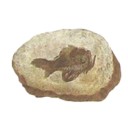
Designating a lectotype for Mesacanthus pusillus (Gnathostomata: Acanthodii)Matthew G. Baron
Published online: 03/03/2021 |
S.I. Data |
|
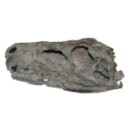
Difficulties with the origin of dinosaurs: a comment on the current debateMatthew G. Baron
Published online: 01/07/2020 |
|
|
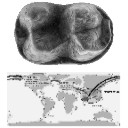
First early Eocene tapiroid from India and its implication for the paleobiogeographic origin of perissodactylsThierry Smith
Published online: 08/09/2015 |
|

|
Les nouvelles faunes de rongeurs proches de la limite mio-pliocène en Roussillon. Implications biostratigraphiques et biogéographiquesJean-Pierre Aguilar, Jacques Michaux, Bernadette Bachelet, Marc Calvet
Published online: 29/04/1991 |
|

|
Contributions à l'étude du gisement Miocène supérieur de Montredon (Hérault). Les grands mammifères. 1 - Les LagomorphesNieves Lopez-MartinezPublished online: 15/11/1988Keywords: Lagomorpha; Montredon; Prolagus; Upper Miocene https://doi.org/10.18563/pv.18.ext.3-14 Abstract A sample of 231 isolated teeth of lagomorphs from the upper Miocene of Montredon (southern France), identified as the ochotonid Prolagus crusafonii DOPEZ, 1975, is studied, comparing it with other populations of the same species as well as with its closest species P. oeningensis (KÖNIG, 1825). PV article infos Published in Vol. 18, Ext (1988) |
|

|
Evolution des Aplodontidae Oligocènes EuropéensNorbert Schmidt-Kittler and Monique Vianey-Liaud
Published online: 01/10/1979 |
|
|
Eggshell microstructure and porosity of the Nicobar scrubfowl (Megapodius Nicobariensis, great Nicobar island, India)Géraldine Garcia
Published online: 16/12/2008 |
|
|
Enamel hypoplasia on rhinocerotoid teeth: Does CT-scan imaging detect the defects better than the naked eye?Manon Hullot
Published online: 03/01/2022 |
S.I. Data |

|
Functional aspects of the evolution of rodent molarsPercy M. ButlerPublished online: 01/10/1980Keywords: Chewing; Muridae; Rodents; Wear facets https://doi.org/10.18563/pv.9.ext.249-262 Abstract The wear facets of primitive rodents can be homologized with those of primitive primates and ungulates. As in primates, the jaw movement was ectental, with an increased anterior component in the lingual phase (phase ll). The buccal phase (phase I) in rodents approaches the horizontal and it tends to be reduced in importance in comparison with the lingual phase. ln more advanced rodents the efficiency of grinding is increased by the development of additional cutting edges of enamel (e.g. enlargement of hypocone, development of mesoloph and lingual sinus). The buccal phase movement becomes lined up with the lingual phase movement to form a single oblique chewing stroke,resulting in planation of the crown. As the stroke becomes more longitudinal (propalinal) the enamel edges become more transverse. In Muridae propalinal chewing evolved before the loss of cusps, facets were reorientated and additional cusps developed. PV article infos Published in Vol. 9, Ext (1980) |
|
