Current issue


2025-12
48-2
<< prev. next >>

Print ISSN: 0031-0247
Online ISSN:
2274-0333
Frequency: biannual

Article Management

You must log in to submit or manage articles.

You do not have an account yet ? Sign up.

Most downloaded articles (last 90 days)


Page 13 of 19, showing 20 record(s) out of 366 total

Die Referenzfauna des Geiseltalium, MP levels 11 bis 13 (Mitteleozan, Lutetium)
Hartmut Haubold
Published online: 04/12/1989

Keywords: Eocene; Geiseltal; Land mammal ages; Mammalian reference levels

https://doi.org/10.18563/pv.19.3.81-93

  Abstract

    The Middle Eocene Fossillägerstätte of the Geiseltal lignite beds near Halle/S. (German Democratic Republic) is the reference locality of the European land mammal age Geiseltalian and of the Mammalian Paleogene reference levels MP 11 - MP 13. Due to this importance a reinvestigation is given of the lithostratigraphical development of the Geiseltal beds and of their vertebrate sites. The last are genetically related to the southwest border of the Geiseltal depression and the influx of carbonate-rich waters. The geographical distribution and stratigraphical position of the fossiliferous sites depends on subrosive and tectonically controlled distribution of coal seams. The geological factors and the known stratigraphical guide of some mammalian species suggest corrections of the age of some sites. Four of the alltogether five coal bearing phases contain the 35 sites with mammalian remains. By the distribution of the around 69 mammal species are characterized, with 5 faunal steps ranging from MP 11 to MP 14 or over the Geiseltalian up to the Lower Robiacian. Well distant are the faunas of MP 11 and MP 12. Beginning with MP 12 up to MP 13/14, the fossil record is very frequent by 27 sites. This evidence coincides somewhat more with the concept of land mammal ages compared to that of the punctual mammalian reference levels. 


  PV article infos

Published in Vol. 19, Fasc. 3 (1989)

PDF
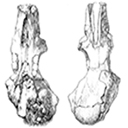
Relations phylétiques de Bachitherium filhol, ruminant de l'Oligocène d'Europe Occidentale.
Denis Geraads Logo, Geneviève Bouvrain and Jean Sudre
Published online: 20/06/1987

Keywords: Artiodactyla; Bachitherium; Cladistic analysis; France; Mammalia; Oligocene; Ruminantia

https://doi.org/10.18563/pv.17.2.43-73

  Abstract

    A detailed comparative study of a complete skeleton of Bachitherium and a cladistic analysis of the sub-order Neoselenodontia lead us to propose a cladogram and a new classification of this group. The Tylopoda are the sister-group of the Ruminantia, which are chiefly defined by the fusion of the cuboid and navicular. Within this infra-order, Amphimeryx is the sister genus of a tetraselenodont group, in which the Hypertragulidae are well-separated group from a monophyletic group defined by the loss of trapezium, fusion of capitatum and trapezoid, and the isolation of the hypoconid on lower molars. The most primitive genera of this group, Lophiomeryx and Iberomeryx still have an open trigonid on the lower molars, but this is lingually closed in Archaeomeryx, sister-genus of the higher Ruminantia which have fused metatarsals and more evolved milk teeth. We divide them into two pan/orders : Tragulina (including the recent and miocene Tragulidae, and the North-American Leptomerycidae), and Pecora, with reduced lateral metacarpals and a new crest (telocristid) on the lower premolars. Within the Pecora, the upper molars of Gelocus are more primitive than those of Bachitherium (a genus with many autapomorphies in the dentition) itself more primitive than the group Prodremotherium + Eupecora, with fused metacarpals. We consider the Eupecora (including several genera without frontal appendages) to be monophyletic. 


  PV article infos

Published in Vol. 17, Fasc. 2 (1987)

PDF
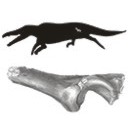
First record of the family Protocetidae in the Lutetian of Senegal (West Africa)
Lionel Hautier Logo, Raphaël Sarr Logo, Fabrice Lihoreau Logo, Rodolphe Tabuce Logo and Pierre Marwan Hameh
Published online: 05/12/2014

Keywords: innominate; Lutetian; Protocetid; Senegal

https://doi.org/10.18563/pv.38.2.e2

  Abstract

    The earliest cetaceans are found in the early Eocene of Indo-Pakistan. By the late middle to late Eocene, the group colonized most oceans of the planet. This late Eocene worldwide distribution clearly indicates that their dispersal took place during the middle Eocene (Lutetian). We report here the first discovery of a protocetid fossil from middle Eocene deposits of Senegal (West Africa). The Lutetian cetacean specimen from Senegal is a partial left innominate. Its overall form and proportions, particularly the well-formed lunate surface with a deep and narrow acetabular notch, and the complete absence of pachyostosis and osteosclerosis, mark it as a probable middle Eocene protocetid cetacean. Its size corresponds to the newly described Togocetus traversei from the Lutetian deposits of Togo. However, no innominate is known for the Togolese protocetid, which precludes any direct comparison between the two West African sites. The Senegalese innominate documents a new early occurrence of this marine group in West Africa and supports an early dispersal of these aquatic mammals by the middle Eocene.


  PV article infos

Published in Vol.38-2 (2014)

PDF
Les vertébrés fossiles de Colombie et les problèmes posés par l'isolement du Continent sud-Américain.
Jaime de Porta
Published online: 20/01/1969

Keywords: Columbia; Cretaceous; Fauna; Quaternary; South America

https://doi.org/10.18563/pv.2.2.77-94

  Abstract

    A general view is given of the vertebrate faunas, Cretaceous to Quaternary of age, found in Columbia and of their principal characteristics. This view leads to the discussion of the isolation of the South American continent and of the role played by the Bolivar syncline with respect to North American immigrants during the Oligocene. The absence of marine deposits of Oligocene age in the north and northwest of Columbia suggests the possibility of a communication with Central America. This communication would have permitted the passage of hystricomorph rodents, of platyrrhine monkeys, and of colubrids. The non-occupation, until then, of the ecologie niches of these groups would have favored their installation beside the indigenous fauna. In this hypothesis it would no longer be necessary to admit that these vertebrates arrived as «island hoppers ››. The eco-biologic conditions would explain the absence of large-sized forms of North American origin. 


  PV article infos

Published in Vol. 02, Fasc. 2 (1969)

PDF
La poche à phosphate de Ste-Néboule (Lot) et sa faune de vertébres du Ludien supérieur. 4- Crocodiliens
Eric Buffetaut Logo
Published online: 25/09/1978

Keywords: Eocene; Quercy Phosphorites

https://doi.org/10.18563/pv.8.2-4.191-199

  Abstract

    Crocodilians are represented in the Upper Eocene of Sainte·Néboule (Lot) by an isolated parietal and a dorsal scute, bath from young individuals. They are refferred to Diplocynodon sp. Predators (mammals and birds) are probably responsible for the occurrence of remains of small crocodilians (belonging to the genera Allognathosuchus and Diplocynodon) in the phosphorltes of Quercy. 


  PV article infos

Published in Vol. 08, Fasc. 2-4 (1978)

PDF
La Poche à phosphate de Ste-Neboule (Lot) et sa faune de vertébres du Ludien Supérieur. 3- Chéloniens
France de Broin Logo
Published online: 25/09/1978

Keywords: Eocene; Quercy Phosphorites

https://doi.org/10.18563/pv.8.2-4.181-184

  Abstract

    The few remains recently collected at Ste Néboule (upper Eocene) belong to three genera: the Testudinid Ergilemys, of which it is the oldest occurence in Western Europa, probably Palaeochelys and an unpublished genus, which is peculiar to the Phosphorites du Quercy. Some statements are made on the chelonian fauna as a whole in that région. After the study of some characters proper to the genus Ergilemys, some remarks are made concerning its antecedents and descendants. 


  PV article infos

Published in Vol. 08, Fasc. 2-4 (1978)

PDF
La poche à phosphate de Ste-Néboule (Lot) et sa faune de vertébres du Ludien Supérieur. 2- Amphibiens. Etude Preliminaire
Jean-Claude Rage Logo and Colette Vergnaud-Grazzini
Published online: 25/09/1978

Keywords: Eocene; Quercy Phosphorites

https://doi.org/10.18563/pv.8.2-4.175-179

  Abstract

    The Caudata are known by two Salamandridae ; one of them is attributed to the genus Megalotriton. The Pelobatidae form the major part of the Anura ; a few bones indicate also the presence of Neobatrachia. 


  PV article infos

Published in Vol. 08, Fasc. 2-4 (1978)

PDF
Une faune du niveau d'Egerkinger (MP 14; Bartonien inférieur) dans les phosphorites du Quercy (Sud de la France)
Jean Sudre, Bernard Sigé, Jean-Albert Remy, Bernard Marandat, Jean-Louis Hartenberger, Marc Godinot Logo and Jean-Yves Crochet
Published online: 18/12/1990

Keywords: Biochronology; Early Bartonian; Eocene; evolution; Mammals; New taxa; Quercy

https://doi.org/10.18563/pv.20.1.1-32

  Abstract

    The Laprade fauna is chronologically situated between those from Egerkingen and Lissieu and consequently, is close to the MP 14 reference-level of the European mammalian biochronological scale (Symposium of Mainz, 1987).
    This new fauna is presently the oldest known in the Quercy phosphorites, formerly the Le Bretou fauna (MP 16) was considered as the oldest one. The Laprade fauna includes 21 species which belong in 7 mammalian orders (Marsupialia: Amphiperatherium bastbergense, Amphiperatherium goethei; Apatotheria: Heterohyus (Gervaisyus) pygmaeus nov. subgen., nov. sp.; Lipotyphla: Saturninia cf. mamertensis, Saturninia cf. intermedia; Chiroptera: Vespertiliavus lapradei nov. sp.; Rodentia: Protadelomys cf. lugdunensis, Elfomys nov. sp.; Primates: Nannopithex cf. filholi, cf. Pseudoloris or Pivetonia; Perissodactyla: ?Palaeotherium ?castrense, small-sized Palaeotherium sp., Plagiolophus sp., Anchilophus sp.; Artiodactyla: Dichobune cf. robertiana, Mouillacitherium cartieri, Tapirulus cf. depereti, Mixtotherium priscum, Pseudamphimeryx schlosseri, and Artiodactyla indet). Sixteen of these species are mentioned for the first time from the Quercy faunas.
    The recognition of a new apatemyid, Heterohyus (Gervaisyus) pygmaeus nov. subgen., nov. sp., attests to an early origin of a lineage known in the Late Eocene. The emballonurid bat Vespertiliavus lapradei nov. sp. is presently the earliest record of this genus and family. This Auversian fauna leads to discuss the age of taxa showing archaic features. These taxa were defined on specimens collected in the Quercy during the last century and have never been found in the Quercy localities recently investigated. This fauna bears also evidence of a karstic filling episode older than those previously dated by fossils in the Quercy Jurassic. 


  PV article infos

Published in Vol. 20, Fasc. 1 (1990)

PDF
Les rongeurs de l'Eocène d'Afrique Nord-Occidentale [Glib Zegdou ( Algérie) et Chambi (Tunisie)] et l'origine des anomaluridae.
Monique Vianey-Liaud Logo, Jean-Jacques Jaeger Logo, Jean-Louis Hartenberger and Mahammed Mahboubi
Published online: 20/05/1994

Keywords: Africa; Eocene; New taxa; Paleobiogeography; PHYLOGENY; Rodents

https://doi.org/10.18563/pv.23.1-4.93-118

  Abstract

    This paper is about the oldest African rodents faunas, from the late Early Eocene, or early Middle Eocene, Glib Zegdou (Algeria) and Chambi (Tunisia) localities. Five species are described and figured, belonging to a new family here created, the Zegdoumyidae.

    This family is compared to the Early and Middle Eocene rodents families from Asia, Europe and North America (Chapattimyidae, Yuomyidae, Gliridae, Theridomyidae, lschyromyidae and Sciuravidae), as well as to those known from the Late Eocene African locality Bir El Ater (Anomaluridae and Phiomyidae).

    On the one hand, it seems clear that the African endemic Anomaluridae arise from the Zegdoumyidae. On the other hand, the lschyromyidae, or primitive Sciuravidae, may be the most reliable ancestral groups for the Zegdoumyidae. Thus, this new family can be considered as the sister group for the American Sciuravidae on the one hand, and for the European Gliridae on the other hand.

    The biogeographical consequences of these phylogenetic hypotheses are discussed. A new phase of communication between Europe and North Africa is inferred, during the Early Eocene. It has been followed by a short period of endemism, allowing the adaptive radiation for the Zegdoumyidae, preceding the immigration of the Phiomyidae, during the Late Eocene, probably from Asian relatives. 


  PV article infos

Published in Vol. 23, Fasc. 1-4 (1994)

PDF
The microfauna of the Djebel Qafze Cave
G. Haas
Published online: 15/09/1972

Keywords: Micromammals; Rodents

https://doi.org/10.18563/pv.5.5.261-270

  Abstract

    This study examines the microfauna from Djebel Qafze Cave, focusing on mammalian remains, with Microtus guentheri as the dominant species and a notable absence of Cricetinae (hamsters). The richest layers (XVIa, XVII, XVIII) suggest accumulation by raptors, particularly owls, given the high presence of nocturnal species like voles and shrews. Two significant species, Arvicanthis cf. ectos and the newly described Rattus (? Mastomys) nazarensis, are highlighted. Reptiles (gekkos, Ophisaurus) and birds are also present, while hedgehogs and lagomorphs are absent. The findings underscore the role of avian predators in fossil deposition and refine the chronology of regional Pleistocene fauna. 


  PV article infos

Published in Vol. 05, Fasc. 5 (1972)

PDF
Les Entélodontes des phosphorites du quercy
Michel Brunet Logo
Published online: 15/11/1974

Keywords: Entelodontes; Quercy Phosphorites

https://doi.org/10.18563/pv.6.1-2.87-108

  Abstract

    The entelodonts of the Quercy phosphorites are essentially known from isolated teeth. The skull remains attributed to Entelodon magnum by Kowalewsky in 1876 and the type left mandible of Enteladon depereti RÉPELIN, 1918 do not belong to this family. From a morphologic point of view, the teeth from Quercy are quite comparable to those from the type localities of E. magnum and E. deguilhemi. In the absence of distinctive anatomical criteria between E. magnum (small species from the level of Ronzon) and E. deguilhemi (large species from the level of Villebramar) they are referred, according to their size, to one or the other of these two species. However, some of them are intermediate in size. Their existence speaks in favor of a close relationship between E. magnum and E. deguilhemi and confers a real stratigraphic interest to these entelodonts of Western Europe. Finally, some anatomical characters (notch on the mesial border of P4, presence of a paraconid joined to the metaconid, trigonid higher than talonid) considered until now as peculiar to the North American Archaeotherium and not yet cited in its European contemporary Entelodon have been brought to light on the teeth from Quercy.


  PV article infos

Published in Vol. 06, Fasc. 1-2 (1974)

PDF
First evidence of an early Miocene marine teleostean fish fauna (otoliths) from la Paillade.(Montpellier,France)
Bettina Reichenbacher Logo and Henri Cappetta Logo
Published online: 15/06/1999

Keywords: Aquitanian; Biostratigraphy; La Paillade; marine deposits; Miocene; otoliths; Palaeoecology; Palaeogeography; Southern France; Teleostei

https://doi.org/10.18563/pv.28.1.1-46

  Abstract

    A fossil fish fauna, based on 5533 otoliths, from the La Paillade locality at Montpellier is described and figured. The otolith-bearing marls correlate to mammal zone MN l (Aguilar, 1982), and thus represent the earliest Miocene. The fish fauna consists of 30 taxa belonging to 20 families. Two species are new: Dussumieria sittigi and Liza gaudanti. The predominant faunal element is the Lesueurigobius vicínalis-species complex, composing 73% of all investigated otoliths. The palaeoecological analysis reveals a marine to euryhaline fish fauna living under tropical to subtropical conditions in the transition zone littoral - sublittoral. Water depth probably was more than 10 m. The scarcity of pelagic físhes suggests that the habitat was either a sheltered bay and/or far away from the open sea. Furthermore, some genera represented in the La Paillade fish fauna presently live exclusively in the Indopacific realm. Their presence strongly supports a broad connection between the Indian Ocean, the Mediterranean, and the Paratethys Seas during the Early Miocene (Aquitanian). From a palaeobiogeographical point of view, faunal relationships were found between the La Paillade fish fauna and both the Paratethys fish fauna and the fish fauna from the deposits in the Upper Rhinegraben and the Mayence and Hanau Basins (Germany).


  PV article infos

Published in Vol. 28, Fasc. 1 (1999)

PDF
The terrestrial environnement and the origin of land vertebrates
Jean-Louis Hartenberger
Published online: 02/12/1980

Keywords: environments; Land vertebrates; Terrestrial

https://doi.org/10.18563/pv.11.1.17

  Abstract

    L'ouvrage rassemble vingt contributions présentées lors d”un colloque organisé par l'éditeur en avril 1979, à Newcastle upon Tyne. Ce sont différents aspects du problème de la << sortie des eaux ›> qui ont été abordés lors de cette réunion. Par son volume, la qualité des communications, l”abondance des illustrations, nul doute que ce livre est appelé à devenir un ouvrage de référence pour les paléontologistes qui s'intéressent de près ou de loin à ce problème : enseignants et cher cheurs y trouveront leur compte. ll est un peu regrettable toutefois qu'aucun tenant de <<l”école suédoise» n'ait eu l`occasion d`y présenter ses thèses.


  PV article infos

Published in Vol. 11, Fasc. 1 (1981)

PDF
Problems of classification as applied to the Rodentia
Albert E. Wood
Published online: 01/10/1980

Keywords:

https://doi.org/10.18563/pv.9.ext.263-272

  Abstract

    A classification should be both usable and useful,not too complex either in the amount of splitting or in the number of hierarchies involved, and not so simple as to give a false assurance of knowledge of relationships. Classifications are only possible because we do not have complete knowledge of the evolution of the organisms concerned because gaps in the record are necessary to allow the separation of the various taxa. Rodent classification is complicated by the large number of organisms involved and by the geat amount of parallelism that has taken place in the evolution of any and all features. If several independent features are characteristic of a certain taxon, should an effort be made to define the group on the basis of all the features, or should only one be selected as the determinant ? Unless the evolution of the several features was closely linked, the former solution will sooner or later lead to insurmountable problems. 


  PV article infos

Published in Vol. 9, Ext (1980)

PDF
Le genre Microstonyx en Espagne et ses relations avec les autres espèces du même genre hors d'Espagne
Juana M. Golpe-Posse
Published online: 01/10/1980

Keywords: Microstonyx; Spain; Suidae

https://doi.org/10.18563/pv.9.ext.213-231

  Abstract

    The genus Microstonyx was found only in the north eastern part of Spain : M. antiquus, referable to the
    Eppelsheim type, from the pyrenean basins ; M. antiquus, more progresive, from the Vallès Basin : M. major-erymanthius group, from the Teruel-Ademuz Area and from Pieru (Penedès Basin).


  PV article infos

Published in Vol. 9, Ext (1980)

PDF
Paleogene faunal assemblage fron  Antofagasta de la Sierra (Catamarca Province, Argentina).
Guillermo M. Lopez Logo
Published online: 15/12/1997

Keywords: Argentina; Faunal assemblage; Mammalia; Middle Eocene; Reptilia

https://doi.org/10.18563/pv.26.1-4.61-81

  Abstract

    The Paleogene faunal assemblage from Antofagasta de la Sierra (Catamarca, Argentina), is here presented, both in its geological and systematic aspects. The fossil bearing levels are referred to the Geste Formation (Pastos Grandes "Group"). The described specimens belong to the Classes Reptilia (Orders Crocodylia, Serpentes and Chelonii) and Mammalia (three taxa from the Superorder Marsupialia, representatives of the Orders Edentata, Condylarthra, Pyrotheria and Astrapotheria, and six families of the Order Notoungulata). This fauna is referred to the Mustersan Age, which in Patagonia represents the Middle Eocene. Such chronologic assignment is based on the presence of characteristic taxa, their evolutionary stage and on stratigraphic evidence. Finally, a brief comparison with other faunal assemblages from the Early Tertiary of Argentina and Chile, is presented. 


  PV article infos

Published in Vol. 26, Fasc. 1-4 (1997)

PDF
Experimental taphonomy inavian eggs and eggshells: effects on early diagenesis.
Ana M. Bravo, D. A. Buscalioni Logo, Lauro Merino and B. G. Müller
Published online: 15/12/2003

Keywords: archosaurian eggshells; avian egg; Experimental taphonomy; geochemical analysis; pyritisation; Upper Cretaceous

https://doi.org/10.18563/pv.32.2-4.77-95

  Abstract

    We experimentally explore the early taphonomic stages involving the decay and biodegradation of buried eggs and eggshells. Unfertilised commercial chicken eggs and eggshell fragments were buried in plastic containers and were kept under controlled conditions for eight months. Half of the containers were filled with marl, and the remainder with sand. All were saturated with fresh tap water, acidified water, sulphate water, or seawater. They were kept in the dark at 23.4-26 °C, except one, which was kept in a heating chamber at 37.4°C. We expected that different burial conditions would produce distinct taphonomic outcomes. Instead, the taphonomic alterations of buried eggs parallel that of the alteration of egg proteins (i.e., denaturation and/or putrefaction) with an additional role played by the eggshell. Mummification, encrustation, distortion and fragmentation, and necrokynesis (vertical displacement) depend on organic matter decay. The experiment identifies environmental conditions that may favour or actively promote these taphonomic processes. Of these, early pyritization is one of the most relevant. For comparative purposes, samples of fossil and extinct eggshell representing three distinct environmental burial conditions were examined. These included Megaloolithus, Caiman crocodilus, and Struthio camelus ootypes. The geochemical analysis of these eggshells showed no significant differences among the chemical variables of these fossil and extant ootypes. Eggshells exhibited a stable composition over a range of experimental conditions. 


  PV article infos

Published in Vol. 32, Fasc. 2-4 (2003)

PDF
Etude du crâne de Pachynolophus lavocati n. sp. (Perissodactyla, Palaeotheriidae) des Phosphorites du Quercy
Jean-Albert Remy
Published online: 15/02/1972

Keywords: Perissodactyla; Quercy Phosphorites

https://doi.org/10.18563/pv.5.2.45-78

  Abstract

    The genus Pachynolophus, one of the poorest known of the Palaeotheriidae, includes the brachyodont forms with reduced and non-molariform premolars and with upper molars lacking a mesostyle. Quantitative characters (divers surface indications and elongation of the teeth), while demonstrating a close relationship to Hyracotherium, permit a better differentiation of the genus, confirm its specific splitting, and permit the distinction of three lineages. The skull from Memerlein is taken as the type of a new species, P. Iavocati, of which the dentition is extremely characterized by its lophiodonty, the strong reduction of the premolars and the reduction of the cingula. This characterization testifies to a late age which extends the existence of the genus quite near to the Eocene-Oligocene limit. Compared with the only two skulls known of related species (Hyracotheríum vulpiceps and Pachynolophus Iivinierensis), that from Memerlein is distinguished by progressive characters affecting diferent regions but most particularly the braincase; it is not possible, however, to isolate within this evolution the part which leads to a systematic differentiation. Modernization is translated by a considerable increase in size of the braincase, principally in the frontal region, a development of the facial region with anterior displacement of the dental series and a greater specialization of the masticatory apparatus. This evolution parallels the history of the Equidae of the North American early Tertiary, but certain particularities, the form of the alisphenoid, the presence of an anterior frontal foramen, and the structure of the paroccipital apophysis, testifies to the independance of the European forms. 


  PV article infos

Published in Vol. 05, Fasc. 2 (1972)

PDF
Rongeurs Miocènes dans le valles-Penedes 1 : Les rongeurs de Can Ponsic 1
Jean-Louis Hartenberger and Miquel Crusafont i Pairó
Published online: 20/04/1979

Keywords: Can Ponsic 1; Miocene; Rodents; Valles-Penedes

https://doi.org/10.18563/pv.9.1.1-15

  Abstract

    The rodents from the spanish locality of Can Ponsic 1 bring new data about some rodents species of the beginning of the Upper Miocene in South-West Europe. The criticims made by Mein and Freudenthal about the validity of the species Hispanomys thaleri from Can Llobateres are not justiíied. The study of the anatomy of the skull of Rotundomys from Can Ponsic 1 gives accurate information about the affinity of this genus with Cricetulus, and shows that the hypothesis, according to which Rotundomys is an ancestral form of the Arvicolids, is unlikely. The systematics of Heteroxerus and the phylogeny of the mio-pliocene Muscardinus species are also discussed. The Can Ponsic 1 locality is a little older than Can Llobateres.


  PV article infos

Published in Vol. 09, Fasc. 1 (1979)

PDF
Long-term fidelity of megaoolithid dinosaurs to a large breeding-ground in the Upper Cretaceous of Aix-en-Provence (southern France).
Géraldine Garcia Logo, Yves Dutour, Isabellle Cojan, Xavier Valentin Logo and Gilles Cheylan
Published online: 15/12/2003

Keywords: Large nesting ground; megaloolithid eggs; Southern France; Upper Cretaceous

https://doi.org/10.18563/pv.32.2-4.109-120

  Abstract

    We present here the preliminary results from a new nesting site "Sextius-Mirabeau", discovered close to the historical centre of Aix-en-Provence in Upper Cretaceous deposits. This extensive megaloolithid nesting ground, the first large scale excavation (3225 m²) in France, yielded more than 530 eggs, some organized in clusters. Their study reveals the reproductive strategy of the megaloolithid egglayer group which indicates nesting fidelity and gregarious behaviour.  


  PV article infos

Published in Vol. 32, Fasc. 2-4 (2003)

PDF

Page 13 of 19, showing 20 record(s) out of 366 total