Current issue


2025-12
48-2
<< prev. next >>

Print ISSN: 0031-0247
Online ISSN:
2274-0333
Frequency: biannual

Article Management

You must log in to submit or manage articles.

You do not have an account yet ? Sign up.

Most downloaded articles (last 90 days)


Page 17 of 19, showing 20 record(s) out of 366 total

Analyse d'ouvrage : Koobi Fora Research Project, volume 3. The fossil ungulates: geology, fossil artiodactyls, and palaeoenvironments, édité par John Michael HARRIS, 1991. Clarendon Press, Oxford, xvi + 384 p. ISBN 0-19-857399-5.
Jean Sudre
Published online: 11/02/1993

Keywords: Artiodactyls; palaeovenvironments; Ungulates

https://doi.org/10.18563/pv.22.2-3.138-139

  Abstract

    Avec ce volume se clôture l'étude géologique et paléontologique des sites à hominidés de Koobi Fora. Il fait suite aux deux précédents ouvrages, parus respectivement en 1978 et 1983, consacrés également à l'étude des faunes recueillies sur ces gisements dans le cadre du Koobi Fora Research Project. 


  PV article infos

Published in Vol. 22, Fasc. 2-3 (1993)

PDF
Nouveaux gisements à rongeurs dans les molasses oligo-miocènes de la région toulousaine
Francis Duranthon Logo
Published online: 11/02/1993

Keywords: Cricetidae; Eomyidae; GIiridae; Miocene; Oligocene; Rodents; Sciuridae; Southern France

https://doi.org/10.18563/pv.22.2-3.113-136

  Abstract

    The fauna from three new rodent localities (Castelmaurou, Grépiac-carrière et Grépiac-rive gauche) from Oligo-Miocene molasses of the Toulouse area is described. The one from Colomiers is completed. 11 species belonging to 4 families (Cricetidae, Eomyidae, Gliridae, Sciuridae) are present. The Miocene localities of Grépiac-carrière and Colomiers are correlated with Balizac, La Brète, Lambert and Lespignan. Grépiac-rive gauche is just a little older than these sites. Castelmaurou is somewhat younger than La Milloque and belongs to Oligocene. 


  PV article infos

Published in Vol. 22, Fasc. 2-3 (1993)

PDF
Etude des dents jugales inférieures des Equus (Mammalia, Perissodactyla) actuels et fossiles
Véra Eisenmann
Published online: 15/04/1981

Keywords: Cheek teeth; Equus; Mammals

https://doi.org/10.18563/pv.10.3-4.127-226

  Abstract

    The comparative morphology and biometry of the lower cheek teeth of modern Equus are studied on approximately 300 mandibles belonging to the 10 usually recognised species : Equus grevyi, E. burchelli, E. quagga, E. zebra, E. africanus, E. asinus, E. hemionus, E. klang, E. przewalskii, E. caballus. The studied parameters comprise : occlusal length and width, postflexid length and index ; shape of the double knot (metaconid + metastylid + lingual groove) ; depth of the vestibular groove on the molars ; frequency of the pli caballinid, protostylid and other enamel plications or islets ; frequency of the dP/l.
    The same methods of study are applied to a number of North American, Eurasian and African species. For the sake of comparison, some Hemphillian equids were observed (Dinohippus interpolatus, Dinohippus leidyanus, Astrohippus ansae, Phiohippus mexicanus) but most of the discussed material belongs to Pliocene or Pleistocene species of Equus : the « stenonine ›› E. stenonis, E. simplicidens, E. sanmeniensis and E. teilhardi; the « caballine ›› E. scotti, E. lambei, E. Iaurentius, E. mosbachensis, E. germanicus, E. gallicus, E. taubachensis and the Liakhov horse. The relationships of other species, in particular the North American E. calobatus, E. occidentalis, E. cf mexicanus are not clear for the moment. ln Africa, the Plio-Pleistocene species from Koobi Fora (Kenya) show some stenonine and perhaps asinine affinities. The relationships of E. numidicus and E. tabeti are uncertain but these species are probably related to the East African ones. E. mauritanicus is most certainly related to the Quagga group.
    The biometrical data are gathered in 32 tables ; 4 photographie plates and 19 figures illustrate the next. The whole is a complement of the previously published studies of the skulls, upper cheek teeth, incisors and metapodials of modern and fossil Equus.


  PV article infos

Published in Vol. 10, Fasc. 3-4 (1981)

PDF
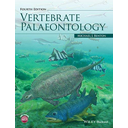
A classic in the making : VERTEBRATE PALAEONTOLOGY (4th edition). By Michael J. Benton.
Eric Buffetaut Logo
Published online: 27/01/2016

Keywords: Book review; Vertebrate Palaeontology

https://doi.org/10.18563/pv.40.1.e1

  Abstract

    When the first edition of Mike Benton’s Vertebrate Palaeontology came out in 1990, sauropods still dragged their tails on the ground, the closest relatives of whales were mesonychids, and Mesozoic birds consisted essentially of Archaeopteryx, Ichthyornis and Hesperornis. Twenty-five years later, the book, now in its fourth edition, is a third longer, in a larger format and sports fine colour plates – in addition to a companion website. 


  PV article infos

Published in Vol.40-1 (2016)

PDF
Cricetid rodents from Siwalik deposits near Chinji village. Part I: Megacricetodontinae, Myocricetodontinae and Dendromurinae.
Everett H. Lindsay Logo
Published online: 15/10/1988

Keywords: Dendromurinae; Megacricetodontinae; Middle Miocene; Myocricetodontinae; Rodents; Siwalik

https://doi.org/10.18563/pv.18.2.95-154

  Abstract

    Seventeen species of cricetid rodent are recognized and described from lower and middle Siwalik deposits in the Potwar Plateau of Pakistan. These species are grouped in three categories, characterized as subfamilies (e. g., Megacricetodontinae, Myocricetodontinae, and Dendromurinae); an additional and more abundant category of rodents from these deposits, the Democricetodontinae, is excluded from this study, and will be described in a later study. Fifteen of the species are new, and four new genera are described. The Siwalik cricetid taxa are : Megacricetodon aquilari, n. sp.; Megacricetodon sivalensis, n. sp.; Megacricetodon daamsi, n. sp.; Megacricetodon mythikos, n. sp.; Punjabemys downsi, n. gen. & n. sp.; Punjabemys leptos, n. gen. & n. sp.; Punjabemys mikros, n. gen. & n. sp.; Myocricetodon sivalensis, n. sp.;  Myocricetodon sp.; Dakkamyoides lavocati, n. gen. & n. sp.; Dakkamyoides perplexus, n. gen. & n. sp.; Dakkamys asiaticus, n. sp.; Dakkamys barryi, n. sp.; Dakkamys sp.; Paradakkamys chinjiensis, n. gen. & n. sp.; Potwarmus primitivus, n. gen.; and Potwarmus minimus, n. gen. & n. sp. This diverse record of middle Miocene small mammals illuminates a profound radiation of cricetid rodents in southem Asia, the effects of which were felt in Europe and Africa as well as the rest of Asia. 


  PV article infos

Published in Vol. 18, Fasc. 2 (1988)

PDF

Otolithes de poissons du Pliocène inférieur de Papiol, près de Barcelone.
Dirk Nolf, Ramon Mané and Agusti Lopez
Published online: 15/09/1998

Keywords: Catalonia; otoliths; Pliocene; Spain; teleosts

https://doi.org/10.18563/pv.27.1-2.1-17

  Abstract

    The Zanclian marls from Papiol provided otoliths belonging to 53 teleost taxa; nine of those are new for the Mediterranean Pliocene. The association reflects a bathymetry between 150 and 350 m, but it is likely that such depths only existed at the initial stage of flooding of the Llobregat bay. A compilation of the available data for the whole Mediterranean realm at Zanclian time provided a list of 163 taxa, of which 105 could be identified at species level. This last group provides the most useful data for evaluating the composition and affinities of the Mediterranean Zanclian fauna, which appears to be significantly different from the Recent Mediterranean fauna. The Zanclian fauna counts 68 % of Recent species: 12,5 % were already represented in the Mediterranean Miocene, 37 % appeared there at the Zanclian, and 18 % are extra-Mediterranean today. This last group is essentially composed by oceanic fishes, living in the warm parts of the Atlantic and Indo-Pacific Oceans. It is evident that a non neglectable number of Recent species only penetrated very recently in the Mediterranean, which stresses the differences between the more oceanic Zanclian Mediterranean fauna and the present one.


  PV article infos

Published in Vol. 27, Fasc. 1-2 (1998)

PDF
The fossil rabbit from Valdemino cave (Borgio Verezzi,Savona) in the context of western Europe Oryctolagini of Quaternary.
Giulia Nocchi and Benedetto Sala
Published online: 15/12/1997

Keywords: Lagomorpha; Mammals; North-western Italy; Oryctolagus; Plio-Pleistocene; Savona

https://doi.org/10.18563/pv.26.1-4.167-187

  Abstract

    The present research deals with the remains of a lagomorph found at Valdemino cave and comes to the conclusion that it is a rabbit with peculiar characteristics in comparison with the other known species Oryctolagus laynensis, O. lacosti and 0. cuniculus. We studied other fossil remains of rabbit populations from Villafranchían and middle Pleistocene deposits and compared them with data from the literature and with recent material. The analysis leads us to maintain two phylogenetic hypotheses about the history of Oryctolagini. The ñrst one, already formulated by Lopez Martinez, suggests that 0. cuniculus derives from O. laynensis,while the origin of O. lacostí is unknown; according to the second hypothesis 0. laynensis would be the common ancestor of two phyletic lineages, 0. lacosti and 0. cuniculus. In both cases the lagomorph from Valdemino would be the form derived from 0. lacosti, from which however it differs in peculiar characteristics. Since the rabbit from Valdemino survives until the beginning of Postgalerian, its disappearance may coincide with the retreat of 0. cuniculus from western Europe in Spain and, perhaps, in south-western France, before the last glaciation. O. cuniculus survived in Spain, from where it spread once again over western Europe as a result of man.


  PV article infos

Published in Vol. 26, Fasc. 1-4 (1997)

PDF
La morphologie dentaire des Thalattosuchia (Crocodylia, Mesosuchia).
Patrick Vignaud Logo
Published online: 15/12/1997

Keywords: Dental morphology; Dental types; feeding habits.; Jurassic; Metriorhynchidae; Systematics; Teleosauridae; Thalattosuchia

https://doi.org/10.18563/pv.26.1-4.35-59

  Abstract

    The tooth morphology of the Thalattosuchia (marine crocodilians from the Jurassic and the Early Cretaceous) is analysed. The Callovian from Poitou and the Kimmeridgian from Quercy have yielded many remains of Metriorhynchus, Steneosaurus and Machimosaurus. These remains allow us to study the variations of tooth morphology during ontogenic growth, tooth replacement and the location of the teeth. We have defined different tooth types for these genera. In Metriorhynchus, the two tooth types defined do not coincide with the two groups recognized in the Callovian (broad-skulled and narrow-skulled metriorhynchids) but reflect the prey preferences of these forms. In Steneosaurus and Machimosaurus the five tooth types deñned are in agreement with the main taxa known from the Bathonian to the Early Cretaceous. This study allows to precise the function and the prey preference of the Thalattosuchia during the Jurassic and the Early Cretaceous.


  PV article infos

Published in Vol. 26, Fasc. 1-4 (1997)

PDF
La palichnofaune de vertébrés tétrapodes du permien supérieur du Bassin de Lodève (Languedoc-France).
Georges Gand, Jacques Garric, Georges Demathieu and Paul Ellenberger
Published online: 15/09/2000

Keywords: Footprints; France; Languedoc; Lodève basin; new ichnotypus; Saxonian; Upper Permian

https://doi.org/10.18563/pv.29.1.1-82

  Abstract

    Near "la Lieude", in the Lodève basin, more than a thousand of footprints are distributed in a twenty of trackways which amounts to 220 m length. They have been found on calcareous siltstone level in the B site named also "Réserve Naturelle Volontaire". This last is located in the Saxonian summit dated Upper Permian. "La Lieude" tracks are described by using statistical methods then they are compared with others from the world Permian. What allows to distinguish 4 following ichnotaxa: Lunaepes ollierorum nov.ichnosp., Merifontichnus thalerius nov. ichnogen. and nov. ichnosp., Planipes brachydactylus nov.ichnosp. and Brontopus circagiganteus nov. ichnosp. All these traces are attributed with possibility or probability to Therapsida or to Therosauria, except Brontopus circagiganteus nov. ichnosp. that could be due to Caseamorpha. All these animals whose sizes have been estimated between l and 5 m lived probably in a playa environment.The biological and sedimentological data from "la Lieude" footprints levels compared with informations provided by the tracks orientations, suggest the following scenario. Animals coming from the North have crossed a sandy channel bank with plants zones by directing to the South for the majority. Maybe, they were going to the lacustrine part of the playa, close to "la Lieude" footprints that they have just trampled on. 


  PV article infos

Published in Vol. 29, Fasc. 1 (2000)

PDF
Nouvelle interprétation de l'évolution du genre Megacricetodon au cours du Miocène
Jean-Pierre Aguilar
Published online: 01/10/1980

Keywords: Megacricetodon; Micromammals; Miocene

https://doi.org/10.18563/pv.9.ext.355-364

  Abstract

    La découverte de nouveaux gisements à micromammifères dans le Miocène du Sud de la France et d'Espagne montre que, s'il n'est plus possible d'accepter dans son intégralité le schéma phylétique de Fahlbusch du genre Megacricetodon, il existe toutefois des segments de lignées à l'intérieur de provinces géographiques différentes (Péninsule Ibérique, France, Europe Centrale), avec lesquels on peut établir une biochronologie locale, segments qu'il est aussi possible de placer les uns par rapport aux autres, en utilisant les corrélations que l'on peut reconnaître entre certains niveaux repères des mammalogistes et l'échelle stratigraphique marine.
    En utilisant ces données nouvelles, et d'après l'étude de la première molaire inférieure, nous proposons le
    schéma évolutif suivant, pour les espèces de grande taille :

    1 - au début du Burdigalien supérieur. une espèce commune, M. collongensis, issue de la forme ancestrale M. primitivus, est présente, de la Péninsule Ibérique à l'Europe Centrale. Son évolution est mal connue en Espagne, par contre cette lignée s'éteindrait en France au Burdigalien terminal avec le stade M. gersii nov. sp. de Sansan et de Luc-sur-Orbieu.
    2 - au cours de la régression post-burdigalienne. reconnue en Languedoc et dans la Péninsule Ibérique apparaîtrait une espèce immigrante, M. crusafonti qui, dans cette dernière province, évolue pour donner M. ibericus de Nombrevilla. L'espèce M. gregarius de La Grive M et de La Grenatière dériverait de cette forme immigrants, en ayant une évolution différente.
    3 - en Suisse, Bavière et Europe centrale, la lignée M. primitivus - M. collongensis va s'individualiser, dès le Burdigalien supérieur ou terminal, et donner naissance à la lignée M. bavaricus qui s'éteindra avec le stade M. germanicus nov. sp. du gisement anté - Hipparion de Anwil. Cette dernière espèce a été trouvée pour la première fois en France, dans le gisement de Collet Redon. 


  PV article infos

Published in Vol. 9, Ext (1980)

PDF
Un giraffidae dans le pliocène de Montpellier ?
Claude Guérin
Published online: 31/10/1986

Keywords: Artiodactyla; France; Giraffidae; Mammalia; Montpellier; Ruscinian

https://doi.org/10.18563/pv.16.3.185-189

  Abstract

    An upper giraffid premolar without any indication about its origin is preserved at the Montpellier University among numerous fossils from the ruscinian formation of Montpellier. It can be related to Samotherium, of the Upper Miocene in Eastern Europe, North Africa and Asia, or more probably to Bramatherium  or Hydaspitherium of the Pliocene of South East Asia. The sedimentological study of the matrix shows a calcareous background, which may indicate that this tooth does not come from the Montpellier formation. 


  PV article infos

Published in Vol. 16, Fasc. 3 (1986)

PDF
Evolution et extinction des reptiles marins au cours du Mésozoïque.
Nathalie Bardet Logo
Published online: 02/10/1995

Keywords: Crocodiles; evolution; Extinctions; faunal assemblages; Helveticosaurs; Hupehsuchians; Ichthyoaurs; lizards; Marine Reptiles; Mesozoic; Nothosaurs; Pachypleurosaurs; Placodonts; Plesiosaurs; Snakes; Thalattosaurs; Turnovers; Turtles

https://doi.org/10.18563/pv.24.3-4.177-283

  Abstract

    An interpretation of the marine reptile fossil record, based on the existing litterature and complemented by the review of ancient collections and the study of new material, permits a better understanding of Mesozoic marine ecosystems. An inventory of the marine reptiles known from the Lower Triassic to the Paleocene is presented: 46 families, about 200 genera and 400 species have been recorded. This data base includes commentaries about systematics, stratigraphical ranges and geographical distribution of taxa. Marine reptiles include a mosaic of not necessarily closely related groups: ichthyosaurs, thalattosaurs, hupehsuchians, pachypleurosaurs, placodonts, nothosaurs, plesiosaurs, pliosaurs but also crocodiles, lizards, snakes, turtles. The diversity studies reveal that the fossil record of marine reptiles has been punctuated by two mass extinctions, during the Middle-Upper Triassic transition and at the Cretaceous-Tertiary boundary. The Jurassic-Cretaceous and Cenomanian-Turonian boundaries (the latter marked by the disappearance of ichthyosaurs) are potential crisis periods, but current data are not sufficient to reach conclusions. The Ladinian-Carnian transition is characterized by the disappearance of 64 % of families and affects essentially coastal forms. This extinction coincides with an important regressive phase. During the Upper Triassic, a faunal reorganisation within marine reptiles leads to the progressive disappearance of near-shore forms and to the development of pelagic groups. During the Maastrichtian-Danian crisis, 36% of families died out. Large-sized pelagic forms such as mosasaurs and elasmosaurs were the most affected and their extinction seems to have been rather sudden. On the other hand, pliosaurs and protostegid turtles became extinct, but were already declining. The survivors were near-shore forms such as crocodiles, snakes and some turtles and they may have taken refuge in freshwater environments. A break in the food chain based on phytoplankton is proposed as an extinction scenario for pelagic forms.


  PV article infos

Published in Vol. 24, Fasc. 3-4 (1995)

PDF
Revision des faunes de vertébrés du site de Provenchères-sur-Meuse (Trias terminal, Nord-Est de la France)
Gilles Cuny Logo
Published online: 14/06/1995

Keywords: amphibians; Fishes; Reptiles; Rhetian; Triassic

https://doi.org/10.18563/pv.24.1-2.101-134

  Abstract

    Revision of ancient collections and study of new material from Provenchères-sur-Meuse (Rhaetian) lead to signíficant changes in the faunal list of this site. This bring to us important information about the effect of the rhaetian transgression on the evolution of the faunas at this period of time. However, study of
    vertebrate microremains is always difficult and some points remain obscure, like the origin of the prosauropods which yield some remains at Provenchères-sur-Meuse and the survival in Europe during the Rhaetian of temnospondyl arnphibians different from the Plagiosauridae.


  PV article infos

Published in Vol. 24, Fasc. 1-2 (1995)

PDF
New late Paleocene rodents (Mammalia) from Big Multi Quarry, Washakie Basin,Wyoming.
Mary R. Dawson and Christopher K. Beard Logo
Published online: 16/12/1996

Keywords: Clarkforkian; North America; Paleocene; Rodentia

https://doi.org/10.18563/pv.25.2-4.301-321

  Abstract

    The earliest North American rodents occur in basal Clarkforkian beds of the Fort Union Formation at Big Multi Quarry near Bitter Creek, northern Washakie Basin, Sweetwater County, Wyoming, and in closely correlative Fort Union beds formerly accessible in the Eagle Coal Mine near Bear Creek, northern Clark's Fork Basin, Carbon County, Montana. Two new species of early Clarkforkian rodents, Paramys adamus and Alagomys russelli, are described from Big Multi Quarry. Paramys adamus is represented by virtually complete upper and lower dentitions, which demonstrate that this species is one of the most primitive North American paramyids yet discovered. These specimens form the basis for a reevaluation of the content and stratigraphic range of P. atavus, which is known with certainty only from Bear Creek. Alagomys russelli is the first North American record for the enigmatic rodent family Alagomyidae, otherwise known from ?late Paleocene-early Eocene localities in Mongolia and China. Phylogenetic analysis of dental and gnathic traits suggests that Alagomyidae form the sister group of all other undoubted rodents. At least two rodent clades, alagomyids and basal paramyids, seem to have invaded North America from Asia at the beginning of Clarkforkian time, but only the paramyids persisted to undergo a significant evolutionary radiation in North America. 


  PV article infos

Published in Vol. 25, Fasc. 2-4 (1996)

PDF
Analyse d'ouvrage: “J.J. THOMASON (Ed.): Functional morphology invertebrate paleontology (1995)”
Jacques Michaux
Published online: 18/03/1996

Keywords: Book review; Functional morphology

https://doi.org/10.18563/pv.25.1.54-55

  Abstract

    Functional morphology invertebrate paleontology, édité par Jeffrey J. THOMASON, 1995. Cambridge University Press, xi + 277 p. ISBN 0-521-44095-5, f. 45,00 ($ 69,95).

    La morphologie fonctionnelle appliquée aux fossiles demeure un sujet à la fois passionnant et important. Passionnant, car elle s'adresse à des êtres disparus, aux combinaisons de caractères parfois inattendues et sans contrepartie chez les formes actuelles. Sujet important, car il faut, au delà de la constatation classique de l'adéquation de la forme des organes à leur fonction, expliquer l'origine des structures par évolution. L'évolution ou descendance avec modification, implique que les êtres vivants sont reliés les uns aux autres et qu'i! est possible de tenter à l'aide d'un raisonnement par inférence, la caractérisation des ancêtres en fonction des traits des formes auxquelles ils ont donné naissance. Mais il faut ajouter que par sa fonction, la structure relie immédiatement l'animal à son milieu puisqu'elle assure un rôle biologique. 


  PV article infos

Published in Vol. 25, Fasc. 1 (1996)

PDF
Sur la présence de dents de mammifères (Creodonta, Perissodactyla) près de la limite Paléocène-Eocène à Hoegaarden, Belgique
Richard Smith and Jerry J. Hooker
Published online: 16/12/1996

Keywords: Belgium; Creodonta; Landenian; Mammals; Perissodactyla

https://doi.org/10.18563/pv.25.2-4.115-124

  Abstract

    Amongst a collection of selachian teeth made at Hoegaarden in a marine level of Bruxellian (Lutetian) age, containing a reworked Landenian (Sparnacian) fauna mixed with a contemporaneous one, a few teeth of  terrestrial mammals have been discovered. They comprise two rare European taxa: ? Hallensia sp. and Palaeonictis gigantea, both known from the Landenian. Even though the ?Hallensia has not been definitely identified, il differs from the only perissodactyl of this age previously recorded from Belgium (Cymbalophus cuniculus). 


  PV article infos

Published in Vol. 25, Fasc. 2-4 (1996)

PDF
La poche à phosphate de Ste-Néboule (Lot) et sa faune de vertebres du Ludien supérieur. 10 - Paléothérides (Perissodactyles).
Jean-Albert Remy
Published online: 25/09/1978

Keywords: Eocene; Quercy Phosphorites

https://doi.org/10.18563/pv.8.2-4.291-293

  Abstract

    La poche à phosphorite de Sainte-Néboule (Lot) a livré au cours des récentes campagnes de fouilles effectuées dans le cadre de la RCP 311 une douzaine de dents ou fragments de dents de paléothéridés à rapporter à 3 taxons. 


  PV article infos

Published in Vol. 08, Fasc. 2-4 (1978)

PDF
Saturnin Garimond (1914-1987)
Jean-Albert Remy
Published online: 15/11/1987

Keywords: biography

https://doi.org/10.18563/pv.17.3.151-154

  Abstract

    Saturnin Garimond (1914-1987), naturaliste autodidacte né à Fons-outre-Gardon dans le Gard, a marqué la paléontologie et l'archéologie régionale par sa passion précoce pour les sciences naturelles. Quittant l'école à 10 ans, il s'instruit seul et explore inlassablement la garrigue, découvrant des sites préhistoriques dès 1930. Collaborant avec Camille Hugues, il fouille de nombreux gisements, dont la grotte de la Verrerie à Montmirat, révélant un outillage moustérien et des restes de néandertaliens. En 1961, il rejoint le Laboratoire de Paléontologie de Montpellier dirigé par Louis Thaler, contribuant à des fouilles majeures comme celle du gisement de Fons 4. En 1965, il permet la découverte du premier mammifère mésozoïque de France au gisement de Champ-Garimond. Membre de la Société Géologique de France, son érudition et sa collaboration ont enrichi de nombreuses recherches. Homme simple et affable, il a marqué tous ceux qui l'ont connu par son enthousiasme et ses connaissances encyclopédiques. 


  PV article infos

Published in Vol. 17, Fasc. 3 (1987)

PDF
Octodontid-like Echimyidae (Rodentia) : an upper Miocene episode in the radiation of the family
Diego H. Verzi Logo, Maria G. Vucetich Logo and Claudia I. Montalvo Logo
Published online: 20/05/1994

Keywords: Argentina; Echimyidae; Miocene; New taxa; Rodentia; South America

https://doi.org/10.18563/pv.23.1-4.199-210

  Abstract

    Reigechimys octodontiformis gen. et sp. novo and R. plesiodon sp. novo are described. They represent the frrst record of the family Echimyidae for the Cerro Azul Formation (Huayquerian Age, Late Upper Miocene) at La Pampa Province, central Argentina. Both species have hypsodont cheek teeth with an eight-shaped occlusal design. This dental morphology represents a noticeable case of convergence to octodontids and indicates that these echimyids inhabited open environments. 


  PV article infos

Published in Vol. 23, Fasc. 1-4 (1994)

PDF
A primitive Emballonurid bat (Chiroptera, Mammalia) from the Earliest Eocene of England
Jerry J. Hooker
Published online: 16/12/1996

Keywords: bats; Early Eocene; Emballonuridae; Origins; PHYLOGENY

https://doi.org/10.18563/pv.25.2-4.287-300

  Abstract

    A new genus, Eppsillycteris, is erected for Adapisorex? allglicus COOPER, 1932, from the earliest Eocene Blackheath Beds of Abbey Wood, London, England. Various derived character states indicate that it belongs to the order Chiroptera (bats) rather than to the extinct "insectivore" family Adapisoricidae. Other derived character states are shared with fossil and modern members of the family Emballonuridae. Placement of the new genus in this family extends the record of the Emballonuridae back in time by about 10 million years. It is the earliest record of a modern bat family and one of the earliest bats. This implies that the differentiation of at least some modern bat families took place in the Palaeocene, where no authenticated records of bats yet exist. The primitive characters of the earliest bats make the family Nyctitheriidae an unlikely stem group for the order Chiroptera. A tentative plausible alternative exists in some unnamed upper molars from the Palaeocene of Walbeck, Germany. Wyollycteris chalix, described as a bat from the Late Palaeocene of Wyoming, U,S.A., fits better in the family Nyctitheriidae. 


  PV article infos

Published in Vol. 25, Fasc. 2-4 (1996)

PDF

Page 17 of 19, showing 20 record(s) out of 366 total