Print ISSN: 0031-0247
Online ISSN: 2274-0333
Frequency: biannual
stratigraphy and biochronology of Oligo-Miocene of Kazakhstan
Notidanodon tooth (Neoselachii: Hexanchiformes) in the Late Jurassic of New Zealand
Additions to the elasmobranch fauna from the upper Cretaceous of New Jersey (middle Maastrichtian, Navesink Formation)
Fossil snakes, Palaeocene, Itaborai, Brazil, Part I
Abstract book of the 18th Conference of the EAVP
Eocene (57) , Quercy Phosphorites (38) , Systematics (32) , Rodents (29) , Mammalia (27)

|
Les Bovidae (Artiodactyla, Mammalia) du Miocène moyen de la formation Hofuf (Province du Hasa, Arabie Saoudite).Herbert ThomasKeywords: Biostratigraphy; Bovidae; Middle Miocene; Palaeogeography; Saudi ArabiaAbstract The study of the bovids from Al Jadidah (Hofuf Formation, Saudi Arabia) confirms that the fauna comes from a pre-Hipparion level. The Al Jadidah age is close to that of Fort Ternan (14 m.y.) and Beni Mellal, but cannot be older than that of Fort Ternan. The age of the Hofuf Formation is close to but slightly older than the oldest deposits of the Ngorora Formation (Kenya). 7 to 9 species have been recorded, of which 2 to 4 remain indeterminate. If the great specific diversity of te bovids from this locality gives evidence of immigrations from anterior Asia (Turkey) (e.g. Pachytragus Iigabuei sp. nov.), the bovid assemblage of Al Jadidah results in fact from a double influence: from the anterior Asia and mainly from Africa (e.g. the Caprotragoides lineage and the Neotragini? Homoiodorcas). The Al Jadidah bovids reflect, on the whole, the predominant character of open to very open environment, which supports the conclusions drawn from our two preliminary studies. Article infos Published in Vol. 13, Fasc. 5 (1983) |
|
|

|
Données et hypothèses sur la radiation initiale des rongeurs.Jean-Louis HartenbergerKeywords: Diversification scheme; Radiation; RodentsAbstract About the early radiation of Rodents, we have now from the early tertiary of Asia, a new fossil record, and Article infos Published in Vol. 9, Ext (1980) |
|
|
|
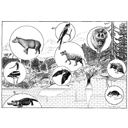
Essai de reconstitution d'un paysage du Quercy vers -35 Ma. (Esquisse de Christian Pondeville, 1977).Monique Vianey-Liaud and Christian PondevilleKeywords: Landscape reconstruction; Quercy PhosphoritesAbstract Le Quercy est aujourd'hui un vaste plateau calcaire, parcouru par un réseau karstique actif, pro· fondément entaillé par des vallées aux falaises abruptes, comme celles du Lot ou du Célé. Sur un sol peu épais domine la forêt de chênes, accompagnés de cornouillers, érables, genévriers. La faune est pauvre, peu diverse, et les nombreux chasseurs se satisfont de gibier d'élevage ... View editorial Published in Vol. 08, Fasc. 2-4 (1978) |
|
|

|
Les vertébrés fossiles de Colombie et les problèmes posés par l'isolement du Continent sud-Américain.Jaime de PortaKeywords: Columbia; Cretaceous; Fauna; Quaternary; South Americadoi: 10.18563/pv.2.2.77-94 Abstract A general view is given of the vertebrate faunas, Cretaceous to Quaternary of age, found in Columbia and of their principal characteristics. This view leads to the discussion of the isolation of the South American continent and of the role played by the Bolivar syncline with respect to North American immigrants during the Oligocene. The absence of marine deposits of Oligocene age in the north and northwest of Columbia suggests the possibility of a communication with Central America. This communication would have permitted the passage of hystricomorph rodents, of platyrrhine monkeys, and of colubrids. The non-occupation, until then, of the ecologie niches of these groups would have favored their installation beside the indigenous fauna. In this hypothesis it would no longer be necessary to admit that these vertebrates arrived as «island hoppers ››. The eco-biologic conditions would explain the absence of large-sized forms of North American origin. Article infos Published in Vol. 02, Fasc. 2 (1969) |
|
|

|
Nouvelles espèces de Dendromus (Rongeurs,Muriodea) à Langebaanweg (Pliocène,Afrique du Sud) conséquences stratigraphiques et PaléoecologiquesChristiane DenysKeywords: Dendromurinae; Paleoecology; Pliocene; Rodents; South Africa; StratigraphyAbstract New Dendromus species (Rodentia, Muroídea) from Langebaanweg (Pliocene, South Africa). Stratigraphical and paleoecological consequences. Article infos Published in Vol. 23, Fasc. 1-4 (1994) |
|
|

|
Owls, caves and fossils. Predation, preservation and accumulation of small mammal bones in caves, with an analysis of the Pleistocene cave faunas from Westbury-Sub-Mendip, Somerset, UK, par Peter Andrews, 1990. The University of Chicago Press, 232 p.Christiane DenysKeywords: caves; owls; preservation; taphonomyAbstract La taphonomie (science de l'enfouissement et de la fossilisation) des micromammifères a trop souvent été négligée par rapport à celle des grands mammifères. Or, pour expliquer les concentrations parfois très importantes de microfossiles dans les grottes et les sites préhistoriques il faut connaître les mécanismes qui concourrent actuellement à favoriser les accumulations de ces derniers. C'est le but de l'ouvrage de Peter Andrews qui se décompose en deux parties. Article infos Published in Vol. 22, Fasc. 1 (1992) |
|
|

|
Etude paléoneurologique comparative de Parabos Cordieri (De Christol), un bovidae (Mammalia, Artiodactyla) du Pliocène d'Europe Occidentale.Catherine GromolardKeywords: Bovidae; endocranial cast; Europe; PlioceneAbstract A skull of Parabos cordieri, undamaged by fossilisation, allows us to make an endocranial cast, which is compared to those of Bos taurus, Boselaphus tragocamelus and Hippotragus equinus. These are studied by general form (shape, volume, « rolling-up›› and inclination), and by detailed morphology (gyri and sulci patterns, rete mirabile, importance of rhinencephalon and cerebellum). Article infos Published in Vol. 12, Fasc. 2 (1982) |
|
|

|
Rana (Amphibia : Ranidae) from the upper eocene (MP17a) Hordle Cliff locality, Hampshire, England.Alan J. Holman and David L. HarrisonKeywords: Amphibia; England; Rana; Ranidae; Upper EoceneAbstract An ilium from the Upper Eocene (MP l7a) of Hordle, England, represents the first report of Rana from the Eocene of Britain. The ilium is similar to those of the water frog (Rana [ridibunda]) species group. Article infos Published in Vol. 28, Fasc. 1 (1999) |
|
|

|
Mammoths, mastodonts & elephants. biology, behavior and the fossil record
|
|
|

|
Mode de vie et affinités de Paschatherium (Condylarthra, Hyopsopontidae) d'après ses os du tarseMarc Godinot, Thierry Smith and Richard SmithKeywords: Astragalus; Calcaneum; Condylarthra; Eocene; Functional morphology; Paschatherium; PHYLOGENYAbstract Tarsals that can be confidently attributed to Paschatheríum dolloi from Dormaal (Belgium) are described. The astragalus is short; its broad neck is set at an angle of 30 degrees to the trochlea. The trochlea is pulley-shaped and proximally extended. There is no astragalar foramen. The medial tibial facet extends distally in a cup deeply excavated in the neck and buttressed. The sustentacular facet extends toward the navicular facet but is not fully confluent with it. The calcaneum bears a proximo-distally extended proximal facet for the astragalus. A relatively large peroneal tubercle projects from the body, and is situated distally. Functionally, the trochlea indicates extensive flexion-extension movements of the foot. Calcaneo-astragalar facets indicate sliding and rotation between the two tarsals. The inclination of the navicular facet suggests frequent foot inversion. The peroneal tubercle reflects good muscular capacities for foot rotation. Overall morphology is interpreted as a scansorial adaptation similar to that of sciurids.Comparisons are made with the tarsals of Macrocranion vandebroeki from Dormaal and Hyopsodus paulus from the Bridgerian of Wyoming. Some similarities between the astragali of Paschatherium and Macrocraníon (trochlea) are interpreted as convergences for rapid locomotion. However absence of mobility at the lower ankle and midtarsal joints in M. vandebroekzi suggests that this species was cursorial, as is known for M. tenerum from Messel. Similarities in the calcanea of Paschatherium and Hyopsodus are probably the result of close phylogenetic relations, and confirm the placement of Paschatherium in the hyopsodontids. The differences in the calcanea of Paschatherium and Macrocranion underline that Paschatherium is distinct from erinaceomorph insectivores. The differences in astragalar morphology between Paschatherium and Hyopsodus show that a marked adaptive divergence separates the two genera. We speculate about the common occurrence of a deep tibial cup (“cotylar fossa”) and a pulley-shaped trochlea in Paschatherium and hyracoids, suggesting that an adaptive scenario similar to that having led to Paschatherium (scansoriality) might explain the acquisition of the peculiar hyracoid tarsal characters; such a scenario contradicts the concept of Pantomesaxonia. Other peculiar characters of Hyopsodus suggest that hyopsodontids might be given more consideration in the search for hyracoid (and tethythere) origins. Article infos Published in Vol. 25, Fasc. 2-4 (1996) |
|
|

|
Contributions à l'étude du gisement Miocène supérieur de Montredon (Hérault). Les grands mammifères. 9 - Une tentative de magnétostratigraphieSevket SenKeywords: France; magnetostratigraphy; Montredon; Upper MioceneAbstract Afin d'étudier la magnétostratigraphie de la colline de Montredon, j'ai prélevé en Avril 1982, 93 carottes orientées réparties sur 29 sites. J.-P. Aguilar et I. Loridant m'ont aidé durant cette opération. Pour la stratigraphie de la coupe échantillonnée et pour le contenu faunique des deux gisements de mammifères de cette colline, voir J.-P. Aguilar & J.-Y. Crochet (1982). Article infos Published in Vol. 18, Ext (1988) |
|
|

|
La Poche à phosphate de Ste-Neboule (Lot) et sa faune de vertébres du Ludien Supérieur. 3- ChéloniensFrance de BroinKeywords: Eocene; Quercy PhosphoritesAbstract The few remains recently collected at Ste Néboule (upper Eocene) belong to three genera: the Testudinid Ergilemys, of which it is the oldest occurence in Western Europa, probably Palaeochelys and an unpublished genus, which is peculiar to the Phosphorites du Quercy. Some statements are made on the chelonian fauna as a whole in that région. After the study of some characters proper to the genus Ergilemys, some remarks are made concerning its antecedents and descendants. Article infos Published in Vol. 08, Fasc. 2-4 (1978) |
|
|

|
La poche à phosphate de Ste-Néboule (Lot) et sa faune de vertébres du Ludien supérieur. 4- CrocodiliensEric BuffetautKeywords: Eocene; Quercy PhosphoritesAbstract Crocodilians are represented in the Upper Eocene of Sainte·Néboule (Lot) by an isolated parietal and a dorsal scute, bath from young individuals. They are refferred to Diplocynodon sp. Predators (mammals and birds) are probably responsible for the occurrence of remains of small crocodilians (belonging to the genera Allognathosuchus and Diplocynodon) in the phosphorltes of Quercy. Article infos Published in Vol. 08, Fasc. 2-4 (1978) |
|
|

|
La poche à phosphate de Ste-Néboule (Lot) et sa faune de vertebres du Ludien supérieur. 9- Primates et ArtiodactylesJean SudreKeywords: Eocene; Quercy PhosphoritesAbstract La faune d'artiodactyles de Ste-Néboule, qui comprend neuf espèces, présente de nombreux Article infos Published in Vol. 08, Fasc. 2-4 (1978) |
|
|

|
Koobi Fora Research Project, volume 3. The fossil ungulates: geology, fossil artiodactyls, and palaeoenvironments, édité par John Michael HARRIS, 1991. Clarendon Press, Oxford, xvi + 384 p. ISBN 0-19-857399-5.Jean SudreKeywords: Artiodactyls; palaeovenvironments; UngulatesAbstract Avec ce volume se clôture l'étude géologique et paléontologique des sites à hominidés de Koobi Fora. Il fait suite aux deux précédents ouvrages, parus respectivement en 1978 et 1983, consacrés également à l'étude des faunes recueillies sur ces gisements dans le cadre du Koobi Fora Research Project. Article infos Published in Vol. 22, Fasc. 2-3 (1993) |
|
|

|
Pseudorhyncocyon cayluxi Filhol, 1892 insectivore géant des phosphorites du QuercyBernard SigéKeywords: Insectivores; Leptictidae; Quercy PhosphoritesAbstract Une hémimandibule et une molaire supérieure recueillies dans le gisement oligocène inférieur d'Escamps (phosphorites du Quercy) fournissent de nouvelles informations sur le genre Pseudorhyncocyon FllHOL, grand insectivore longirostre du Paléogène d'Europe, fossile très mal connu jusqu'ici. Des comparaisons avec les macroscélididés africains, géolabididés nord-américains, et leptictidés euraméricains permettent de rattacher cet amimal aux leptictidés, et de le rapprocher du genre Lepticidium TOBIEN, au sein de la sous-famille européenne nouvelle des pseudorhyncocyoninés. Article infos Published in Vol. 06, Fasc. 1-2 (1974) |
|
|

|
D'important restes de Diplobune minor FILHOL à Itardies (Quercy)Jean SudreKeywords: Diplobune; Quercy PhosphoritesAbstract Abstract not available Article infos Published in Vol. 06, Fasc. 1-2 (1974) |
|
|

|
First record of the genus Megaderma Geoffroy (Microchiroptera: Megadermatidae) from Australia.Suzanne J. HandKeywords: Australia; Chiroptera; Megaderma; Megadermatidae; Pliocene; Rackham's Roost Site; RiversleighAbstract A new Tertiary megadermatid is described from Rackham's Roost Site, a Pliocene limestone cave deposit on Riversleigh Station, northwestern Queensland, Australia. It appears to represent the first Australian record of Megaderma GEOFFROY, 1810, a genus otherwise known from Tertiary African and European taxa and the living Asian species M. spasma (LINNAEUS, 1758) and M. (Lyroderma) lyra PETERS, 1872. Megademza richardsi n. sp. is one of the smallest megademiatids known. It exhibits a mixture of plesiomorphic and autapomorphic features, the latter appearing to exclude it from being ancestral to any living megadermatid. The new species is one of eight megadermatids identified from the Australian fossil record, most of which are referable to Macroderma MILLER, 1906. Article infos Published in Vol. 24, Fasc. 1-2 (1995) |
|
|
|
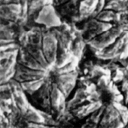
Eggshell microstructure and porosity of the Nicobar scrubfowl (Megapodius Nicobariensis, great Nicobar island, India)Géraldine Garcia, Ashu Khosla, Ashok Sahni and Monique Vianey-LiaudKeywords: conductance porosity; eggshell microstructure; incubation conditions; Megapodesdoi: 10.18563/pv.36.1-4.75-88 Abstract The eggshell of Nicobar scrubfowl (Megapodius nicobariensis) is described for the first time. Its egg porosity is calculated and discussed with data from several taxa (another megapode, some extant and fossil reptiles including a titanosaur group) in order to compare incubation types with eggshell structure. Eggshell microstructure reflects first phylogenetic traits and does not seem to have developed major adaptative features due to the incubation conditions, except for the pore canals. Article infos Published in Vol. 36, Fasc. 1-4 (2008) |
|
|

|
Rongeurs muroidés du Néogène supérieur d'Afghanistan, évolution, biogéographie, corrélationsLouis D. BrandyKeywords: Afghanistan; Muroidea; NeogeneAbstract The rodent faunas of five afghan localities found in 1976 and 1977 (Sherullah, Ghazgay, Pul-e Charkhi, Dawrankhel 14 and 15) are studied. Article infos Published in Vol. 11, Fasc. 4 (1981) |
|