Print ISSN: 0031-0247
Online ISSN: 2274-0333
Frequency: biannual
stratigraphy and biochronology of Oligo-Miocene of Kazakhstan
Notidanodon tooth (Neoselachii: Hexanchiformes) in the Late Jurassic of New Zealand
Additions to the elasmobranch fauna from the upper Cretaceous of New Jersey (middle Maastrichtian, Navesink Formation)
Fossil snakes, Palaeocene, Itaborai, Brazil, Part I
Abstract book of the 18th Conference of the EAVP
Eocene (57) , Quercy Phosphorites (38) , Systematics (32) , Rodents (29) , Mammalia (27)

|
Contributions à l'étude du gisement Miocène supérieur de Montredon (Hérault). Les grands mammifères. 4 - Les artiodactyles Suidae.Léonard GinsburgKeywords: Artiodactyla; France; Mammalia; Montredon; Upper MioceneAbstract There is only one suid known in the Upper Miocene of Montredon (Hérault): Microstonyx (Limnostonyx nov. subgen.) antiquus (KAUP). It is differenciated from Microstonyx major by the presence of upper and lower canines which are considerably longer and biger. Its presence at Montredon corroborates the palustrine habitat for the species. Article infos Published in Vol. 18, Ext (1988) |
|
|

|
Ostéologie de la tête de Richardus excavans Lavocat,1988René LavocatKeywords: Africa; anatomy; Bathyergidae; Miocene; RodentsAbstract Remarkable association of a small infraorbital foramen, similar to that in recent Heterocephalus, and of a strong muscular print on the dorsal anterior part of the zygomatic plate and on the premaxillary. Several anatomical structures to be compared with those of Heterocephalus suggest relationships with this genus. Richardus supports the ancestrality of the hystricomorph character in the bathyergids Article infos Published in Vol. 19, Fasc. 2 (1989) |
|
|

|
Prospection paléontologique de la région de Torralba de Ribota (Burdigalien du bassin de Calatayud, prov. de Zaragoza, Espagne)Edouard Boné, Maria T. Alberdi, Manuel Hoyos and Nieves Lopez-MartinezKeywords: Faunal assemblage; Macromammals; Spain; Zaragoza prov.Abstract The study of another faunal assemblage (mostly macromammals) from Torralba de Ribota (Calatayud, Zara- Article infos Published in Vol. 9, Ext (1980) |
|
|

|
The eosimiid and amphipithecid primates (Anthropoidea) from the Oligocene of the Bugti hills (Balochistan, Pakistan): new insight into early higher primate evolution in South Asia.Laurent MarivauxKeywords: Amphipithecidae; anthropoid phylogney; Bugti Hills; Early Oligocene; Eosimiidae; PakistanAbstract Eosimiid and amphipithecid primates document a long and significant history of primate evolution throughout the Eocene in Southeast Asia. Despite the absence of a comprehensive post-Eocene fossil record, it was generally hypothesized that both families left no descendant in Asia. Recently, two new small-bodied taxa, Bugtipithecus and Phileosimias, have been recovered in early Oligocene coastal deposits from the Bugti Hills (Balochistan, central Pakistan) and referred to the families Amphipithecidae and Eosimiidae, respectively, on the basis of dental fossil remains. In this paper, we provide more exhaustive description, comparison, and discussion of these taxa. As for tarsiid and sivaladapid primates, the persistence of eosimiids and amphipithecids into the Oligocene clearly demonstrates that low latitudes of South Asia provided a continuous access to tropical refugia during the climatic deterioration characterizing the late Eocene-early Oligocene interval, which was seemingly lethal for primate communities elsewhere across the Holarctic continents. As a contribution to the ongoing phylogenetic debates regarding the position of eosimiids and amphipithecids on the primate family tree, we have performed a cladistic analysis in a high-level primate systematic context in order to assess the position and the role of these new taxa in that phylogenetic issue. Our results support the view according to which eosimiids and amphipithecids (and by extension Phileosimias and Bugtipithecus, respectively) are stem anthropoids. These fossils from Pakistan document an unsuspected Oligocene phase of the evolutionary history of anthropoid primates in southern Asia, which clearly enhances the extent of the anthropoid radiation in this province during the Paleogene. Several phylogenetic and paleobiogeographic aspects are discussed, notably the intra- and inter-relationships between Paleogene Asian and Afro-Arabian anthropoids, and the resulting potential dispersal models between both land-masses during the Paleogene. Article infos Published in Vol. 34, Fasc. 1-2 (2006) |
|
|

|
Etude de la Variabilité chez Lophiodon lautricense NouletJean SudreKeywords: Cheek teeth; Eocene; Lophiodon; variabilitydoi: 10.18563/pv.4.3.67-95 Abstract The biometric and morphologie variability of the cheek teeth in the end-of-the-phylum species Lophiodon lautricense Noulet studied in this note, reposes on the observation of about 800 teeth. These were revealed to be little variable in absolute dimensions. The considerable morphologie variability in the upper premolars permitted the problem of the molarization process to be taken up. An hypothesis concerning the order of eruption of the cheek teeth is formulated based on an examination of a large number of milk dentitions. In conclusion, it is suggested that reservations be held on the value of dental characters classically used in systematics for the group under consideration. Article infos Published in Vol. 04, Fasc. 3 (1971) |
|
|

|
Sur le plus ancien Lagomorphe Européen et la "Grande Coupure" Oligocène de StehlinNieves Lopez-Martinez and Louis ThalerKeywords: Grande Coupure; Lagomorphe; OligoceneAbstract Pour la première fois un spécimen de lagomorphe a été récolté en Quercy. L'intérêt de ce fossile tient surtout à son âge géologique inattendu, qui recule considérablement la date de première apparition en Europe de cet ordre de mammifère, Ceci nous paraît justifier une nouvelle réflexion sur la « grande coupure» oligocène, Article infos Published in Vol. 06, Fasc. 3-4 (1975) |
|
|

|
Une nouvelle espèce de Steneosaurus (Thalattosuchia, Teleosauridae) dans le Callovien du Poitou (France) et la systématique des Steneosaurus longirostres du Jurassique moyen d'Europe Occidentale.Patrick VignaudKeywords: middle Jurassic; nov. sp.; phylogenetic relationships; skulls; Steneosaurus pictaviensis; Systematics; thalattosuchian crocodileAbstract The study of all the available skulls allows us to review the systematic relationships of the longirostrine Steneosaurus from the Middle Jurassic of western Europe. Up to now, Aalenian and Bajocian deposits have not yielded any significant Steneosaurus remain. In the Bathonian, the only valid longirostrine species, S. megistorhynchus, is known in the Britain-Normandy Basin, the Poitou and the Lorraine. In the Callovian, most of the longirostrine Steneosaurus remains can be attributed to the species S. leedsi. Nevertheless, some remains from the Middle Callovian of Poitou (France) show important differences with S. leedsi. A new Steneosaurus species, only known in Poitou, is created and named S. pictaviensis. The specific characters are carried by the skull (preorbital pit well marked, orbit and ptetygoid fossae shapes), by the mandible (symphysis shape) and by the teeth (ornamentation). S. megistorhynchus is probably situated near the stem of the Callovian species but remains from the Bathonian and Lower Callovian are very scarce and it is very difficult to precise the phylogenetic relationships between the longirostrine species of the Middle Jurassic. Article infos Published in Vol. 27, Fasc. 1-2 (1998) |
|
|

|
Problems of classification as applied to the RodentiaAlbert E. WoodKeywords:Abstract A classification should be both usable and useful,not too complex either in the amount of splitting or in the number of hierarchies involved, and not so simple as to give a false assurance of knowledge of relationships. Classifications are only possible because we do not have complete knowledge of the evolution of the organisms concerned because gaps in the record are necessary to allow the separation of the various taxa. Rodent classification is complicated by the large number of organisms involved and by the geat amount of parallelism that has taken place in the evolution of any and all features. If several independent features are characteristic of a certain taxon, should an effort be made to define the group on the basis of all the features, or should only one be selected as the determinant ? Unless the evolution of the several features was closely linked, the former solution will sooner or later lead to insurmountable problems. Article infos Published in Vol. 9, Ext (1980) |
|
|
|
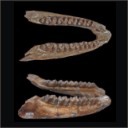
A mandible of the hyracoid mammal Titanohyrax andrewsi in the collections of the Muséum National d'Histoire Naturelle, Paris (France) with a reassessment of the speciesRodolphe TabuceKeywords: Afro-Arabia; Fayum; Oligocene; Titanohyracidaedoi: 10.18563/pv.40.1.e4 Abstract An unpublished mandible of the large hyracoid Titanohyrax andrewsi from the early Oligocene Jebel Qatrani Formation, Fayum Depression, Egypt is described. This specimen has a twofold importance. Firstly, it opens an unexpected window on early paleontological research in the Fayum because it was discovered as early as 1904 by the French paleontologist René Fourtau during an expedition to the Fayum organized by the Muséum National d’Histoire Naturelle, Paris (MNHN). This expedition has remarkably never been mentioned in the literature. Secondly, the mandible documents the best-preserved specimen of T. andrewsi, permitting a revision of one of the very rare Paleogene hyracoids. Interestingly, the new mandible was discovered two years before the first report of the species by Charles W. Andrews. The hypodigm of T. andrewsi is reviewed and the dentition as a whole is compared in detail, notably with other Titanohyrax species from the Fayum. The validity of the large Titanohyrax “schlosseri” species is discussed, but a pronounced sexual size dimorphism for T. andrewsi is favoured. Article infos Published in Vol.40-1 (2016) |
|
|
|
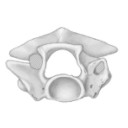
Latest Early-early Middle Eocene deposits of Algeria (Glib Zegdou, HGL50), yield the richest and most diverse fauna of amphibians and squamate reptiles from the Palaeogene of AfricaJean-Claude Rage, Mohamed Adaci, Mustapha Bensalah, Mahammed Mahboubi, Laurent Marivaux, Fateh Mebrouk and Rodolphe TabuceKeywords: Africa; Algeria; amphibians; Eocene; squamatesdoi: 10.18563/pv.44.1.e1 Abstract HGL50 is a latest Early-early Middle Eocene vertebrate-bearing locality located in Western Algeria. It has produced the richest and most diverse fauna of amphibians and squamate reptiles reported from the Palaeogene of Africa. Moreover, it is one of the rare faunas including amphibians and squamates known from the period of isolation of Africa. The assemblage comprises 17 to 20 taxa (one gymnophionan, one probable caudate, three to six anurans, seven ‘lizards’, and five snakes). Two new taxa were recovered: the anuran Rocekophryne ornata gen. et sp. nov. and the snake Afrotortrix draaensis gen. et sp. nov. The locality has also yielded the first confirmed anilioid snake, the first Palaeogene gymnophionan, and probably the first caudate from the Palaeogene (and possibly from the Tertiary) of Africa. The presence of a caudate at that time in Africa would be of particular interest; unfortunately, the available material does not permit a definitive identification. The fauna comprises Gondwanan and more specifically West Gondwanan vicariants, probably autochthonous groups and a Eurasian immigrant (assuming that the identification of the caudate is accurate). The fauna from HGL50 is clearly distinguished from the few other Eocene assemblages of Africa. However, if this results largely from differences in geological ages, geographic positions of the localities and mainly differences in environments took a part in the composition of the faunas. Article infos Published in 44-1 (2021) |
|
|

|
Les Otolithes de téléostéens du Miocène de Montpeyroux (Herault),France).Dirk Nolf and Henri CappettaKeywords: Miocene; Montpeyroux; Otolithes; teleostean fishAbstract Sieving and washing of about 700 kg of sediment from the miocene site at Montpeyroux produced otoliths of 34 teleost species, of which four still occur in the present day fauna or are near to extant species. Among the fossil species, eight are new : Ilisha lerichei, «genus Clupeidarum ›› orbiculatus, Dipulus mediterraneus, Morone cornuta, Chanda nelsoni, Pomadasys steurbauti, «genus Sciaenidarum ›› barthassadensis and Paraplagusia roseni. The fauna found is typical for a tropical or subtropical very littoral, probably even estuarine environment; it was living in a period near the boundary between Lower and Middle Miocene, perhaps somewhat earlier. Article infos Published in Vol. 10, Fasc. 1 (1980) |
|
|

|
Les Affinités de Nyctereutes megamastoides (Pomel), canidé du gisement Villafranchien de Saint-Vallier (Drôme, France).R. MartinKeywords: Canidae; Nyctereutes; Villafranchiandoi: 10.18563/pv.4.2.39-58 Abstract Nyctereutes megamastoides (Pomel) from the Villafranchian of the Auvergne and from Saint-Vallier presents cranial and dental characters sufficiently close to those of the late Pliocene canid from Perpignan (Roussillon), described by Depéret under the specific name of Canis donnezani belonging to the same genus Nyctereutes. The extinction of the European "Nyctereutes" group seems due to the too great alimentary specialization of this canid, whereas the Asiatic lineage represented in the Villafranchian by Nyctereutes sinensis Schlosser and at present by Nyctereutes procyonider Gray was able to maintain itself probably by means of a profound change in its alimentary regime. Article infos Published in Vol. 04, Fasc. 2 (1971) |
|
|

|
|
|
|

|
Decouverte d'un nouveau Diacodexis (Artiocactyla, Mammalia) dans l'Eocène inférieur de Silveirinha, Portugal.Carmen Estravis and Donald E. RussellKeywords: Artiodactyla; Eocene; Migration; Portugal; SilveirinhaAbstract A new artiodactyl, Diacodexis antunesi n.sp., is described from the early Eocene of Silveirinha, Portugal. Comparisons are made with Diacodexis gazini GODINOT, 1978, D. varleti SUDRE et al., 1983, D. cf. varleti from Paris Basin sites, D. sp. from Dormaal and from localities in Spain and England, D. secans from North America and D. pakistanensis from Asia; affinities and evolutive tendencies are discussed. The presence of Diacodexis in the locality of Silveirinha confirms the very early Eocene age of the latter. As Diacodexis antunesi appears ta be more primitive than D. gazini from Rians (early Eocene of France), it lends corroboration to the interpretation (essentially based previously on condylarths) of the Silveirinha assemblage as the oldest Eocene fauna known in Europe and supports the hypothesis that early artiodactyls migrated from Europe to North America. Article infos Published in Vol. 19, Fasc. 1 (1989) |
|
|

|
Le genre Microstonyx en Espagne et ses relations avec les autres espèces du même genre hors d'EspagneJuana M. Golpe-PosseKeywords: Microstonyx; Spain; SuidaeAbstract The genus Microstonyx was found only in the north eastern part of Spain : M. antiquus, referable to the Article infos Published in Vol. 9, Ext (1980) |
|
|

|
Perutherium altiplanense, un Notongulé du Cretacé Supérieur du PérouLarry G. Marshall, Christian de Muizon and Bernard SigéKeywords: Dental morphology; Late Cretaceous; Notoungulate; Paleobiogeography; PeruAbstract Perutherium altiplanerise THALER, 1967 from the Late Cretaceous of Peru has long been recognized as South America's oldest known placental mammal. Since its description Perutherium has been generally regarded as having condylarth affinity Based on our identification of a unique notoungulate synapomorphy we recognize Perutherium as the oldest and the most generalized known member of that order. This new determination and the large taxonomic diversity (five families) of notoungulates in rocks of Paleocene age in Argentina and Brazil, favor a South American origin for this group. The occurrence of notoungulates in rocks of Late Paleocene age in Asia and North America is explained by dispersal of a notoungulate stock from South America to North America and from there to Asia. Article infos Published in Vol. 13, Fasc. 4 (1983) |
|
|

|
The skull of Arsinoitherium (Mammalia, Embrithopoda) and the higher order interrelationships of ungulatesNicholas CourtKeywords: Arsinoitherium; PHYLOGENY; Skull; UngulateAbstract Detailed anatomical description of arsinoithere cranial remains from the Lower Oligocene, Fayum Depression, Egypt, provides the basic data for a systematic investigation. All cranial and some postcranial features are assessed from a phylogenetic standpoint. Several soft tissue characters are then added to a cladistic analysis based on 54 derived ungulate morphological characters. The resulting phylogenetic hypothesis implies that perissodactyls, sirenians, proboscideans and arsinoitheres constitute a monophyletic unit (5 synapomorphies). However, increasing the tree length by 3 steps reveals a closer association between hyraxes and perissodactyls. Nevertheless, 13 synapomorphies link proboscideans, sirenians and arsinoitheres to the exclusion of all other ungulates. Form of the sphenopalatine and ethmoid foramina, recurved posttympanic process, absence of a fenestra rotundum in the petrosal, vestigial paroccipital process of the exoccipital and the highly unusual absence of a hypoglossal foramen in the skull, imply a robust sister-group relationship between arsinoitheres and proboscideans. In this analysis artiodactyls share only one derived character with all other ungulates studied. Monophyly of Ungulata, including Artiodactyla, is therefore only weakly supported. It is argued that pedal anatomy of hyraxes is non-homologous with that of Tethytheria. Arsinoitherium should now be classified within Tethytheria, sharing a sister-group relationship with Proboscidea. Hyraxes are excluded, thus refuting the concept of Paenungulata. However, monophyly of the wider concept, Pantomesaxonia, containing hyraxes, perissodactyls, sirenians, proboscideans and now, arsinoitheres, is supported by this study. Article infos Published in Vol. 22, Fasc. 1 (1992) |
|
|

|
Données nouvelles sur le genre Stehlinia (Vespertilionoidea, Chiroptera) du Paléocène d'EuropeBernard SigéKeywords: Chiroptera; Palaeocene; VespertilionoideaAbstract Abstract not available Article infos Published in Vol. 06, Fasc. 3-4 (1975) |
|
|

|
Middle Eocene rodents from the Subathu group, Northwest Himalya.Kishor Kumar, Rahul Srivastava and Ashok SahniKeywords: Chapattimyidae; Eocene; evolution; India; Rodentia; Subathu group; SystematicsAbstract Extensive collecting in previously known and new Middle Eocene rodent localities in the Subathu Group of the Rajauri and Reasi districts, Jammu and Kashmir (northwest Himalaya, India) has yielded over 500 isolated cheek teeth, numerous incisors and cheek tooth fragments, and two mandibular fragments with M/1-M/3. An analysis of this additional material and a restudy of that reported earlier from the Metka (Rajauri) area has revealed the presence of diverse Middle Eocene ctenodactyloid rodents in India. The assemblage comprises six genera and twelve species, viz.., Bírbalomys woodi, B. ibrahimshahi, B. sondaari, Basalomys vandermeuleni, B. ijlsti, B. lavocati, Chapattimys wilsoni, C. debruijni, Gumbatomys asifi, cf. Advenimus bohlini, cf. Petrokoslovia sp. indet. 1 and cf. Petrokoslovia sp. indet. 2. Most species of this assemblage are endemic to the Indian subcontinent and are referred to the Family Chapattimyidae. However, at least three taxa, viz.., cf. Advenimus bohlini, cf. Petrokoslovia sp.indet. 1 and cf. Pezrokoslovia sp. indet. 2 show close affinities with their Central and Eastern Asiatic contemporaries and are attributed to the Family Yuomyidae. The dentitions of most of the Middle Eocene rodents from India are described here in better detail thus providing more precise characterization than was available earlier. The taxonomie status of Basalomys, formerly a subgenus of Birbalomys has been raised to that of a genus. Basalomys vandermeuleni is here designated as the type species of Basalomys in place of B. ijlsti. The rodent assemblage from the Subathu Group is specifically similar to that from the coeval Kuldana Formation of Pakistan. The absence of Birbalomys ibrahimshahi and cf. Advenimus bohlini in Pakistan is related to sampling bias. The identifications of the Early Eocene rodents from Barbara Banda, Pakistan have been reexamined and the familial assignments of some of the Early and Middle Eocene rodents from Central and Eastern Asia have been discussed and reviewed in the light of recent discovery of early rodents in Mongolia. Article infos Published in Vol. 26, Fasc. 1-4 (1997) |
|
|

|
Contributions à l'étude du gisement Miocène supérieur de Montredon (Hérault). Les grands mammifères. 1 - Les LagomorphesNieves Lopez-MartinezKeywords: Lagomorpha; Montredon; Prolagus; Upper MioceneAbstract A sample of 231 isolated teeth of lagomorphs from the upper Miocene of Montredon (southern France), identified as the ochotonid Prolagus crusafonii DOPEZ, 1975, is studied, comparing it with other populations of the same species as well as with its closest species P. oeningensis (KÖNIG, 1825). Article infos Published in Vol. 18, Ext (1988) |
|