Print ISSN: 0031-0247
Online ISSN: 2274-0333
Frequency: biannual
stratigraphy and biochronology of Oligo-Miocene of Kazakhstan
Notidanodon tooth (Neoselachii: Hexanchiformes) in the Late Jurassic of New Zealand
Additions to the elasmobranch fauna from the upper Cretaceous of New Jersey (middle Maastrichtian, Navesink Formation)
Fossil snakes, Palaeocene, Itaborai, Brazil, Part I
Abstract book of the 18th Conference of the EAVP
Eocene (57) , Quercy Phosphorites (38) , Systematics (32) , Rodents (29) , Mammalia (27)

|
The Quaternary avifauna of Crete, Greece.Peter D. WeesieKeywords: Avifauna; Crete; Quaternary; SystematicsAbstract Pleistocene bird fossils have been studied from nine localities on Crete. Part of this material was described earlier by the author (Weesie, 1982) and will not be treated here in extenso, the results will be incorporated. More than one third of the over 10,000 fossil bird bones available could be identified ; they were found to represent at least 65 bird species. The following species of the Pleistocene Cretan avifauna are new to the fauna of Crete : Branta ruficollis, Haliaeetus albicilla, Gyps melitensis, Aquila chrysaetos simurgh n. ssp., Ketupa zeylomensis, Aegolius funereus, Dendrocopos leucotos, Zoothera dauma, Turdus iliacus and Pyrrhula pyrrhula. The Pleistocene Cretan avifauna differs less from comparable mainland avifaunas than (fossil) avifaunas from oceanic islands do. Still, the Pleistocene Cretan avifauna has two qualities that are characteristic of island avifaunas : the almost complete absence of a group of birds (the Galliformes) and the presence of two endemic (sub)species : the giant eagle Aquila chrysaetos simurgh n. ssp. and the long-legged owl Athene cretensis (Weesie, 1982). The new subspecies is described in the present study. Article infos Published in Vol. 18, Fasc. 1 (1988) |
|
|

|
Nouveau Dichobunidae (Artiodactyla, Mammalia) du gisement d'Aumelas (Hérault) d'âge Lutétien terminalJean SudreKeywords: Aumelas; Dichobunidae; Hérault; Middle Eocene; Upper LutetianAbstract The faunal list of the mammals collected at the locality of Aumelas (Hérault, France) is revised. For the first Article infos Published in Vol. 9, Ext (1980) |
|
|

|
Evolution of the Rhizomyine zygomaLawrence J. Flynn, Mohammed Sarwar and Jean-Jacques JaegerKeywords: parallel evolution; Rhizomyidae; Rodentia; Siwalik; zygomaAbstract Cranial anatomy of a late Miocene rhizomyid, Brafhyrhizomys cf. B. pilgrimi, provides new evidence on the origin of the dorsal, round infraorbital foramen of living rhizomyines. Primitive rhizomyids retain a myomorphous keyhole foramen with a long ventral slit that retracts upward during the evolutionary history of the Rhizomyidae. The primitive condition of the elongated ventral slit is represented by Kanisamys sivalensis. Among later burrowers the foramen shows progressive dorsal migration, the ventral slit terminating midway up the snout in B.tertracharax and B. choristos ; well above the midline of the snout in Brachyrhizamys cf. B. pilgrimi. Apparently this transformation began earlier among Rhizomyinae than among Tachyoryctinae and continued to a more derived stage in rhizomyines. ln living Rhizomyx the ventral slit is absent and only a high round hole remains at the anterior end of the zygomatic arch. Article infos Published in Vol. 15, Fasc. 3 (1985) |
|
|

|
Nouvelle quantification de l'Hypsodontie chez les Theridomyidae : l'exemple de Theridomys ludensis nov. sp.Monique Vianey-LiaudKeywords: Dental morphology; evolution; Hypsodonty; Oligocene; TheridomyidaeAbstract A new example of parallelism in the dental pattern ofthe Theridomyidae is illustrated by the description ofa new species: Theridomys Iudensis from the standard level of Antoingt (middle Oligocene). Considering the occurence ofthis parallelism phenomenon. the use of numerous qualitative and quantitative criteria is essential to characterize the different stages ofthe different evolutive lineages. Thus, a new simple parameter is proposed (CHY = H+l/0,5 L) to estimate hypsodonty of the medium hypsodont Rodentia. Article infos Published in Vol. 15, Fasc. 3 (1985) |
|
|

|
Schmelzmikrostruktur in den inzisiven alt-und neuweltlicher histricognather nagetiereThomas MartinKeywords: Africa; Caviomorpha; Ctenodactyloidea; Deseadan; Enamel microstructure; Hunter-Schreger bands; Hystricognathi; Incisors; Ischyromyoidea; multiserial; Paleobiogeography; pauciserial; Phiomorpha; Rodentia; South AmericaAbstract Enamel microstructure in the incisors of Old- and New World hystricognath rodents: Article infos Published in Vol. 21, Ext (1992) |
|
|

|
Relations phylétiques de Bachitherium filhol, ruminant de l'Oligocène d'Europe Occidentale.Denis Geraads, Geneviève Bouvrain and Jean SudreKeywords: Artiodactyla; Bachitherium; Cladistic analysis; France; Mammalia; Oligocene; RuminantiaAbstract A detailed comparative study of a complete skeleton of Bachitherium and a cladistic analysis of the sub-order Neoselenodontia lead us to propose a cladogram and a new classification of this group. The Tylopoda are the sister-group of the Ruminantia, which are chiefly defined by the fusion of the cuboid and navicular. Within this infra-order, Amphimeryx is the sister genus of a tetraselenodont group, in which the Hypertragulidae are well-separated group from a monophyletic group defined by the loss of trapezium, fusion of capitatum and trapezoid, and the isolation of the hypoconid on lower molars. The most primitive genera of this group, Lophiomeryx and Iberomeryx still have an open trigonid on the lower molars, but this is lingually closed in Archaeomeryx, sister-genus of the higher Ruminantia which have fused metatarsals and more evolved milk teeth. We divide them into two pan/orders : Tragulina (including the recent and miocene Tragulidae, and the North-American Leptomerycidae), and Pecora, with reduced lateral metacarpals and a new crest (telocristid) on the lower premolars. Within the Pecora, the upper molars of Gelocus are more primitive than those of Bachitherium (a genus with many autapomorphies in the dentition) itself more primitive than the group Prodremotherium + Eupecora, with fused metacarpals. We consider the Eupecora (including several genera without frontal appendages) to be monophyletic. Article infos Published in Vol. 17, Fasc. 2 (1987) |
|
|

|
Contribution à l'étude des genres Gliravus et Microparamys (Rodentia) de l'Eocène d'Europe.Jean-Louis HartenbergerKeywords: Eocene; Gliravus; Microparamys; Rodentiadoi: 10.18563/pv.4.4.97-135 Abstract Based on material found in about 15 localities the relationships of the genera Microparamys and Glirarus have been studied. One new genus, two subgenera and three species [Microparamys (Sparnacomys) chandoni n. subgen. and n. sp., Microparamys (Pantrogna) russelli n. subgen., Eoglirarus wildi n. gen. and n. sp., Gliravus meridionalis n. sp.] as well as the publication Article infos Published in Vol. 04, Fasc. 4 (1971) |
|
|

|
La palichnofaune de vertébrés tétrapodes du permien supérieur du Bassin de Lodève (Languedoc-France).Georges Gand, Jacques Garric, Georges Demathieu and Paul EllenbergerKeywords: Footprints; France; Languedoc; Lodève basin; new ichnotypus; Saxonian; Upper PermianAbstract Near "la Lieude", in the Lodève basin, more than a thousand of footprints are distributed in a twenty of trackways which amounts to 220 m length. They have been found on calcareous siltstone level in the B site named also "Réserve Naturelle Volontaire". This last is located in the Saxonian summit dated Upper Permian. "La Lieude" tracks are described by using statistical methods then they are compared with others from the world Permian. What allows to distinguish 4 following ichnotaxa: Lunaepes ollierorum nov.ichnosp., Merifontichnus thalerius nov. ichnogen. and nov. ichnosp., Planipes brachydactylus nov.ichnosp. and Brontopus circagiganteus nov. ichnosp. All these traces are attributed with possibility or probability to Therapsida or to Therosauria, except Brontopus circagiganteus nov. ichnosp. that could be due to Caseamorpha. All these animals whose sizes have been estimated between l and 5 m lived probably in a playa environment.The biological and sedimentological data from "la Lieude" footprints levels compared with informations provided by the tracks orientations, suggest the following scenario. Animals coming from the North have crossed a sandy channel bank with plants zones by directing to the South for the majority. Maybe, they were going to the lacustrine part of the playa, close to "la Lieude" footprints that they have just trampled on. Article infos Published in Vol. 29, Fasc. 1 (2000) |
|
|

|
Evolution et extinction des reptiles marins au cours du Mésozoïque.Nathalie BardetKeywords: Crocodiles; evolution; Extinctions; faunal assemblages; Helveticosaurs; Hupehsuchians; Ichthyoaurs; lizards; Marine Reptiles; Mesozoic; Nothosaurs; Pachypleurosaurs; Placodonts; Plesiosaurs; Snakes; Thalattosaurs; Turnovers; TurtlesAbstract An interpretation of the marine reptile fossil record, based on the existing litterature and complemented by the review of ancient collections and the study of new material, permits a better understanding of Mesozoic marine ecosystems. An inventory of the marine reptiles known from the Lower Triassic to the Paleocene is presented: 46 families, about 200 genera and 400 species have been recorded. This data base includes commentaries about systematics, stratigraphical ranges and geographical distribution of taxa. Marine reptiles include a mosaic of not necessarily closely related groups: ichthyosaurs, thalattosaurs, hupehsuchians, pachypleurosaurs, placodonts, nothosaurs, plesiosaurs, pliosaurs but also crocodiles, lizards, snakes, turtles. The diversity studies reveal that the fossil record of marine reptiles has been punctuated by two mass extinctions, during the Middle-Upper Triassic transition and at the Cretaceous-Tertiary boundary. The Jurassic-Cretaceous and Cenomanian-Turonian boundaries (the latter marked by the disappearance of ichthyosaurs) are potential crisis periods, but current data are not sufficient to reach conclusions. The Ladinian-Carnian transition is characterized by the disappearance of 64 % of families and affects essentially coastal forms. This extinction coincides with an important regressive phase. During the Upper Triassic, a faunal reorganisation within marine reptiles leads to the progressive disappearance of near-shore forms and to the development of pelagic groups. During the Maastrichtian-Danian crisis, 36% of families died out. Large-sized pelagic forms such as mosasaurs and elasmosaurs were the most affected and their extinction seems to have been rather sudden. On the other hand, pliosaurs and protostegid turtles became extinct, but were already declining. The survivors were near-shore forms such as crocodiles, snakes and some turtles and they may have taken refuge in freshwater environments. A break in the food chain based on phytoplankton is proposed as an extinction scenario for pelagic forms. Article infos Published in Vol. 24, Fasc. 3-4 (1995) |
|
|

|
Les mammifères post-glaciaires de Corse. Etude Archéozoologique.Jacques MichauxKeywords: Book reviewAbstract Les mammifères post-glaciaires de Corse. Etude Archéozoologique, par Jean-Denis Vigne, 1988. XXVle suppléments à "Gallia Préhistoire". Editions du C.N.R.S., Paris, 337 p. FRF 300. ISSN 0072-0100, ISBN 2-222-04130-9. Article infos Published in Vol. 19, Fasc. 1 (1989) |
|
|

|
Description des restes d'Elasmobranches (Pisces) du Dévonien moyen de BoliviePhilippe JanvierKeywords: South AmericaAbstract Some fragmentary remains of spines and endoskeletal elements, referred here to as ctenacanthid like elasmobranchs, are recorded in the Middle Devonian of Bolivia. These specimens, and some others from the Eodevonian of Brasil represent the only Devonian fish remains hitherto known from South America and indicate that further discoveries may be made in their original localities respectively. Article infos Published in Vol. 07, Fasc. 4 (1977) |
|
|
|
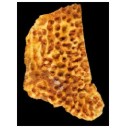
Lissamphibians from Dams (Quercy, SW France): Taxonomic identification and evolution across the Eocene-Oligocene transitionAlfred Lemierre and Maeva J. OrliacKeywords: Eocene-Oligocene; Grande Coupure; Lissamphibia; Quercy Phosphoritesdoi: 10.18563/pv.48.1.e3 Abstract The locality of Dams (Quercy, southwestern France) has yielded two fossil assemblages, one from the late Eocene and another from the early Oligocene, making it one of the few localities with infillings across the Eocene-Oligocene transition. At least 24 taxa (13 mammals, 11 snakes) have been identified in this locality. Study of the lissamphibian remains from Dams yields an Eocene and an Oligocene assemblage, with a total of eight taxa. The Eocene assemblage includes two unnamed salamandrine species, one unnamed pelobatid species and one pyxicephalid species (Thaumastosaurus). The Oligocene assemblage includes two unnamed pleurodeline species, one salamandrine species (Salamandra sansaniensis) and an unnamed pelobatid species. Among the eight taxa from Dams, one Eocene salamandrine and one Oligocene pleurodeline are identified for the first time in the Quercy. A review of the lissamphibians from the Quercy area identifies eleven taxa for the Late Eocene (MP19) and eight taxa for Early Oligocene (MP22), with a major turnover at the Eocene-Oligocene transition. This turnover occurs in a time of major climatic changes, with a significant decrease in temperature and precipitation and concurrent increase in seasonality in Europe, likely affecting specialized taxa. Article infos in press |
|
|

|
Les mammifères Montiens de Hainin (Paléocène moyen de Belgique) Part III : MarsupiauxJean-Yves Crochet and Bernard SigéKeywords: Belgium; Marsupials; Paleobiogeography; PaleoceneAbstract The oldest european marsupials are described from some specimens (isolated upper molars) recently found from the Hainin sediment (Middle Paleocene of Belgium). These fossils document a new species of the Peradectes genus. They give evidence of a much older occurrence of the marsupials in Europe than it was assumed. They allow us to postulate a didelphid dispersal from South America towards the western-holarctic area operating in two phases : the first one of the Peradectes genus at the end of the Cretaceous; the second one of the Didelphíni tribe at the end of the Paleocene. A central american crossing is likely for the first one, whereas a transafrican way is tentatively argued for the second one. Article infos Published in Vol. 13, Fasc. 3 (1983) |
|
|
|
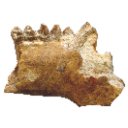
The new Algerian locality of Bir el Ater 3: validity of Libycosaurus algeriensis (Mammalia, Hippopotamoidea) and the age of the Nementcha FormationFabrice Lihoreau, Lionel Hautier and Mahammed MahboubiKeywords: Dispersal event; Miocene; North Africa; Tetralophodondoi: 10.18563/pv.39.2.e1 Abstract The description of original material of anthracothere and proboscidean in the new locality of Bir el Ater 3 from East Algeria, and a thorough review of early Libycosaurus remains of Bir el Ater 2 allows us validating L. algeriensis as the smallest and earliest species of Libycosaurus and probably the earliest migrant of the genus from Asia. The presence of a Tetralophodon in the Neogene Nementcha formation might represent the earliest occurrence of the genus in Africa. These original fossil remains allow us to discuss the age of the Neogene part of the Nementcha formation close to the Serravalian/Tortonian boundary. Article infos Published in Vol.39-2 (2015) |
|
|

|
The paramyid rodent Ailuravus from the middle and late Eocene of Europe, and its relationshipsAlbert E. WoodKeywords: Ailuravinae; RodentiaAbstract The complex taxonomic history of the paramyid rodent genus Ailuravus is reviewed. It has been described as Hyracotherium, as a creodont carnivore and as a lemuroid primate - errors at the ordínal level that are most unusual for a rodent. The genus is a member of the poorly known subfamily Ailuravinae, probably derived from some European Early Eocene species of Paramys. Aíluravus was a large arboreal paramyid with highly rugose cheek teeth, very well developed hypocone, and a remarkably weak lower incisor. It was tropical to subtropical. Three named species are recognized, A. macrurus from the Lutetian of Messel; the genotype, A. picteti, from Egerkingen, Buchsweiler and the Geiseltal, slightly later in the Lutetian; and A. stehlinschaubi, new name, from the Bartonian of Mormont-Eclépens and Robiac. One or more unnamed species are present in the Ypresian of Cuis. The species are close to a phyletic sequence. No later representatives of the genus are known. The late Eocene to earliest Oligocene North American paramyid Mytonomys, whose relationships have been obscure, is tentatively referred to the Ailuravinae. Article infos Published in Vol. 07, Fasc. 1-2 (1976) |
|
|
|
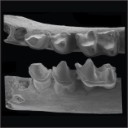
An evening bat (Chiroptera: Vespertilionidae) from the late Early Eocene of France, with comments on the antiquity of modern batsSuzanne J. Hand, Bernard Sigé, Michael Archer and Karen H. BlackKeywords: evolution; palaeobiogeography; Prémontré; Western Europe; Ypresiandoi: 10.18563/pv.40.2.e2 Abstract Bats are among the most numerous and widespread mammals today, but their fossil record is comparatively meagre and their early evolution poorly understood. Here we describe a new fossil bat from dental remains recovered from late Early Eocene sediments at Prémontré, northern France. This 50 million-year-old bat exhibits a mosaic of plesiomorphic and apomorphic dental features, including the presence of three lower premolars, a single-rooted p3, short p4 with metaconid, myotodont lower molars and a tall coronoid process of the dentary. This combination of features suggests it is an early member of Vespertilionidae, today’s most speciose and geographically widespread bat family. The Prémontré bat has bearing on hypotheses about the origins of vesper or evening bats (Family Vespertilionidae), as well as crown-group chiropterans. Article infos Published in Vol.40-2 (2016) |
|
|

|
Présence de Palaeobatrachidae (Anura) dans des gisements tertiaires Français caractérisation, distribution et affinités de la familleColette Vergnaud-Grazzini and Robert HoffstetterKeywords: Anura; Palaeogeography; SystematicsAbstract The Palaeobatrachidae until now have not been reported from France. The present note makes known the discovery of very significant remains in three Tertiary localities of France: Cernay (late Paleocene), Laugnac (late Aquitanian) and Sansan (middle Helvetian). The osteologic characters, as well as the geographic and stratigraphic distribution of the family are re-stated with added details. The Palaeobatrachidae are a European family known from the late Jurassic of Catalonia (publication in course by J. Seiffert) to the Plio-Pleistocene (pre-Mindel) of Poland and Rumania. By their way of life and certain osteologic characters they are similar to the Pipidae, but they are distinguished by profound differences. It would be rash to include them in the Pipoidea or even in the Aglossa. They are apparently an independant group, essentially holarctic, which held in Europe a role equivalent to that played by the Pipidae south of Tethys. Article infos Published in Vol. 05, Fasc. 4 (1972) |
|
|

|
The microfauna of the Djebel Qafze CaveG. HaasKeywords: Micromammals; RodentsAbstract Abstract not available Article infos Published in Vol. 05, Fasc. 5 (1972) |
|
|

|
Contributions à l'étude du gisement miocène supérieur de Montredon (Hérault). Les grands mammifères. Avant propos.Bernard SigéKeywords: Editorial; Mammalia; Montredon; Upper MioceneAbstract Le Mémoire Extraordinaire 1988 de PALAEOVERTEBRATA regroupe dix articles consacrés au gisement à mammifères du Miocène supérieur de Montredon (Hérault), connu et classique depuis la fin du siècle dernier, et auquel est lié le nom du savant paléontologue lyonnais Charles Depéret. View editorial Published in Vol. 18, Ext (1988) |
|
|

|
A new Ardynomys (Rodentia,Cylindrodontidae) from the Eocene of the eastern Gobi Desert, Mongolia.Demberelyin DashzevegKeywords: Ardynomys; Eocene; Mongolia; Rodentia; SystematicsAbstract A partial skull of Ardynomys russelli sp. nov. (Rodentia, Cylindrodontidae) is described. This was collected in the late Eocene of Alag Tsab locality in the eastem Gobi Desert, Mongolia. Ardynomys russelli sp. nov. is characterized by small size, brachyodont molars, and retention of P3. It represents the earliest record of the genus Ardynomys MATTHEW & GRANGER, 1925, in Asia. Article infos Published in Vol. 25, Fasc. 2-4 (1996) |
|